A University of Pennsylvania-founded biotech company that helps scientists test drugs and therapeutics has raised $4 million in order to more widely adopt their platform that embraces “organs on chip” technology.
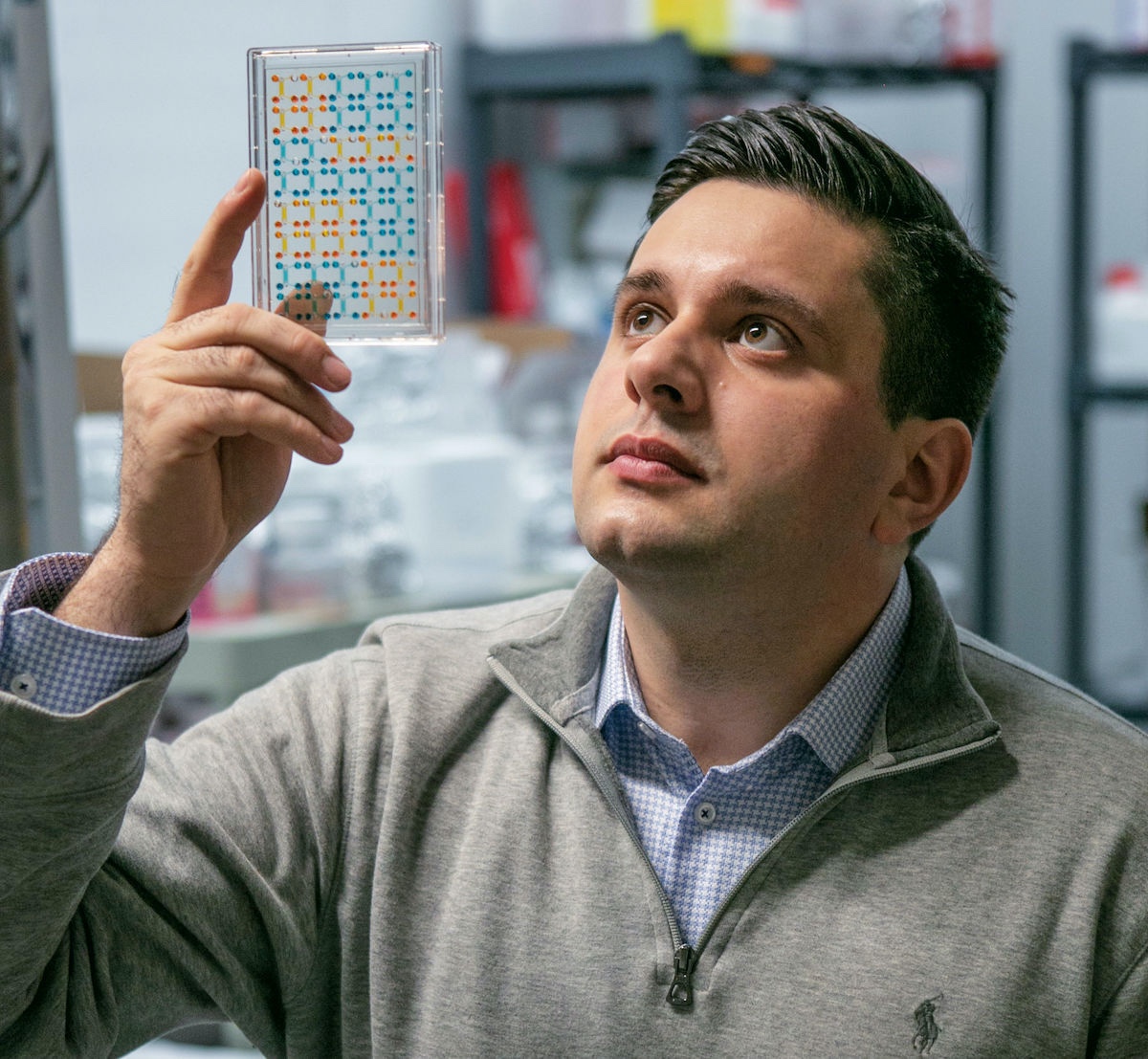
Research into potential drugs is usually performed first on mice, and success is only found in a fraction of humans once implemented in clinical trials, Andrei Georgescu, cofounder and CEO of Vivodyne, told Technical.ly. The genetic makeup just isn’t similar enough. But technology that allows scientists to test therapies on lab-grown human organs called “organs on chip” is allowing for testing without human subjects.
The organs on chip allow for a drug to react to tissue in a more similar way to the body than it would in a petri dish, Georgescu said. Cells sense their environment very well, he added.
“We’re making the environment more complicated, making its spacial features complicated enough to match the native complexity of the organs,” he said. “When [cells] sense a softer environment, they start to behave more realistically. Their response to the drug is more realistic.”
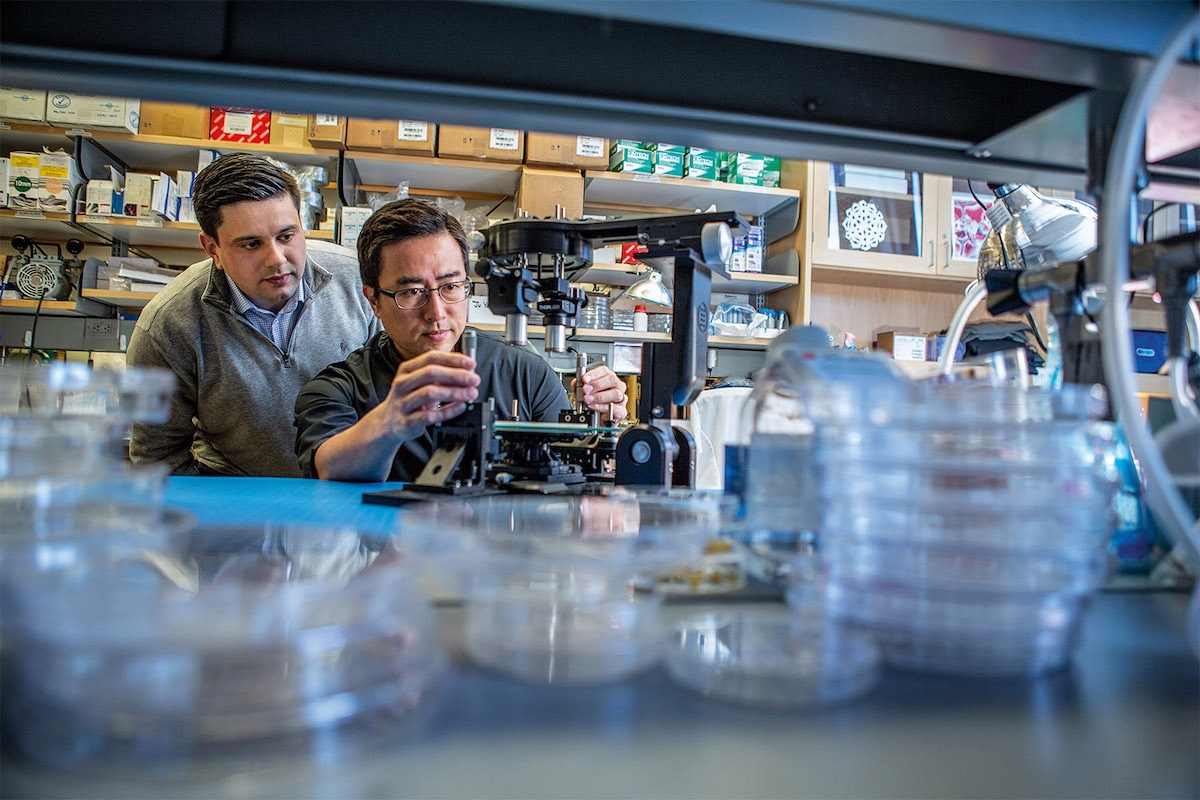
Vivodyne’s platform was originally developed at Penn in the BIOLines Lab, which is directed by Dr. Dan Huh, who cofounded the company with Georgescu. Years ago, Huh and other scientists developed tools to emulate human organs in living benchtop platforms, but they were hard to get right, he said.
“They’re a bit different each time, and they’re made from materials that don’t interface well with the enormous scale and consistency that drug companies need,” Huh said in a statement. “With Vivodyne, we’ve finally bridged that gap by automating every aspect of cultivating, testing, and analyzing these tissues’ responses to drugs and environmental stimuli with superhuman speed and precision.”
Vivodyne formed at the end of last year, and this spring raised this $4 million seed round led by LA-based Kairos Ventures. The team of six will grow likely to about 17 or 18 people within the next year, and the company is moving into a space at the Curtis Center in Old City.
The main goal with the funding is to lower the bar for labs and scientists to test their own research instead of just the specialists who make these chips, Georgescu said.
“The most important thing is to make a usable product that customers can use to develop their research and discoveries,” the CEO said. “We focus on the product, and the rest will follow.”