

In emergencies, it’s often hard to find people in all the chaos.
Team Salutem, first place winner of Johns Hopkins University medical hackathon MedHacks 2016, designed a product that could send real-time GPS location data to emergency responders in times of crisis.
https://twitter.com/amustafa21/status/780150416986308612
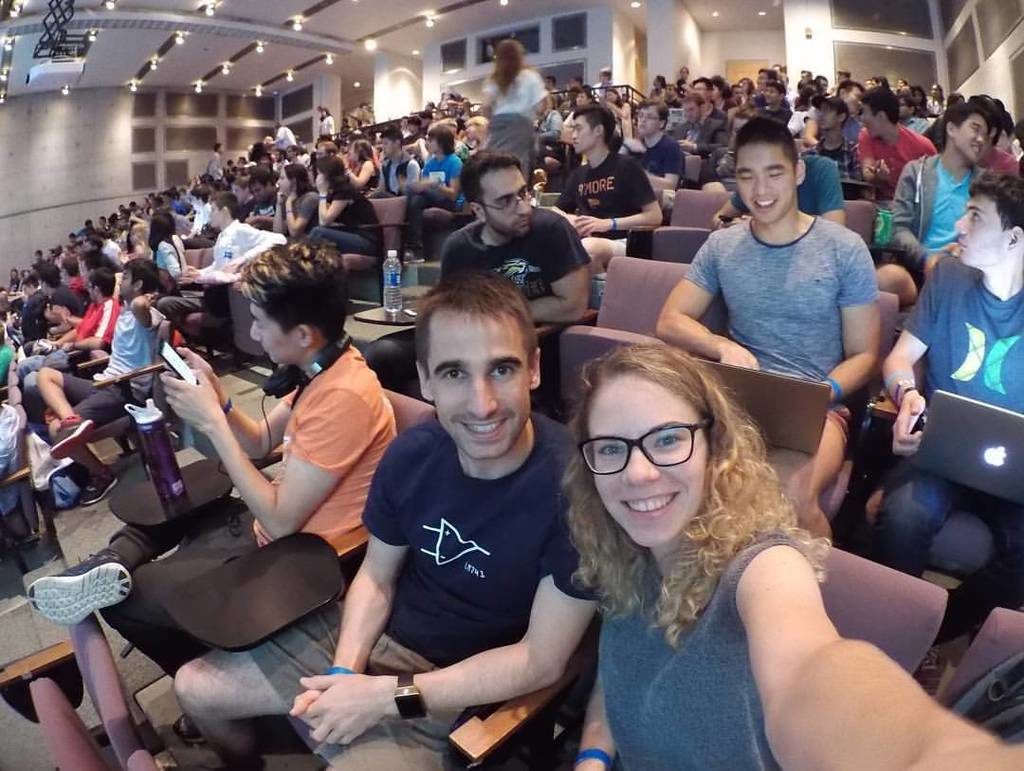
During the weekend, 179 students mingled, collaborated and, of course, hacked during the Baltimore Innovation Week 2016 presented by 14 West event. Prizes up for grabs included cash, medals, six Leap Motion controllers, gift cards and swag bags.
There were 47 projects submitted and they included apps, physical products and medical databases. That’s nearly double from last year’s MedHacks, which saw a total of 27 projects and 100 registered participants.
One of the projects, #LegDay, was a 3D-printed prosthetic leg that uses software that allows users to generate walking keyframes as an assisted walking sequence. The 3D printing brings the prosthetic into a more affordable $300 range than the thousands of dollars that typical a prosthetic can cost.
https://twitter.com/ndneighbor/status/779836627262672896
See the rest of the projects here.
MedHacks judges included Vice President of Blue Cross Blue Shield Teresa Clark and MedImmune’s Jaideep Sundaram. They made their decisions based on criteria like medial impact, innovation and functionality.
It wasn’t all work all the time, however; some students took the time to formulate a plan for success.
https://twitter.com/MLHacks/status/779779971850051584
The MedHacks winners are:
- First place: Salutem.
- Second place: emicus, an app that can track and respond to the user’s mental health status with a wearable EEG monitor.
- Third place: ThereForYou, a web app that tracks mental health through facial and voice analysis for patients and doctors.


