
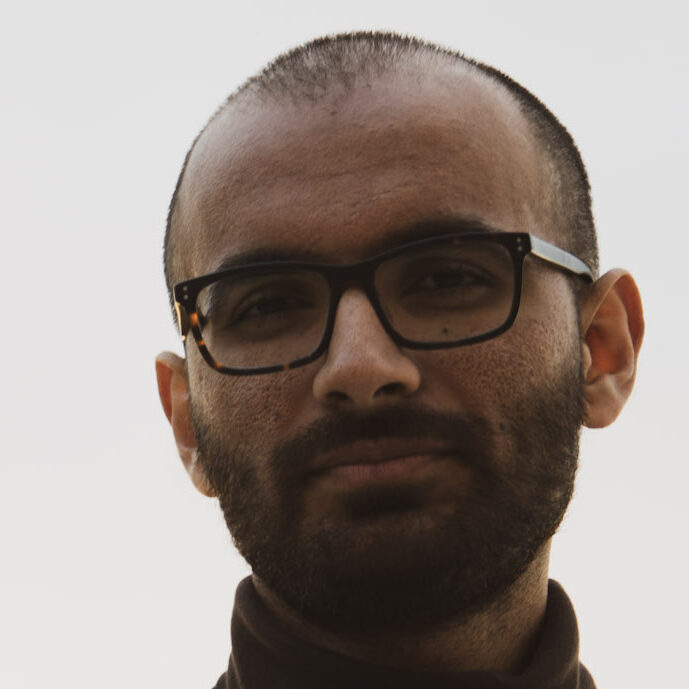


Charlotte Clark seems to have a thing for gritty post-industrial cities and speaking different languages.
Originally from Pittsburgh, she went to school at MIT, spent nine years in Kansas City and now enjoys building roots in Baltimore. Her work sits at the intersection of different communities and languages — both actual languages like French, Spanish and American Sign Language; and cultural languages between technologists, entrepreneurs, funders and others invested in the innovation economy.
She also wears several different hats that reflect her broad expertise. She’s a fellow in the International Economic Development Council’s Economic Recovery Corps program, through which she works with the Baltimore BASE (Business Assistance and Support for Equity) Network and Impact Hub Baltimore. She also serves as a co-lead of the District Angels’ Venture Fellowship Program and director of operations at Kansas City nonprofit Black Excellence.
Clark’s career took her from software engineering to product management to entrepreneurial ecosystem-building. Her journey wasn’t linear but centered on a mission to solve meaningful and immediate problems alongside other people — and to support entrepreneurs.
In this edition of the How I Got Here series, Clark shares her story from coding alone to building communities of founders. She discusses lessons learned about the power of community and collaboration, and how Baltimore shaped her understanding of entrepreneurial ecosystems.
This interview has been edited for clarity and length.
Where are you from? What was your journey into technology like?
I grew up in the East Liberty and Forest Hills neighborhoods of Pittsburgh and was part of a lot of STEM-focused activities. In elementary school, we had one of those old-school Mac laptops with the rainbow apple and I was on it a lot. I was doing a lot of gaming — my parents would have me do those intellectual and educational games — and in early middle school, I was using coding-type software, essentially making little apps.
In high school, I thought I was going to become a robotics engineer, or I was going to major in languages. While tech was always something I was integrated in, it hadn’t fully clicked for me as far as a career. In kindergarten I started learning French, then American Sign Language in middle school, and then added Spanish in high school. I made a very conscious decision and even wrote in my college essays that I wanted to do robotics engineering specifically in assistive technology, and help people with disabilities be more independent.
Throughout my journey, I’ve had an unconscious belief that tech startups in Silicon Valley are just one model. Across the rest of the US, founders don’t look like that.
Charlotte Clark
How did you go from engineering software to developing ecosystems?
The first spark for me was three or four years into my time being a software engineer. Many of my friends were dabbling as entrepreneurs. One of my friends was doing a juicing business and selling at farmers’ markets. She was getting overwhelmed with the mental math of it all, and I thought, “Oh, there are tons of apps for that.”
In engineering, you’re problem-solving … but you’re delayed problem-solving. People have theoretically already figured things out and then given it to you. You’re micro-problem solving, but you’re not really affecting the bigger picture. Coding has never been a passion for me and at the job I was at, software engineers were siloed away.
It made me think, “Are there roles where I’m still problem-solving and doing great work, but maybe more closely aligned to the people who are having the problems?”
That’s when I stumbled into product management. I became a consultant who was doing product management and supporting entrepreneurs.
Along the way, I became a CTO of a startup in Kansas City. Being a CTO with nontechnical founders was really great. By nature of how huge the product was, I couldn’t code it by myself.
I found a contract role as a program manager for an insurance tech accelerator. In this role I realized there are other people integrated into this work; it really gave me a good understanding of the ecosystem in Kansas City, and all the other ways in which this touched people. Here I was in this accelerator, with these founders, but we also had investors coming in, we had these bigger insurance tech companies and insurance companies.
From there, I worked in economic development at an entrepreneurial support organization — Kansas City’s Innovation Center, as part of its tech venture studio department. … My boss at the time applied for the Economic Recovery Corps program as a host and recommended I apply as a fellow. When I read through the website, I realized a lot of what I was thinking about was economic development-focused. I applied and told them I do [what is now called] entrepreneurship-led economic development. If it’s startup-related, if it’s entrepreneur support, then I’m there.
Baltimore is a place I’ve thought about living that I’ve eyed for a while. It was serendipity that I got matched with a project [here and it] was with entrepreneurs, with Black-owned businesses. A lot of my brand at the time was around energizing ecosystems and the work to help an ecosystem build and be innovative. This project was exciting for me because of being able to work with organizations that are supporting entrepreneurs but from within the organization.
If it’s startup-related, if it’s entrepreneur support, then I’m there.
Charlotte Clark
How has your understanding of ecosystems changed during your time in Baltimore?
It’s been awesome. Being able to talk to other organizations while also getting a good lay of the land has been amazing. Part of this fellowship is doing a capstone project and I’m focusing on the infrastructure of the BASE network. The BASE network is great because it’s not hierarchical, unlike other coalitions. It’s very distributed. There are lots of ways in which this structure could work across all entrepreneurial ecosystems, but also in any community or space where a group of people is all serving the same beneficiary group.
Throughout my journey, I’ve had an unconscious belief that tech startups in Silicon Valley are just one model. Across the rest of the US, founders don’t look like that. Being here and realizing so many entrepreneurs don’t need or want to scale businesses really quickly — they’re being socially conscious and social impact-oriented — more explicitly broadened the entrepreneurial space that I was already thinking about and wanting to serve.
What’s next for you?
I intend to continue building in this ecosystem for entrepreneurs. I find myself drawn back to entrepreneurship again … but doing it in a way that is also serving entrepreneurs and ecosystem building. [I want to keep] finding innovative ways to build platforms and tools for entrepreneurs to use, to build communities and to benefit other people.


