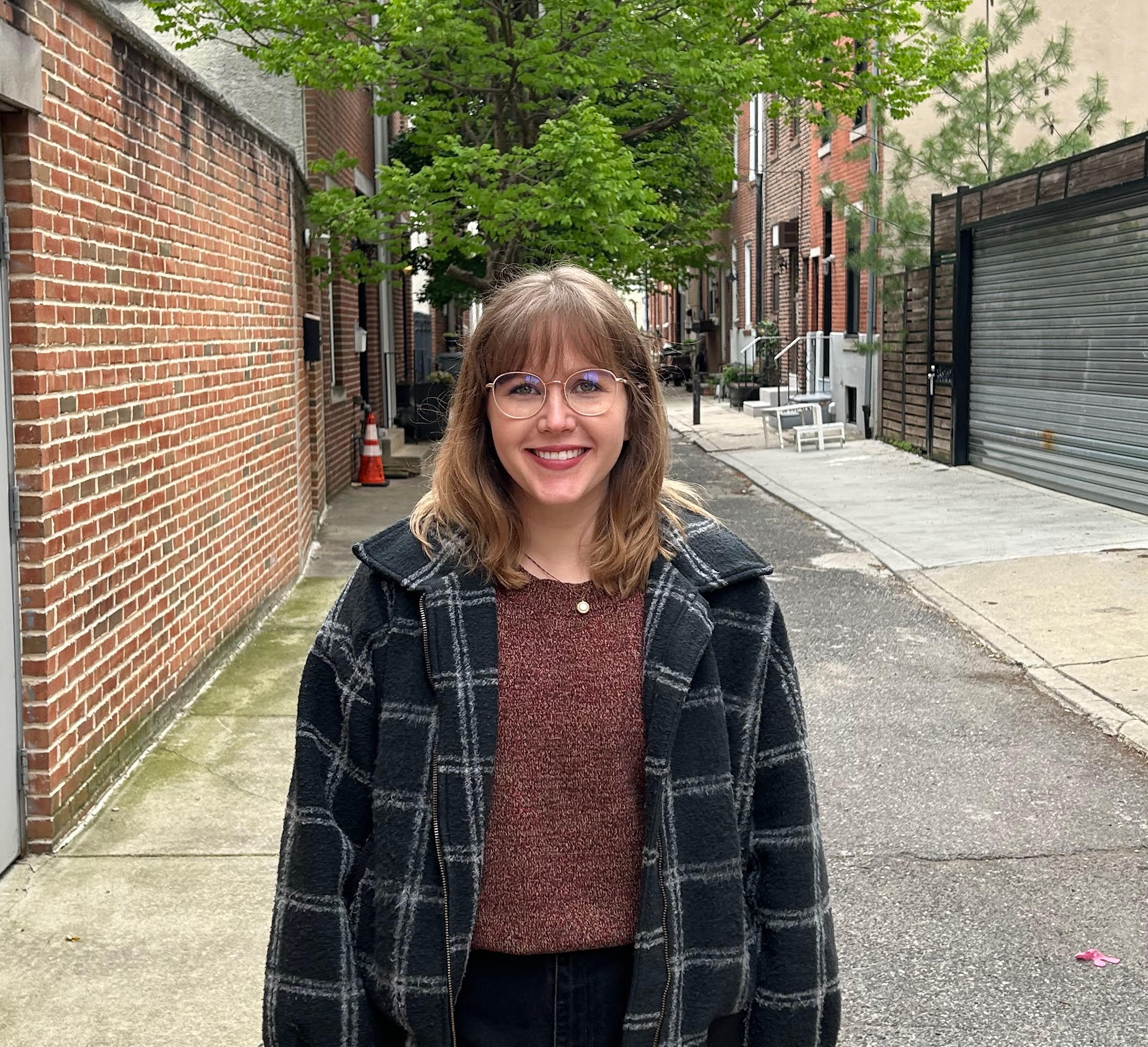
This is How I Got Here, a series where we chart the career journeys of technologists. Want to tell your story? Get in touch.
Hazel Horvath’s startup began as a PDF and a spreadsheet. A few years later, she’s helped 100 companies earn a certification proving social and environmental impact.
Ecolytics, founded in 2022, was born out of Horvath’s observations while she was in undergrad at Duke University and consulting at the Hatcher Group. She saw plenty of companies try for the performance- and transparency-focused B Corp certification, but struggle with paperwork. That’s where her startup comes in, with software that she says helps firms complete assessments in weeks, not years.
“That’s the order of operations: It’s really what problems you want to solve, and who you would be solving them for.”
Hazel Horvath
There’s also a new product this summer. The browser extension Offset AI helps individuals track the environmental effects of using ChatGPT, logging emissions and water use. People can also pay to “offset” impacts through project partners Ecolytics works with.
“We were finding, for companies, that educational piece too — like every time you use ChatGPT, that’s such a bigger environmental impact than a Google search,” Horvath, 26, told Technical.ly. “We’re not necessarily seeing it, since we’re not in front of those data centers.”
Technical.ly caught up with Horvath, a Forbes 30 Under 30 and RealLIST Startups honoree who lives in DC’s Chinatown neighborhood, for the latest installment of How I Got Here. She dove into starting Ecolytics, why she’s stayed in the district and advice for founders wanting to break into the sustainability field.
This conversation has been edited for length and clarity.
What was the beginning of your career?
My whole professional background is within the sustainability field. I got my degree from Duke. Worked abroad in Beijing and Geneva, as well as here in the States, in a variety of different experiences.
But I kept finding myself coming back to this intersection between business and sustainability. I actually spent a summer interning for Greenpeace, which ended up being super informative.

You might not think of Greenpeace as working with businesses as much, but the projects I was tasked on were really at that intersection between businesses coming to Greenpeace and saying, “How can we improve and how can we really meet high standards?”
That’s how I first heard about the B Corp movement, because something that those companies had in common: A lot of them were B Corps.
I graduated from college and was working in sustainability in DC, but always had in the back of my mind this idea, through my experiences of seeing how just difficult it was for companies to start to get to those improvements. Because, in companies working on sustainability, that manual data collection process just took them so long and was so difficult.
Especially for the small, mid-market businesses, there weren’t really great solutions for them to get started and to know what to do, and to get value out of sustainability.
Tell me about your startup, Ecolytics.
I was working the field, saw the problem and then just talked to people about it.
I didn’t really set out to start a company, but realized what could make this process a lot easier for businesses with software.
The first version was a spreadsheet and a PDF, just putting information in front of companies and getting their feedback. From there, I had enough, if you could call it “traction,” of businesses working with me and were interested in what I was building, that I applied to a Techstars program. The one I applied to was in Birmingham, Alabama. I had an awesome experience through it. That’s their sustainability energy tech program.
So that was a subject matter fit, and that program did what they market it to be: taking the company from no paying users to start to bring on our first paying users. And we found this really great fit of something that had really always been in the back of my mind — of working with companies who wanted to become B Corp certified, or were already certified and were maintaining that certification.
What about your new product, Offset AI?
Because of all of our work with B Corps, we recently just kept hearing this question of, “What can we do better about AI?”
So we built out this product called Offset AI. That’s just a browser extension, really simple tool. Anyone can download it, and companies can download it for their teams, so they can start to track and offset their team usage.
You get that visual reminder of that impact. You’re able to see that cumulatively, and then you’re able to offset that impact so you can mitigate those actions.

What does a typical day look like for you?
Every day is very different depending on what initiatives we’re rolling out. This summer has been very focused on rolling out a bunch of new tools for the new B Corp standards.
B Corp has, since its founding, update[d] the standards. Continuous improvement is such a big piece of sustainability; it’s really a requirement for doing sustainability well. As B Corp [oversight] has looked to do that, they have made incremental changes.
But to really meet the moment of sustainability and where the world is at this point, they realized they needed to do a big overhaul of the standards.
There’re a bunch of intricacies that companies need to navigate. We’ve been creating a lot of resources, both updating our platform so companies can easily navigate this transition — that’s been a big focus — as well as the Offset AI piece.
The last quarter has leaned more heavily into me being more involved with our development team and having those workflows, getting those pushes ready, and then doing the marketing around that.
Do you have any advice for aspiring entrepreneurs?
My advice is always: Talk to people and talk to who you would potentially think would be your customer, or who you would want to work with, whose problems you would want to be solving.
That’s the order of operations: It’s really what problems you want to solve, and who you would be solving them for. Talk to those people before you even maybe address them as a customer, because that will lead you in the right direction in terms of entrepreneurship.
I’ve definitely made it in ways of pushing features forward that actually, if we had gotten some customer feedback, would have saved us a lot of time and money.
As cool as your product can be, you really need to talk to people about it before you go down that path.
You grew up in DC. What made you want to stay and build here?
DC is home for me. I think it’s been a great place to build the company, and I’ve gotten really involved in the E local community here. That’s the regional network for B Corps, and so it’s been great to be at this intersection of business and sustainability.