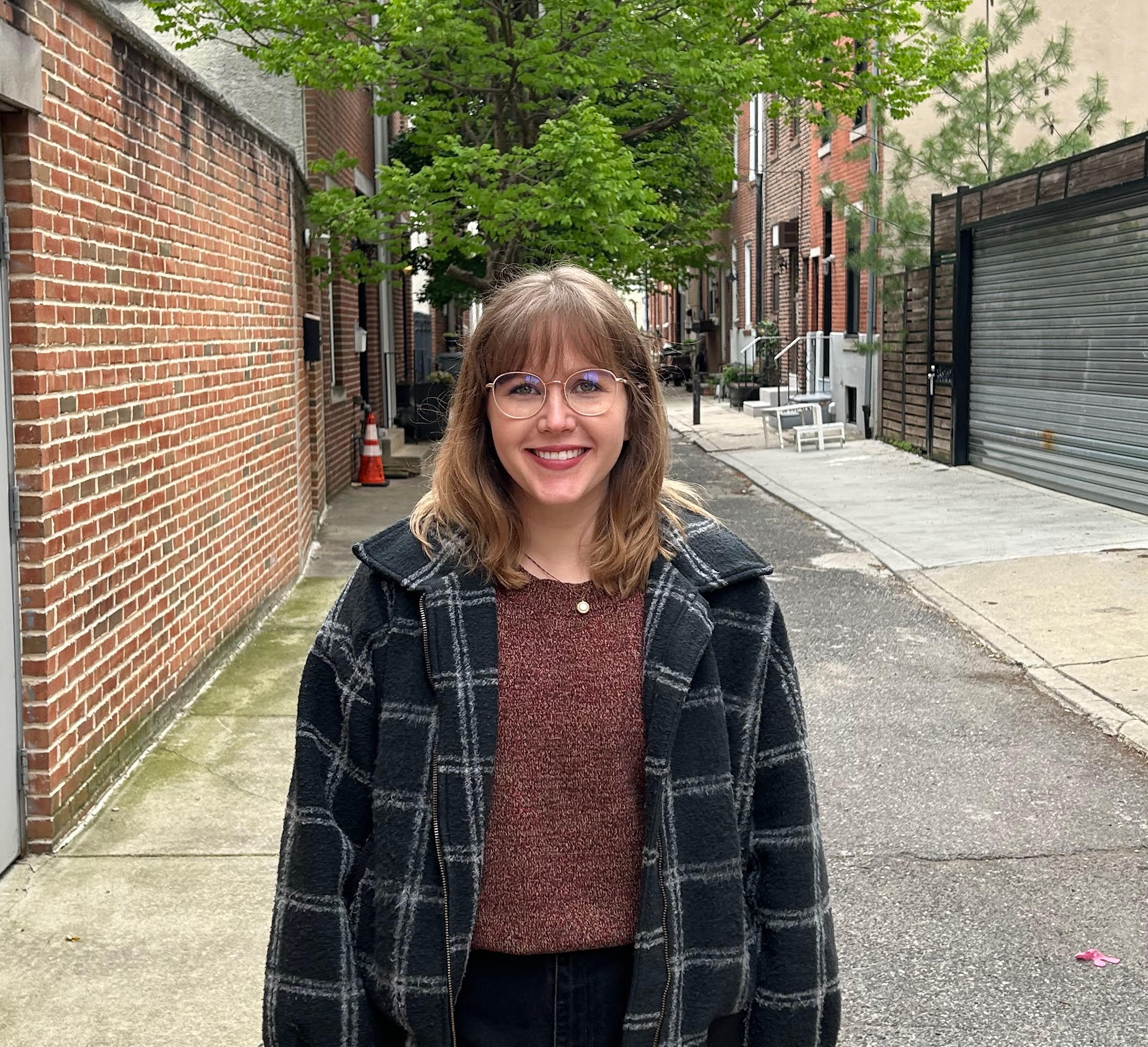
Chelsea Kirkland doesn’t consider herself a tech expert. But that’s what helps her build trust with residents, she says.
Kirkland is digital inclusion coordinator at the DC Public Library, where she focuses on advancing digital equity. She runs AI literacy classes, and last year launched an upskilling program for local laid off federal workers — which she designed with some assistance from ChatGPT. Her role includes coordinating classes around technical skills, like how to upload a PDF in applying for a job. But leading conversations about ethics and feelings around tech, especially AI, are essential, too.
“Even though it’s tech, there’s such a human connection and emotional piece to it.”
Chelsea Kirkland, DC Public Library
“A lot of people just have these existential concerns,” Kirkland told Technical.ly. “Even though it’s tech, there’s such a human connection and emotional piece to it.”
Libraries are the perfect place to have these conversations, because they’re anchor institutions in their communities, she said.
“We’re really the front line,” she said. “Naturally, because people come here when it’s the only place that they can freely and comfortably access computers and WiFi.”
For this installment of our How I Got Here series, Technical.ly caught up with Kirkland about AI programming she’s excited about, gaps in cybersecurity literacy and advice for aspiring digital inclusion workers.
This Q&A has been edited for length and clarity.
What led you to DC’s library system?
I moved up to this region about 10 years ago, and I worked at the main library in Arlington for a while. I did basic technology classes for adults. We were establishing a makerspace, so did some planning for that — basic coding, open source design tools.
I came over here to DCPL, and I’ve worked in a few different random departments. I started in the children’s department at the Petworth library, and then I worked for the outreach and inclusion department. A lot of the requests we would get from community partners would be for tech-related programming. Everybody wanted us to bring digital literacy and computer stuff. This position I’m in now, the digital inclusion coordinator, was established in 2022.
We know we have a digital divide. We know the goal is digital equity, meaning everybody has the same level of access.
We had some digital inclusion big projects. One was device distribution. We had federal funds, and we did 10,000 Chromebooks that went out to DC residents with a bunch of partner agencies. We have a digital navigator program — staff who are specifically dedicated to helping people, working through their tech questions.
I’ve been looking at, what other partnerships can I bring in, and what type of programming. In the past couple years, that’s been a lot of AI literacy stuff, and figuring out what we need to be talking about with residents.

What has your AI literacy work looked like?
We started doing an AI basics class. A lot of people are interacting with it, but they might not even know that they are interacting with AI, in their browsers and all that stuff. We set up some basic curriculum on that.
I was tooling around at home with ChatGPT and stuff, and [asked], “Can you make me a curriculum of how I can learn AI?” It made me a great curriculum. With all of the DOGE and all of the federal employees getting laid off, a lot of us in the library, we’re talking about, “How do we serve them? What might be a useful thing that we can offer them?”
We’re not in the habit of supporting that community with workforce stuff, because they usually are fine. I’d imagine that a lot of feds are in a similar position to the DC government where … it just doesn’t make sense to experiment with a lot of new tools for work.
We got a lot of interest. The folks that participated have gone on to create their own community led initiative that’s called the Upskilling Labs. That’s meeting here in the library on a regular basis.
We also have … this series called Cool/Scary AI. The idea is just to do more discussion — how is it impacting your community, and just sharing your perspective.
Did you always know you wanted to work in digital inclusion?
Community engagement was more of interest to me. I’ve always been very curious about people and bringing people together.
I’ve never been somebody that was super technical or super online, but I feel like in this role, that helps, because I can relate to a lot of the folks that are coming in here looking for help.
Honestly, so many of the interactions that I’ve had, I don’t even really teach people anything. They just come and want to have somebody to sit next to them while they do what they have to do, because they feel overwhelmed by the task at hand and maybe don’t feel confident in their skills.
What gaps are you seeing in digital literacy?
An understanding of online safety and security is something that is constantly a challenge for people.
People might not be coming in saying, “I’m struggling with online safety.” They’ll tell us a story about how they got scammed, or there’s always password issues.


When we offer online safety or cybersecurity classes, it’s less popular. I’m working on figuring out how to market it better. I’ve been thinking I want to do … sessions on alternative platforms that are more privacy-forward, and then get people to get people thinking about their personal stance on online privacy and their data.
Another big thing that we’re seeing is many folks are only doing things on their phone, and that’ll span generations. That creates some issues when you have to do things that are official — apply for a job or apply for housing, or anything related to government benefits.
We get a lot of confusion around things like uploading documents, attaching documents, and navigating PDFs. It’s really surprising, because I think even young people that are tech savvy with the phone, they might not really have been on a desktop very much.
What advice do you have for people who want to go into digital inclusion?
There’s a lot of different ways to approach it. Technical know-how matters. But a lot of the times when I see, especially our digital navigators, interacting with folks, it’s about establishing trust and having an honest connection with someone.
If you don’t know how to do something they need to do, you just say, “I don’t know how to do that. Let’s investigate together.” You show them what you’re doing, and then you can go about it together and build sort of trust and skills together that way.
Right now it seems like there’s been a dip in available funding for these types of efforts. I hope that that won’t be permanent. I hope that’s just right now, but I do think it’s important work and it’s not going away.