It’s no secret that the Massachusetts Institute of Technology is home to plenty of smart people and births plenty of great ideas.
The key, though, is what you do with them.
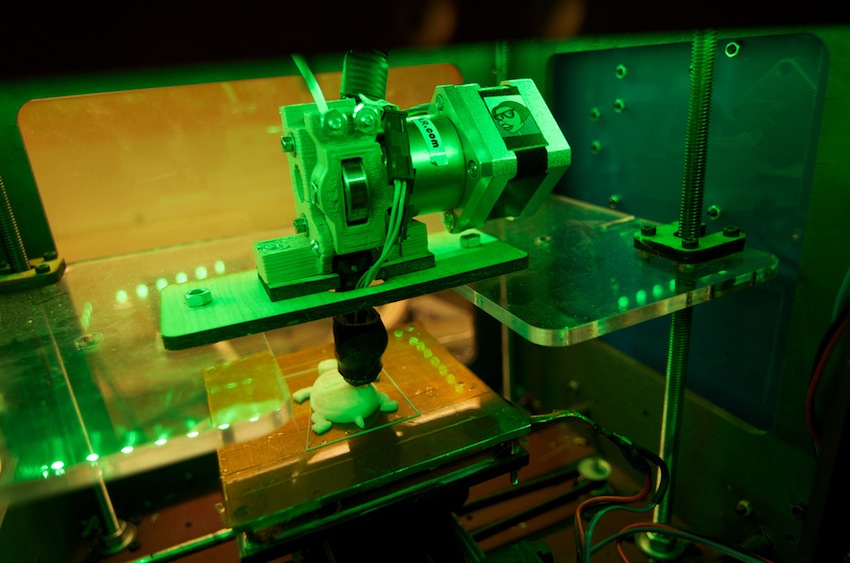
Matter.io — a Brooklyn-based 3D-printing startup — understands that reality better than most. The startup’s founding team first got involved with 3D printing technology at MIT, where the majority of its founders attended school.
The company’s CEO, Dylan Reid, though, attended Cornell, where he studied industrial design. He is described on the company website as a fourth-generation Brooklynite, although he admits he actually grew up in the West Village.

Either way, those roots were likely part of the reason he was able to bridge the gap between the army of Cambridge- and Boston-based “nerds,” as he affectionately called them and … the real world.
“People would talk about all the innovation happening in 3D printing then pull a 3D-printed Yoda head out of their pocket,” Reid said.
(“The future is this,” you can almost hear them saying, Yoda voice and all.)
“But that technology is useless without an application,” he added.
That’s what drove Matter’s focus — and its move back to Brooklyn.
Last September, Matter.io moved to Dumbo, although it’s about to expand to an office in midtown Manhattan.
After dabbling in customized jewelry for a bit, the company honed in on small-scale manufacturing. Its goal is to make manufacturing both accessible (via a web platform) and affordable (via 3D printing technology) for mom-and-pop shows.
As the 3D printing industry continues to struggle at a mass scale — as evidenced by MakerBot’s recent layoffs and ever-shifting leadership — Matter took MIT innovation straight to an actual market. Brooklyn, thanks to its long-standing maker history, strong manufacturing sector and a generally vibrant artisanal scene, had a natural customer base.
Early on, over 60 percent of Matter’s customers, which Reid says are mostly one- and two-person startups, were from Brooklyn, although that percentage has naturally shrunk with growth. Such proximity to manufacturers is far from the norm for small companies that are often forced to offshore due to cost or scale limitations.
“Especially when you are building and offering a web product, you really have to be close to your customers in order to understand and in turn serve them,” Reid added when discussing Matter’s geography.
Add it all up, and the broader 3D printing industry could definitely take some notes. For any new technology, it’s all about the market.
For Matter.io, that market was right here in New York.
Matter.io CEO explains why his 3D-printing startup moved to Brooklyn
The company promises browser-based, “worry-free manufacturing.” Here’s why CEO Dylan Reid is growing Matter in New York and not Boston.