- Those invested in the data center industry’s success see it as a driver of local job creation for the construction industry, with at least one study highlighting its ability to offset recent declines in those roles.
- Construction projects involve a range of specialized workers, including electricians, design engineers and quality assurance technicians, each contributing distinct expertise to ensure facilities meet power, security and reliability needs.
- The work offers higher wages and new career paths for skilled tradespeople, while also underscoring challenges around workforce retention, training gaps and the technical limits of rapidly expanding infrastructure.
Across the country, data center industry leaders and government officials who want their business repeat a familiar refrain: job creation.
A recent Maryland Tech Council report highlighted the data center industry’s economic potential, particularly its ability to boost local construction jobs, which have declined in recent years. The industry booster group’s study found that every 275 square feet of data center development supports one construction job, though it did not specify the types of jobs involved.
“Business wants to obviously build bigger, better, and faster, but you run into those hard technical problems of, ‘we don’t have enough water to cool this.’”
Nicholas Peloso
At the Maryland data center summit last month, Mike McHale, business manager at IBEW Local 24, a labor union representing electrical workers from Frederick to Ocean City, explained how data center projects help grow union membership.
Keep reading for a behind-the-scenes look at the roles behind data center construction, including the electrical workers hired through Local 24 and the engineers who plan the projects.
Journeyman electrician
Peter Turley works as a journeyman electrician on a Rowan Digital Infrastructure data center project in Frederick County.
He spent the last decade working as an independent electrician on residential and commercial projects. While searching for new opportunities, he came across a job posting from Local 24, which led to both his union membership and his current role on the site.
“They’re doing a good amount of recruiting for the union based on these jobs, which are union jobs or scale jobs, if you will, so they need heavy manpower,” Turley said.
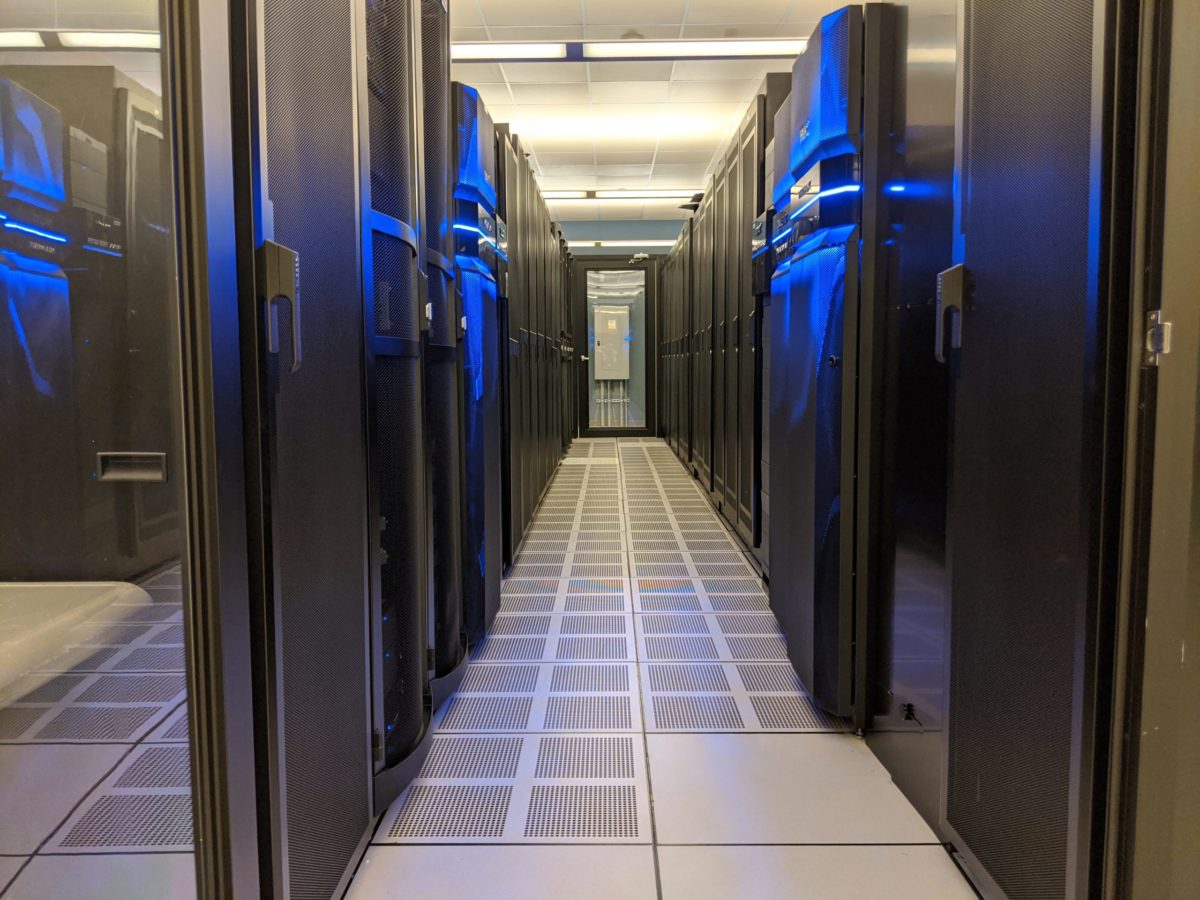
Although this is Turley’s first data center project, his previous experience easily translates to the new work. For the past month, he’s worked on installing cable trays that will eventually hold the power lines to data racks and other electrical wiring. He also helps with the lighting for the “data hall,” the section of the building where the servers are located.

Before joining the union, Turley earned $35 an hour as an electrician. His pay rose after he signed on with Local 24, where the standard rate is $49.50 an hour, per the group’s website. Because the project also includes members of IBEW Local 26, which covers the DC metro area, wages were adjusted to match that union’s higher rate. He’s currently making $59.50 an hour working full-time on-site.
Turley, who lives in Frederick, said the higher pay has drawn union members who usually only work closer to Baltimore. For now, he plans to stay in data center construction, since maintenance roles are limited once a site is up and running.
“I would like to do that at some point, but at the moment, I’ll probably just stay on the construction side since there is so much work,” Turley said.
Design engineer
Nicholas Peloso spent nearly two years at Amazon as a physical security engineer, designing security systems for data centers under construction. He worked on sites across the DC metro area, but primarily within Northern Virginia’s data center cluster.
Design engineers cover various disciplines during the construction process, including electrical, mechanical, plumbing, security — like Peloso’s role — and more. Working under a manager, they collaborate to plan the campus layout and determine the required power capacity. They also conduct site visits during construction to ensure everything is proceeding as planned. Once a data center goes live, field engineers and data center technicians take over the running of the site.

Large companies often run data center construction more like a tech company than an infrastructure project, Peloso said.
“In tech, turnover can be a good thing because it’s an influx of new blood, new ideas, and it keeps people on their toes,” Peloso told Technical.ly. “In engineering, especially as it relates to infrastructure, you don’t necessarily want to turn people over too quickly when it takes a year to a year and a half for a project.”
Peloso emphasized the importance of retaining engineers for their institutional knowledge of local county regulations and common construction challenges. He said it’s not uncommon in the industry to see a “churn-and-burn” approach with engineers.

He also noted the challenge of keeping up with new technologies that company leaders are eager to introduce into data centers, such as updated server racks or equipment with higher power demands.
“Business wants to obviously build bigger, better, and faster, but you run into those hard technical problems of, ‘we don’t have enough water to cool this,’” Peloso said, “‘We don’t have enough power to run this,’ but the business will tend to kind of hand down a rule by edict.”
Peloso plans to continue working as a physical security design engineer for data center companies on a consulting basis.
Quality assurance/Quality control technician
Blaine Boone started working on data centers more than two years ago and now focuses exclusively on those projects. A member of Local 24, he was recruited by the DC Metro union in Northern Virginia to train in Quality assurance/Quality control (QA/QC) technician work, a role in short supply in Maryland.
“There are people from all over the country that go down there, because there’s so much work,” Boone said. “There’s not enough people to do those jobs.”
Now, Boone no longer commutes two hours from Baltimore; instead, he works on a data center project in Frederick County. As a QA/QC technician, he ensures the power serving data racks meets code and verifies that backup systems will transfer power if the utility fails, keeping the data center running.
QA/QC work isn’t taught in a traditional electrician apprenticeship and is something Boone has learned on the job over the years. He added that it could eventually become part of apprenticeships as data center work grows increasingly important.
“It might be at some point in time, with how crucial it has become to data center work,” Boone said. “But right now, it’s something that you get from a little bit of experience and skill in the field doing electrical already.”