



Residents spotted a new AI robot braving Pittsburgh’s streets earlier this month.
The RIVR ONE, designed by a Switzerland-based company to navigate last-mile delivery, is testing its ability to traverse tricky terrain throughout the city – with possible plans to expand next year. The autonomous robot, backed by the biggest delivery company in the US, may be taking advantage of Pennsylvania’s favorable regulatory environment, like other robotics startups in the region, but local residents increasingly find the tech unsettling.
“Pittsburgh [is] offering the perfect playground for our physical AI,” the company wrote in an Instagram post, showing off the delivery robot’s ability to navigate the city’s iconic public stairways.
Autonomous delivery robots aren’t new to Pittsburgh. In the past, delivery robots could be found at the airport or roaming the streets of the city’s East End, but their public presence has waned somewhat over the years.
The recent RIVR buzz, however, contributes to the trend that Pittsburgh has become a testing ground specifically for physical AI.
It’s a familiar argument from organizations like the AI Strike Team and the Pittsburgh Robotics Network: The city has become a real-world testing ground for emerging AI and robotics technologies, attracting companies from around the globe.
Pittsburgh-based unicorn Skild AI has been courting multibillion-dollar investments for its “AI brain,” designed to power robots that can understand and operate in the physical world, from warehouses to homes. Plus, autonomous vehicle company Waymo launched testing in Pittsburgh earlier this month.
However, the public’s response has been less glowing. A post of the RIVR robot posted on Instagram by humor account the Pitts Company had more than 450 comments, with many having a negative or wary reaction to the tech.
“I assure you if I see this on the street, I will beat it with a hammer until it dies,” one commenter wrote.
Other comments, though, said that if the robot can navigate Pittsburgh streets and sidewalks, it can navigate anything.
RIVR did not respond to Technical.ly’s request to comment on why the company chose Pittsburgh for testing, how long it plans to test here and whether it will expand operations in the city next year.
RIVR partners for Pittsburgh connections
RIVR is working on a robot that can tackle the final step in delivering goods to a customer’s door, which can be the most costly and complex part of the shipping process.
In May, the company announced a partnership with delivery platform Veho, which has a Pittsburgh presence, to start testing its robots in Austin, Texas.

“We will be working with RIVR in Pittsburgh beginning in the new year,” Evan Wagner, Veho’s communications director, told Technical.ly. “They currently have five robots deployed in Austin, so I believe Pittsburgh will be their second market.”
Beyond that specific deal, though, RIVR may be taking advantage of Pittsburgh’s prominence in this space with its latest tests.
In 2020, Pennsylvania legalized autonomous delivery robots, classifying them as pedestrians and making Pennsylvania arguably one of the least restrictive states in the nation for this tech.
Pittsburgh’s an even better spot now for physical AI, local advocates say, because of the city’s proximity to top research institutions, natural gas reserves and vacant industrial sites ready to be transformed into data centers or AI hubs.
RIVR has another key advantage, too, with significant financial backing from Amazon founder Jeff Bezos.
The company raised $22 million in 2024 for its wheeled quadruped robot. The round was co-led by Bezos through Bezos Expeditions. The Amazon Industrial Innovation Fund, a $1 billion corporate venture capital fund that has invested in Pittsburgh companies like Agility Robotics, also contributed to the raise.
A rocky history of pilot testing
Multiple outside tech companies have tried to test their autonomous delivery robots in Pittsburgh, but ultimately, they’ve failed to set up shop here.
In late 2019, California-based company Starship Technologies started testing its food delivery robots on the University of Pittsburgh’s campus. Soon after, the company temporarily paused testing because a student who used a wheelchair said the robot impeded her ability to access the sidewalk, posing a safety risk.
Even as the robots returned in 2020 for some additional testing, they continued to struggle to navigate Pittsburgh’s hills, according to Pitt students.
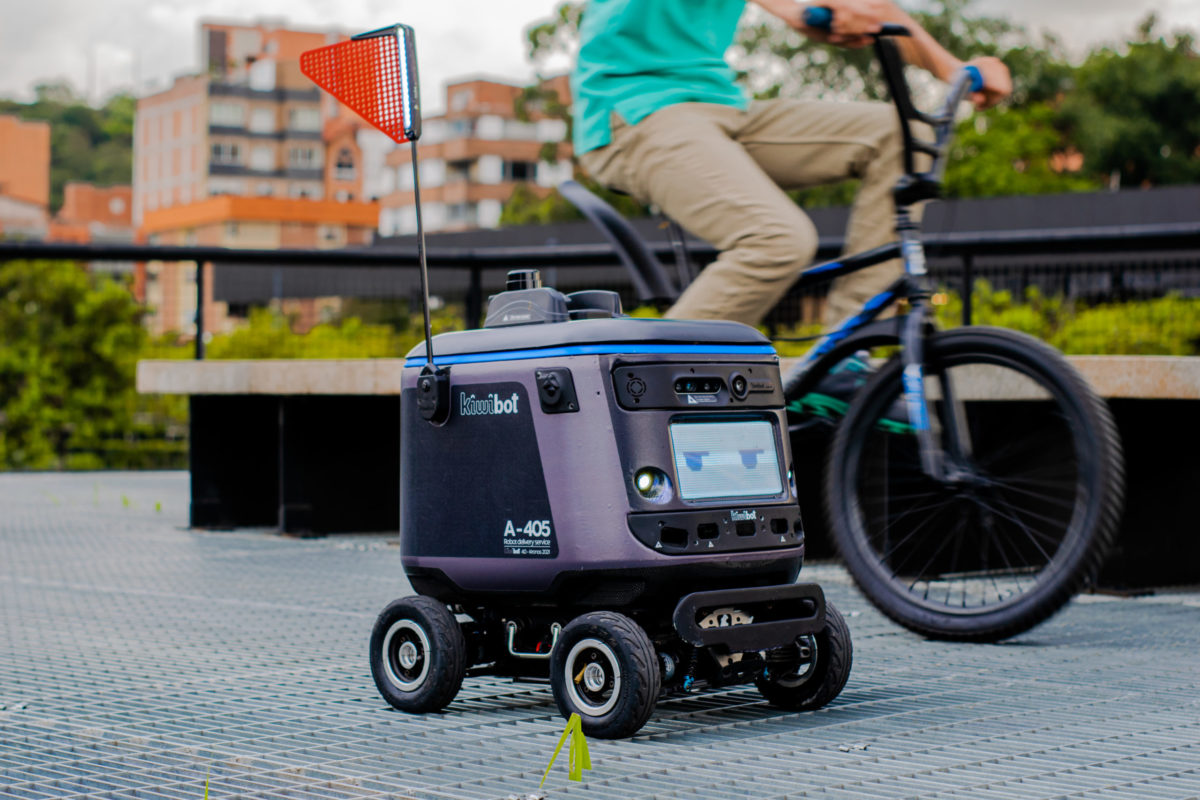
California-based Kiwibot later tested in Pittsburgh in 2021 and 2022, also finding the terrain and public response difficult to navigate.
While Kiwibot mapped neighborhoods like Bloomfield and Lawrenceville to implement its delivery tech, the results were a mixed bag of helpful and hesitant neighbors. And in Garfield, Kiwibot ultimately decided it could not offer delivery services because the robot could not navigate cracked sidewalks, overgrown bushes and cars parked on walkways.
Some commenters are hopeful, though, that RIVR could overcome this and bring some good to the city.
“It’s so weird to me how everybody always sees the bad possibilities of stuff like this and not the good ones,” a commenter on the Pitts Company’s post wrote. “I think most of you probably aren’t going to be saying the same thing when this is delivering groceries to your grandmother who can’t get out of her house in a snowstorm.”
While its product looks similar to the robot dogs that have garnered a reputation in defensetech, RIVR is mainly focused on doorstep delivery, according to its website. That was a concern among some commenters, while others were worried this tech could take away jobs from humans.
“This sucks,” one commenter wrote. “Taking jobs from people and making rich people richer.”
But, humans remain an important part of the delivery process, according to Wagner at Veho. Humans still travel with the robots to delivery areas and provide safety monitoring.
“We don’t see robots replacing humans in delivery any time soon,” Wagner said. “We see this more about expanding capacity, improving delivery in dense areas with limited parking and unlocking new ways of delivery such as late [at] night.”


