


A local coach for startup founders is phasing out his involvement with Pittsburgh’s startup ecosystem, but not before making sure the programs he started have a life after him.
Max Polec, one of the leaders behind the popular pitching series What’s Your Business Idea? (WYBI) and the free Anvil Founder Coaching program, plans to say goodbye to the Steel City later this year.
“I don’t want it to be a competition. I want it to be collaborative.”
Max Polec, Anvil Founder Coaching
He recently released an open-source guide to running WYBI and has already secured some volunteers to run the event series in his absence. As for the Anvil program, he’ll continue to run it through 2026, traveling back and forth from his new home in Delaware to Pittsburgh.
After that, it’s uncertain.
“[At WYBI], we’ve served 88 founders,” Polec told Technical.ly. “That number is going to hit 100 without me, but I think there’s honestly something beautiful about that because I’m giving it away to the community and the community is running it themselves.”
Polec is the founder and executive coach at The CEO Strategy. His interest in entrepreneurship started young, for a somewhat common reason — he was broke.
“Neither my parents had gone to university,” Polec said. “Both of them said, ‘We want you to have that opportunity, but we can’t afford to pay for it.’ That led to my first entrepreneurial experience, running my own landscaping business at 15 years old.”
With the profits, Polec could afford to study at the University of Pittsburgh, where he participated in Pitt’s startup competitions and Blast Furnace program.
At 22, while working for Venture for America, Polec launched a startup accelerator program at the University of Alabama at Birmingham. Then, about two and a half years ago, after spending time in several states, Polec returned to Pittsburgh.

Since then, he’s become a staple in the city’s startup scene, often collaborating with the ecosystem development organization InnovatePGH — though not every local stakeholder believes in his approach.
“People disagree, and the most important thing is finding a way to move forward and have that impact,” Polec said. “I’m not out to compete with others. I’m just here to collaborate, and do so on behalf of the awesome and incredible founders in Pittsburgh.”
Technical.ly interviewed Polec about the impact of his programs, his response to skeptics and what’s next for him in Delaware.
This Q&A has been edited for length and clarity.
What impact have you seen from the two programs you co-lead?
I ran WYBI in Birmingham, Alabama, to see if we could help founders in that ecosystem, and it worked well.
I had a coffee chat with InnovatePGH’s Charles Mansfield during the fall of 2023 and he said I should run it here. We decided to run a pilot — three events — to see what would happen. When we ran the third one everyone was asking, “When’s the next?” To date, we’ve run the event 18 times.
WYBI is open to all founders to share what they’re working on, make connections, ask questions, get feedback and then connect them to relevant resources. We’ve had people find access to coworking spaces and great programming, like Ascender, the Pathways Fellowship and PGHLab.
Building as a founder can be very lonesome, and after many of these events, we have impromptu dinners. It’s a place for people to shoot the shit or talk about business.
As for Anvil, I released a startup book in 2024, which coincided with me getting my coaching credential through the International Coaching Federation. When I did a fireside chat about the book at Avenu Meyran’s coworking space, I mentioned I was going to do a one-off, six-month founder coaching program for free. The folks over at InnovatePGH said, “What if we gave you a space and a little bit of a budget?”
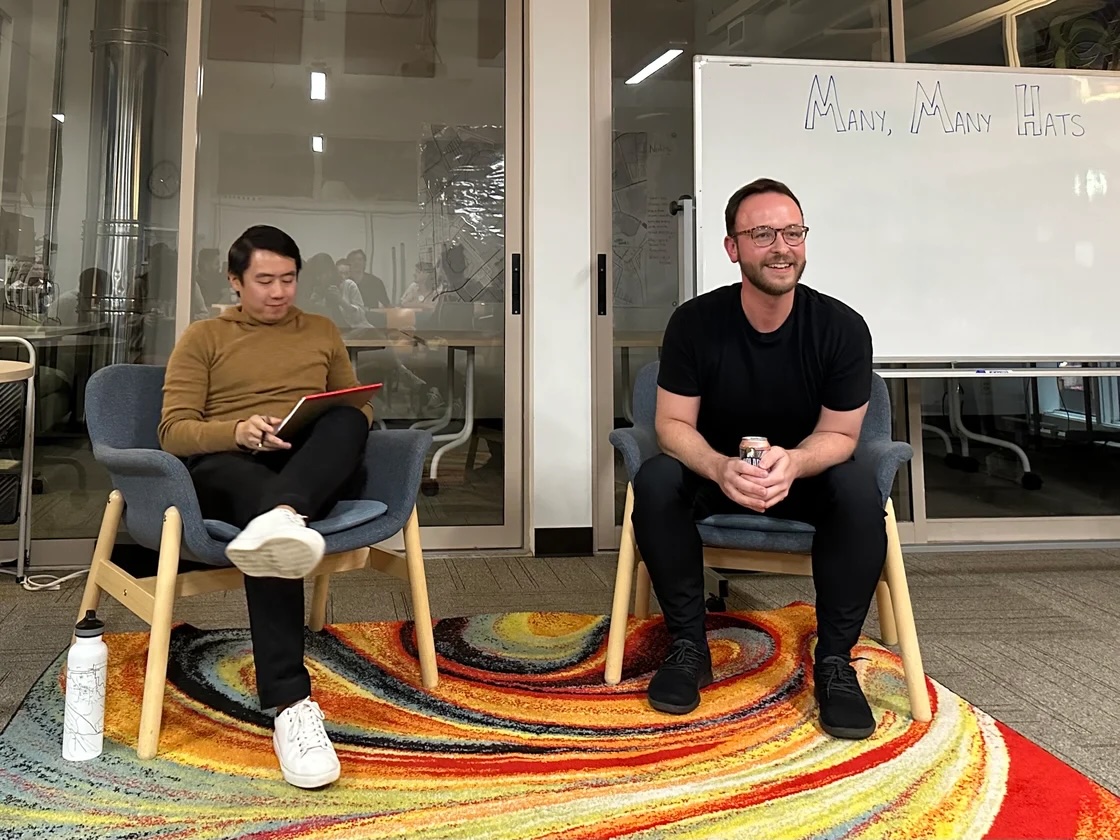

We designed the program to ask founders, “What do you specifically need to drive you forward, and how can we help make that happen?” That can be strategic coaching, intros to customers or preparing to pitch investors.
We ran the first Anvil cohort during 2025 with about a dozen founders, and the results — what the founders have to say — speak for themselves.
An opinion piece by Pittsburgh Startup News in 2024 questioned your work experience and criticized the productivity of a program like Anvil. What was your reaction?
I said a word that rhymes with truck and starts with ‘F.’ I didn’t see it coming. I was shocked. I was stressed.
I had to take time to feel my feelings and work through that, but I had a ton of people reach out to me and show their support. I was already planning to do the best damn job possible because I care about the founders and I care about Pittsburgh, but I said, “I’m going to make sure that I dial it up even more.”
As for the critiques in the piece, I started my first business at 15. I’m 30 now. Do the math.
When it comes to the $26 million I’ve helped raise, I have non-disclosure agreements for all of my clients. When Pittsburgh Startup News asked about that, I said, “Listen, I can give you anonymized company information, but I can’t give you company names, because I want to honor those NDAs and confidentiality.”

Through WYBI, we found there was an appetite for more programming and resources. I don’t want it to be a competition. I want it to be collaborative.
I was in conversations with a lot of folks — Ascender, PGHLab — to say our goal is to get startups to the point where they can apply for your programs and vice versa. Will there be a little bit of duplicative efforts? Of course. Is that a bad thing? I don’t think so, as long as we have the programs hit a certain quality threshold for the founders that they’re supporting.
The critique that the Anvil program is vague went out as we were finalizing some details — the exact trainings we were going to cover, the speakers we were bringing in. So, I framed it as, this is what I have, this is what I’m figuring out, and I’ll have an answer in January 2025.
Ego aside, my goal was to build a program, support founders and put my all into that. Whether it’s the impact metrics we collect, the support requests we’ve done for the founders or the testimonials that they put together about their experience, doors were opened.
What do you see as the biggest challenges currently facing the startup ecosystem?
I’m going to reframe it, because I’m a coach, and that’s part of what we do.
The biggest opportunity I see in Pittsburgh is collaboration — more folks inviting more people inclusively to collaborate, and understanding that we might try things, they might work, and then we operationalize it, we scale it. We might try things and they don’t, but then we capture those lessons learned. It’s not a mistake, it’s a lesson.
It’s also something I’ve been thinking a lot about myself with regard to the move. For example, with WYBI, I don’t want this to be a house of cards that relies solely on me — nor does it have to be.

What’s next?
My partner is based in Wilmington, Delaware. She has to live within 25 miles of the hospital where she works. I’m an executive coach who can do basically all my work within reason on Zoom, so I’m moving for love.
I am so excited, ecstatic, happy, but it’s also bittersweet, because I’ve met some incredible people in Pittsburgh. I will miss everybody, but I’m not dying either. I’m five hours down the road. I’ll be coming back to Pittsburgh often, because there are people I love here.


