



This story was reported with support from the Delaware Division of Small Business. DSB assists small businesses by providing guidance and advice, helping navigate state permitting processes, increasing access to funding opportunities and connecting owners with strategic partners. Its mission is to help small businesses start, grow and scale in Delaware.
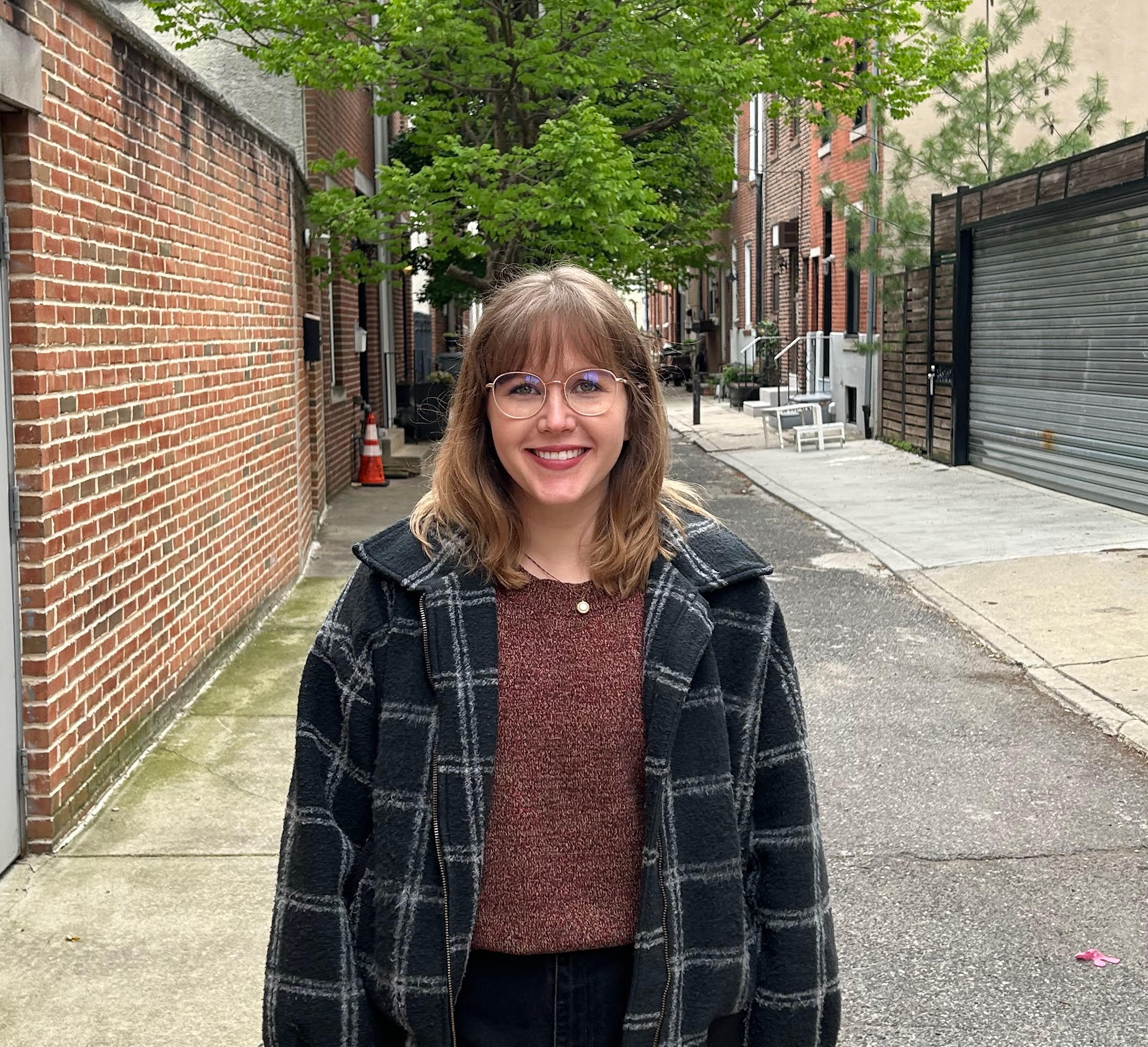
Aternium founder and CEO Andrew Cottone resisted the idea more than once, but hydrogen kept proving itself too powerful, practical and well-suited for Delaware to ignore. This was underscored with a new $1 million investment from the state.
Founded in 2023, Wilmington-based clean hydrogen company Aternium aims to produce and supply energy needs across the mid-Atlantic. Its vision is ambitious, including building compact plants with essentially no direct emissions and minimal waste streams, supplying existing industries already using hydrogen and, ultimately, shifting Delaware from a state that imports virtually all of its energy into a regional exporter.
“Our focus here is to produce profitable and responsible clean hydrogen for the mid-Atlantic future,” Cottone told Technical.ly, a goal that would potentially bring lower energy costs and new jobs, while leaning into Delaware’s long legacy in chemical manufacturing and engineering.
Delaware’s $1 million investment in Aternium, granted on Sept. 25, comes from the Delaware Accelerator & Seed Capital Program (DASCP), one of four programs awarded under the State Small Business Credit Initiative (SSBCI) from the US Treasury Department.
It’s part of a $60.9 million SSBCI award aimed at providing access to capital for startup and early-stage businesses, administered by the Delaware Division of Small Business.
Delaware as a hydrogen hotbed
Nearly 97 million metric tons of hydrogen are used worldwide each year in industries like steelmaking, pharmaceuticals and refining. For Aternium, that means it doesn’t have to invent new markets; it can supply existing demand while preparing for hydrogen’s next chapter as a cleaner, more flexible power source for things like vehicles.
According to the US Energy Information Administration, Delaware currently consumes about 100 times more energy than it produces, importing nearly all of its energy.
“If we’re able to build the plants we want, we can convert Delaware into the hydrogen capital of the East Coast,” Cottone said.
Delaware may be small, but with its location at the heart of the mid-Atlantic corridor, it’s close enough to New York and Washington to access massive markets. Just as importantly, Delaware has a healthy pipeline of engineering and chemical manufacturing talent.
“Our workforce is strong. Chemistry, manufacturing and clean is in our DNA in this region,” Cottone said. “We have some of the highest levels of PhDs and engineers here,” as well as partnerships with Del Tech, Delaware State and Wilmington University to train new talent through certification programs.
A personal streak runs through it
Cottone founded Aternium after nearly two decades leading manufacturing as the founder, president and CEO of Adesis.
At first, he called the company First State Hydrogen. In early 2024, Cottone brought on Dora Cheatham, former executive director of the Delaware Sustainable Chemistry Alliance, as vice president of sales and commercialization.
They decided that the company needed a name that reflected both science and its regional goal beyond Delaware. Having shared a love of Roman history and Latin with his late father, Cottone combined “eternal” with the suffix “-ium” (from deuterium) to form Aternium.
That personal streak runs through the way he talks about the company today. Cottone insists on showing up in communities directly, introducing himself and asking for support.
“I’ll take any speaking engagement because I want to build in your community,” he said. “If you don’t like my idea, that’s okay. We can still go have a whiskey or a coffee together. We’ll be friends, and I’ll move on to the next community.”
Building trust in safety
With proposals like a 6-million-square-foot data center in Delaware City, residents are paying closer attention to potential safety and health risks when it comes to new energy facilities.
Unlike fossil fuel refineries, Aternium’s planned hydrogen plants are designed to be compact, low-impact facilities that blend into the landscape. Cottone said a single site would cover just four to five acres, with no stacks, no gas flares and nothing rising above the tree line.
“It’s essentially no waste,” he said. The process produces only hydrogen and oxygen, without direct emissions.
The company plans to partner with industrial technology firm Honeywell to wrap facilities in AI-driven predictive maintenance software, using ultrasonic sensors to detect microscopic leaks before they happen.
“We’re not going to store the hydrogen,” Cottone explained. “We make the hydrogen, we put it in the trucks, and we move it out. That’s a responsible way to do this.”
Aternium is also an anchor partner in Mach2, the mid-Atlantic Clean Hydrogen Hub, a network of producers, users, distributors and stakeholders within the hydrogen ecosystem that was designated a Clean Energy Hub by the US Department of Energy in 2023.
A clean energy option for the future
Looking ahead, hydrogen could support the mid-Atlantic’s biggest infrastructure needs, including those data centers requiring round-the-clock energy. By using surplus solar or wind power to create hydrogen, Cottone said, that energy could be stored and later used to “firm” the grid during peak demand.
“There’s no such thing as energy transition. There’s only energy addition,” Cottone said. “This is about adding a reliable, clean source that can make Delaware stronger.”


