How can the United States ensure an inclusive workforce when automation threatens to impact economic inclusion?
Ashley Putnam, director of the Economic Growth & Mobility Project at the Federal Reserve Bank of Philadelphia, said on Thursday that the policy institution’s research has found that automation will disproportionately impact women, minorities, younger and older workers.
“Even though new jobs are being created, those are often jobs that require a different skill level or different education level,” Putnam added. “And so we really have a case for an economic imperative to be investing in workers now to be prepared for that future.”
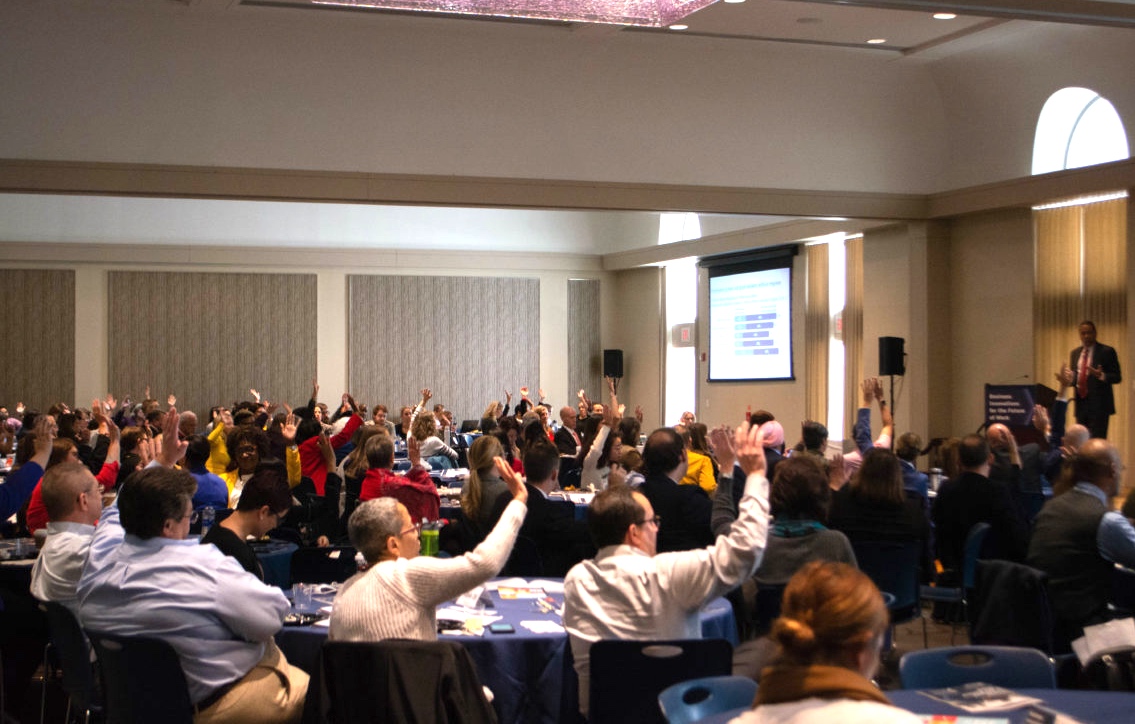
To facilitate conversations on workforce solutions, the Federal Reserve Bank, Chamber of Commerce for Greater Philadelphia, Drexel University and City of Philadelphia organized the Business Innovations for the Future of Work summit.
The first day of the summit, which was held in Drexel’s Bossone Research Enterprise Center on Nov. 6, made a case for workforce investments and highlighted the new public-private partnership between Philadelphia Works and Comcast. The summit moved to the Behrakis Grand Hall inside Drexel’s Creese Student Center on Nov. 7.
The second day focused on business innovations with panel discussions on hiring, upskilling and retaining talent, with a majority of the attendees working in the public, private or nonprofit sectors. Toward the end of the day, those attendees got into groups to discuss workforce solutions.
“Our hope is to really catalyze people in the audience around taking those lessons learned into practice,” Putnam said.
To help sort out all those lessons, attendees, panelists and a moderator shared their takeaways from Day 2 of the summit.
1. There’s an opportunity gap — not a skills gap.
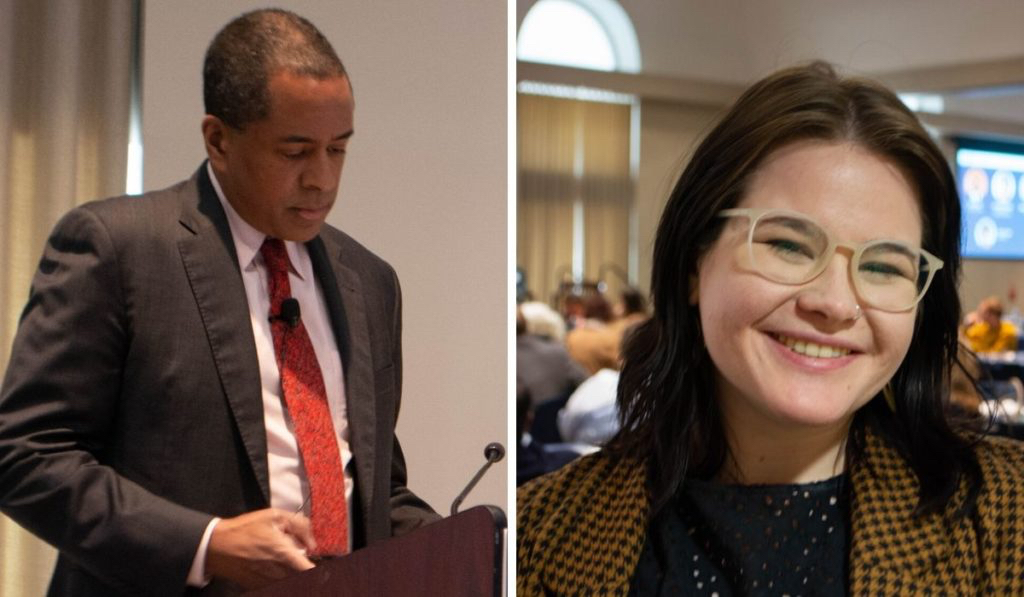
Byron Auguste, CEO and cofounder of Opportunity@Work, a nonprofit social enterprise expanding access to career opportunities, was the keynote speaker. Auguste said the disconnect in the workforce is an opportunity gap — not a skills gap.
Claire Pope, program manager at Temple University’s Lenfest North Philadelphia Workforce Initiative, said hearing about the opportunity gap resonated with her. In her role at Temple, she sees a lot of talented people who can’t get their foot in the door.
“Part of this work is not only getting people connected to jobs, it’s changing the environment that they’re searching for jobs in,” Pope said.
Auguste offered suggestions on how to build an inclusive workforce: investment over selection, performance over pedigree and human capital over “invested” capital.
2. Modify hiring practices to find more talent.
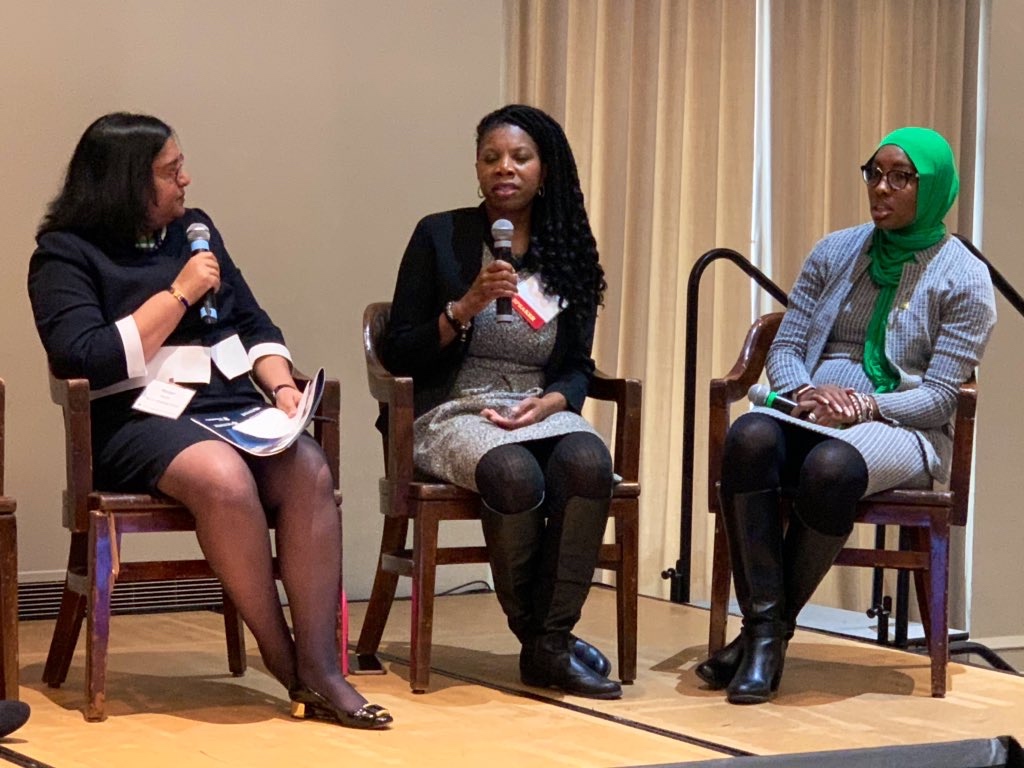
Shenae Simmons, a full-stack engineer and job seeker, was a panelist on the upskilling discussion. She graduated in June from coding bootcamp General Assembly.
While applying for jobs, Simmons has noticed coding challenges with unrealistic time frames and job postings that list more required skills than necessary. Employers need to change how they advertise for jobs, including telling applicants to apply even if they don’t have all the skills, Simmons said.
“Women think that if they don’t have 95% of the skills that are listed in the job, they won’t apply for it,” she added. “So it’s basically just reconfirming the process of [more] men applying.”
Manjari Raman, program director for Harvard Business School’s project on Managing the Future of Work, said traditional hiring practices filter out many trained people like Simmons.
“The rest of us are talking about it from an ivory tower,” said Raman, who moderated and noted that everyone else on the panel was an employer. Simmons is “the only person who’s actually walking this walk and suffering some of the practices.”
For companies, the real question is how to look internally and understand which practices are preventing them from finding talent, she added.
3. Reconsider the importance of a college degree.

“One of the most impressive presentations was the one that pointed out how much our employers in this country exaggerate the value of a four-year college degree,” said James Corrodi, a volunteer for The Center for Returning Citizens, about Auguste’s keynote presentation.
Auguste suggested that employers remove the college degree requirement for people “skilled through alternative routes.”
During the hiring and onboarding discussion, Elyse Rosenblum, principal at Grads of Life, mentioned a 2017 report from Harvard’s Managing the Future of Work. The report, “Dismissed by Degrees,” highlights how employers can prevent degree inflation, which is the rising demand for a four-year college degree for jobs that didn’t require one before.
“Just revisiting how you look at the job posting side of things can open up the funnel to gain access to a deeper pool of talent,” Raman said. “People who might not have the four-year college degree but have maybe exactly the right experience.”
4. Resumes may be a “reflection of our privilege,” not our capabilities.
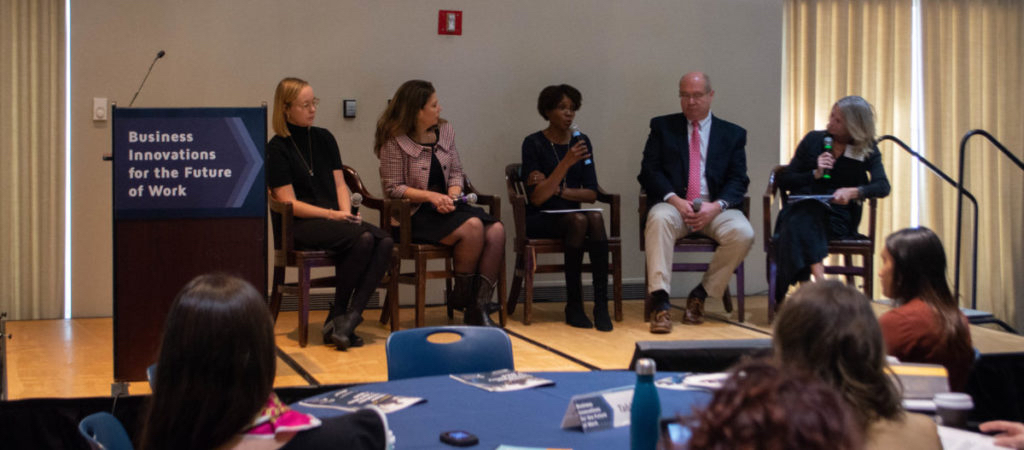
Jessica Collazo, assistant program officer at LISC Philadelphia, a nonprofit community development organization, took extensive notes during the summit. A comment from Charlotte Lysohir, a panelist and senior program manager at IBM, caught Collazo’s attention during the hiring and onboarding discussion.
“One of my favorite quotes from today is that employers need to take huge [workforce investment] risks almost to the point of fear, because the employee and talent landscape is pretty chaotic,” Collazo said.
But Collazo wasn’t the only one with a takeaway from Lysohir.
“I cannot forget what [Lysohir] said that resumes are a reflection of our privilege rather than anything else,” Raman said. “And we need to find a new system and a new way of thinking about it.”
5. Inclusive hiring is an institutional responsibility.
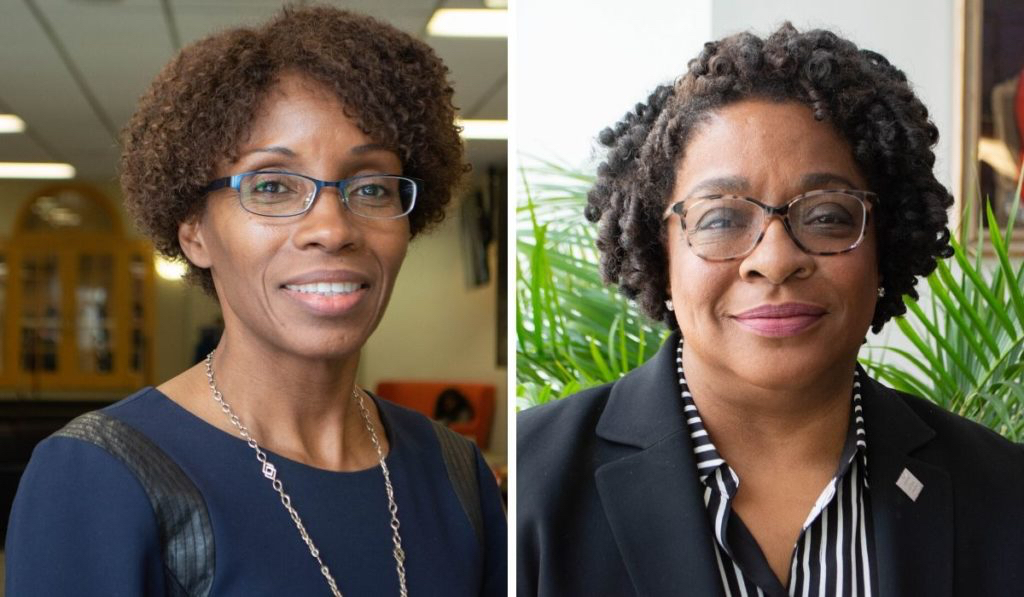
Audrey Williams-Lee, senior VP of human resources, talent acquisition and philanthropy/CSR for Hyatt Hotels Corporation, said she’s aligned with the focus on getting people into jobs, like Goodwill’s Ex-Offender Program. The program employs returning citizens at Goodwill’s Contract Services Center in Philadelphia.
“We can do lots of training, and we can do lots of other kinds of development, but the bottom line is that people really need jobs,” Williams-Lee said.
Williams-Lee and Mark Boyd, president and CEO of Goodwill Industries of Southern New Jersey and Philadelphia, were both on the hiring and onboarding panel.
For Sheila Ireland, executive director of the city’s Office of Workforce Development, it was heartening to see Boyd talking about the return on investment from giving people an opportunity, she said.
The Office of Workforce Development creates systems with partners in the city to accomplish goals in the citywide workforce development strategy, Fueling Philadelphia’s Talent Engine.
“As a society, and the city of Philadelphia is a civic agent, at the end of the day, it is our responsibility to create opportunity,” Ireland said. “And to make sure that the opportunities that are created are inclusive and diverse.”