

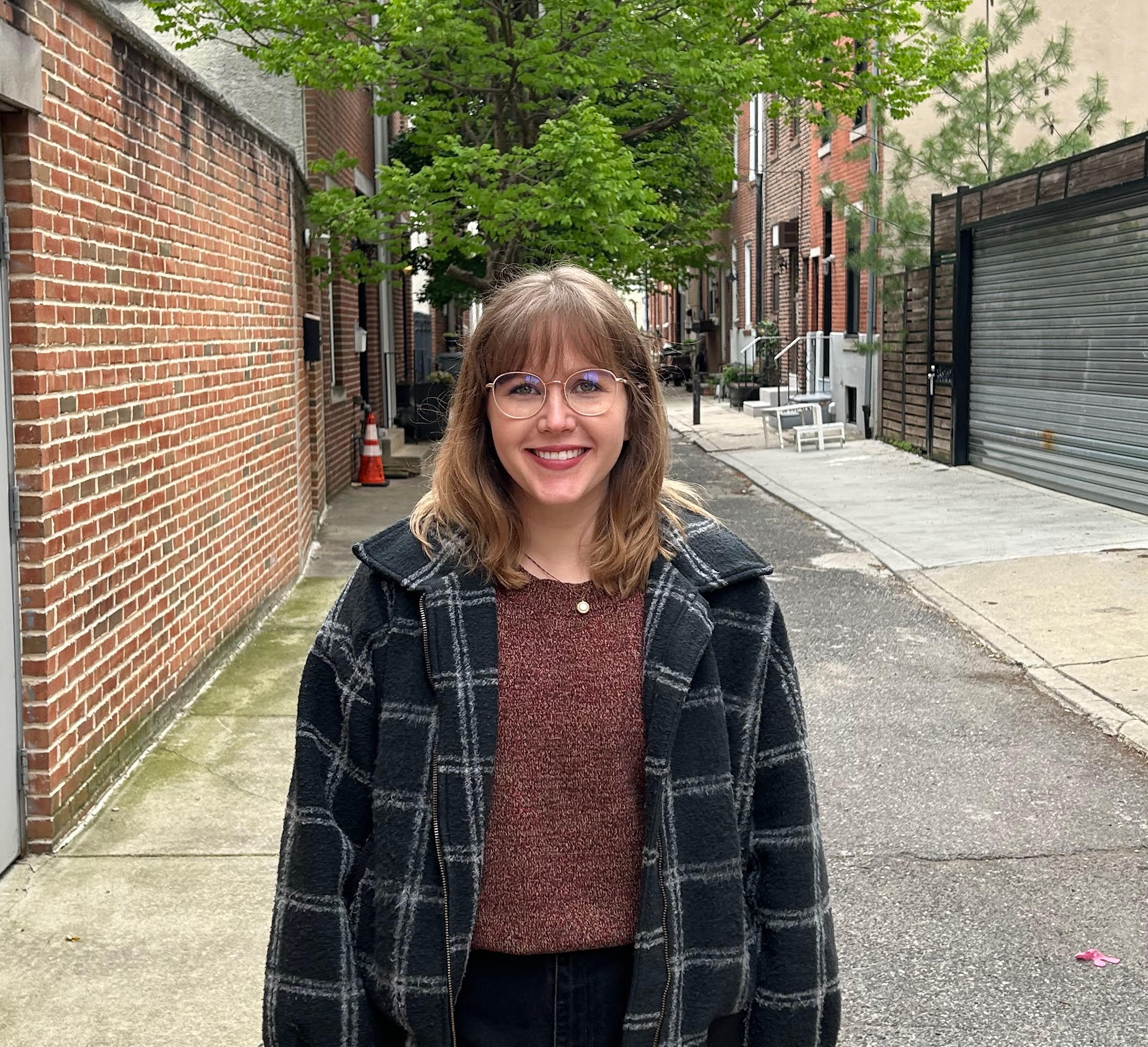

After more than eight years working inside Pittsburgh city government, Heidi Norman says she’s ready to move on.
Norman resigned from her position as chief information officer (CIO) and director of the Department for Innovation and Performance (I&P) on Jan. 4, after newly elected Mayor Corey O’Connor’s administration asked her to do so over email. While the timing was unexpected, Norman told Technical.ly she had already begun planning her next step after what she described as a full chapter of public service.
“Pittsburgh is not able to keep up with the salaries for high-tech IT workers. It presents a massive challenge for the CIO.”
Heidi Norman, former CIO for the city of pittsburgh
“I was surprised that I had stayed for eight and a half years,” Norman said. “That was not on my bingo card, but I’m really glad I did.”
During her tenure, Norman oversaw some of the city’s most essential technology systems, including Pittsburgh’s non-emergency hotline 311, the city’s primary digital communication channels and internal IT services.
Norman also led major modernization efforts. Under her leadership, Pittsburgh began working on a new citywide network (known as NetPGH), a new financial ERP system, a unified communications platform and an enterprise document management system.
Plus, Norman’s department reshaped how the city engages with the local startup ecosystem.
About two years ago, the city transformed its startup partnership program PGHLab into a paid “first customer” program, compensating local startups for piloting new tech with the city and giving them an early government customer to reference as they scale.
Recruited to city government by former Mayor Bill Peduto after years in the private sector, Norman said she had to learn to balance her sense of urgency to solve municipal problems with the procedural rigor required in government.
“I learned a CIO in public service does all the same things that CIOs in any other market industry does, except they’re like Ginger Rogers — they do it backwards and in high heels,” Norman told Technical.ly, recalling what she said at her acceptance speech after winning the Pittsburgh Technology Council’s 2023 CIO of the Year Award.
Technical.ly spoke with Norman about her exit, what she learned during her time as a public servant and her concerns for the city moving forward.
This Q&A has been edited for length and clarity.
When Mayor O’Connor’s administration requested your resignation, what went through your mind?
I was mostly surprised that I didn’t receive a call. But I followed through on their request by turning in my resignation to the mayor. It is what it is. I’m sure that at the last minute, they were frantic and just tried to move things through as quickly as possible.
I want to wish them well. They’re in a really good position to take advantage of all of the modernization and improvement efforts that the Department of Innovation and Performance has been doing over the past few years. I want to wish them and the next CIO all the best. I’m eager to move on and take on a new position.
I have nothing but respect for what they are going to accomplish over the next few years.
"Mayor O'Connor continues to build out a leadership team to deliver on the work he promised to the residents of the City during the campaign," Molly Onufer, press secretary for the city of Pittsburgh, said. "Assistant Director Sylvia Harris is serving the role of acting director."
AI tools became mainstream during your time as CIO. How did you approach the adoption of that tech?
AI comes in many different forms. It’s sort of like saying, “Would you like a beverage with your meal?” You could choose from lots of different beverages.
For generative AI, a working group made up of people from a lot of different departments came together under a Data Governance Committee, and worked very hard to establish a generative AI policy, along with a training program that’s available to anyone in city government.

The city’s in a really good position to both take advantage of the technology with use cases that provide clear efficiencies for staff without violating privacy or the trust of the public.
Also, a lot of organizations worry that agentic AI would take people’s jobs away from them. I don’t think that worry is going to change anytime soon, inside of our local government, much less in other places.
For the next CIO, they’ll really need to be working with the mayor’s office and the chief of staff, as well as City Council and other leaders throughout the city, to talk about if the city wants to use agentic AI.
Part of the issue — and this is me talking — is that it is going to be incumbent upon all organizations to determine what the required technical capabilities of non-union positions will be in the future.
It’s going to mean that the city itself must provide the ability for current workers and staff to be trained and educated on those new technologies so that they have the opportunity to move up into managerial positions.
Looking ahead to 2026, what do you see as the biggest challenges facing the city?
They really need to finish bringing NetPGH online and the other three massive platform modernization efforts that are happening — the ERP, unified communications and enterprise document management.
I talked to City Council in my budget presentation in November. The rest of the world is moving forward in such a way that the CIOs of other organizations sit on the executive cabinets, with the executive leader, but in Pittsburgh, it’s still buried.

If you don’t have the CIO in on some of the conversations at the executive level, it becomes really, really difficult to understand how technology can enhance some of the city’s strategies and efforts.
Also, Pittsburgh is not able to keep up with the salaries for high-tech IT workers. It presents a massive challenge for the CIO, particularly in the future, to hire really great talent onto that IT team. The further behind they get with that, the harder it becomes to fill those positions.
We hired a firm to do an IT staffing and salary study for us, which ended in 2025. What we found when we compared ourselves to others, Pittsburgh was really at the bottom of the list in terms of salaries and number of positions for a city of our size. Having fewer than 50 full-time IT employees for a city of 300,000 people is shockingly low.
In Pittsburgh, their budgets are really tight, so they have to make choices. Either they’re going to focus on it, or they’re not, and things could become pretty dicey in the future if there aren’t some changes.
What’s next for you?
In early March, I will be moving into a strategic leadership position at a non-local university. I’m really excited. I worked in higher education a couple of times over the course of my career, and also love it very much. I will take with me a lot of great partnerships and professional friendships that I’ve made with CIOs all over the country.
My word for 2026 is adventure. It’s a new adventure.
I will be moving out of the city, but I will be retaining my residence here. I plan to return in retirement. My husband’s family is here, and we have so many dear friends and neighbors here that not for one hot second is Pittsburgh going to be behind me.


