
Anyone who knows Eliza Erickson knows that she is a cheerleader for government innovation — but she didn’t always believe that public sector work could create impact.
Erickson always wanted to do work that tackled systemic problems, but early in her career, she didn’t realize government could be a viable path for that, she told Technical.ly.
“I never actually envisioned going to work squarely in and for the public sector,” she said. “[Government] has turned out to be so pivotal and critical to anything and everything we want to fix in society.”
“I can promise that there are many people working for government who are trying to fix those processes. Not just people like me … but the people on the ground … are working really hard to make things as efficient and user-friendly as they can.”
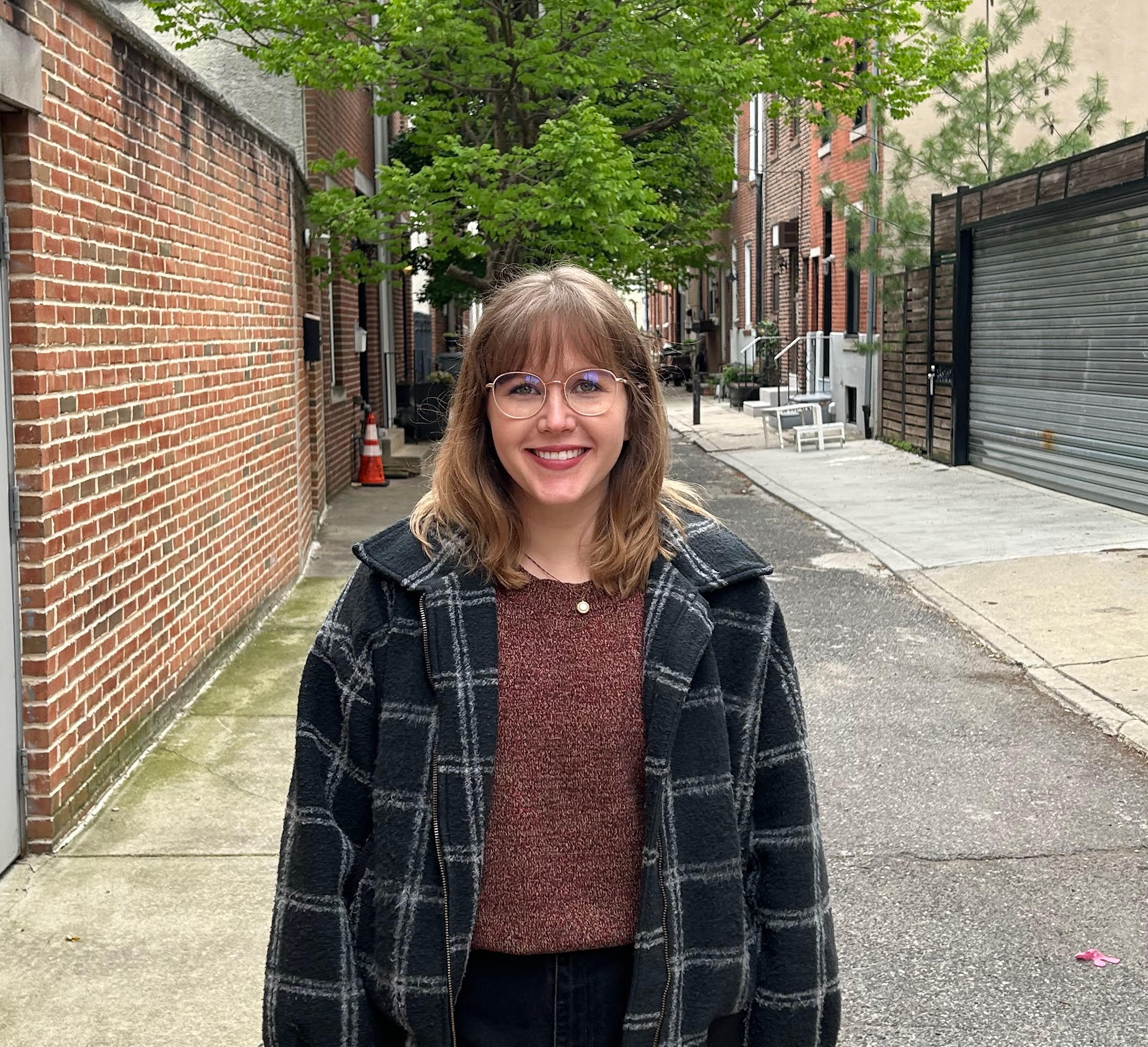
Eliza Erickson, Director of Permit, License & Certification Innovation at the office of Gov. Josh Shapiro
After spending almost a decade working at the City of Philadelphia, Erickson saw how technology and innovation could make it easier for Philly residents to navigate government systems. It shouldn’t be so complicated to pay your water bill, she said.
“I really prioritized and loved being a part of Philly’s tech and innovation ecosystem and talking to people about what government was doing and who we were,” she said.
Now, Erickson works in the Office of Governor Josh Shapiro, thinking up ways to make it easier for Pennsylvania residents to get permits, licenses and certifications.
Erickson’s career path led her to encourage young people entering the workforce to consider public sector work because of its potential to create change, she said.
In this edition of How I Got Here, Erickson shares what brought her to government work and why she believes so strongly in its potential.
This Q&A has been edited for length and clarity.
What brought you to government work?
I did get my master’s degree in public policy, and I always had an interest in looking at systemic solutions to really deep problems and challenges that I saw facing communities and society.
My intention was always to solve those problems from an advocacy perspective, maybe a nonprofit perspective. Government, at least for me at the time, was a little bit of a forgotten sector.
Truthfully, I saw a cool job posting for a program manager of innovation management in the Office of Innovation and Technology. When I told people in my circle that I was going to apply for this job, the first thing they said to me was, “You don’t know anything about innovation, and you don’t know anything about technology.” And I said, “Yeah, but the job sounds really cool.”
What was your experience like working in city government?
The really interesting thing about joining the city’s innovation team at that moment was that everything was really new. I was the first person who was hired once the team had been internally established and the framework existed.
Doing the first cohort of the Innovation Academy and experimenting with that, the first iteration of the Innovation Fund. My first big project was building and opening the Innovation Lab. That event was my first time in city government, being with what I consider to be really important and influential people standing behind this public sector innovation movement.
As the innovation portfolio became more critical and more respected in how the city was operating, I had the ability to continuously reimagine what my role in that space was. So I moved from program manager to senior program manager to assistant director to full director. Along with those title changes came growing autonomy in running the portfolio.
Ultimately, being able to leave my time at the city as the director of innovation and strategy was a really incredible pinnacle. To finally feel like I had grown this portfolio over nine years to a place where it was really impactful and really respected was a tremendous honor
What was it like jumping from city to state government?
The biggest difference, and maybe the biggest challenge, moving from city government to state government is just the size of the state government. The number of bureaus and agencies is more, the number of teams is more, the number of employees is more, and then the number of people and communities and businesses that you’re serving is more.
That scale, on the one hand, makes this work feel so much harder, because there are just so many more factors to consider. The flip side of that is the impact that you get to have at the state can also feel much, much bigger and greater than working at the city.
I also took for granted how well I knew the city government. I had my people, I knew the systems. I understood how everything fit together and the state government is different. Even though I consider myself a government expert, I think, really, I was a city government expert, and I now have to rebuild that knowledge base at the state level.
How does your previous work experience inform the work you’re doing at the state?
I had always had this dream of doing something with the city, and then move up to state, and then maybe move up to federal.
The stars aligned a little bit around some of the work that Gov. Shapiro was thinking about doing. The Office of Transformation and Opportunity is a subset of the governor’s office that is charged with reimagining how business gets done across Pennsylvania.
So my work now is very similar to what I was doing at the city, when we think about how we envision systems and then breaking them down and rebuilding them so that they function better for users.
I am really trying to also bring this idea of stakeholder engagement and user-centric methodology and human-centered design and culture change to the state level. So, not just process this permit faster, but we want it to be holistically a better experience for everyone, both internally and externally.
What role does technology play in your work?
I certainly never considered myself a technologist before I started working for the city, and I have moments where I still don’t consider myself a technologist.
The way that I have come to think about my involvement in tech ecosystems, which now feels very solidified, is that I am the person in the room who doesn’t understand, nor do I really need to understand, the intricacies of the technology or the website or the app.
I bring a human-centered approach to whatever that technological solution is. So, making sure, especially in the context of government, if a department is going to invest millions of dollars in building a new platform that’s going to allow residents to pay a bill more easily, have we really centered that resident in the full development of that website, and is it easy to understand?
What do you say to the people who are frustrated with the way the government operates?
Those people are right. We have all interacted with a government system and found it to be incredibly frustrating.
However, I can promise that there are many people working for government who are trying to fix those processes. Not just people like me who have innovation in their title, but the people on the ground whose daily job is to process payments, review permits or approve budgets. Those people are working really hard to make things as efficient and user-friendly as they can.
I believe that basically everyone who works for government, especially at a local level, is there because they believe in what they’re doing. Every regulation that has been passed, every piece of red tape that feels like it gets in people’s ways, is there because at some point someone really thought they were doing the right thing.
What role would you like to see innovation continue to have in government work?
I would like to see government innovation and government transformation elevated to being in every elected official’s cabinet and every elected official has a senior innovation advisor.
I also believe that government itself needs talented, driven, excited, dedicated people to work in it. I’m happy for that to be my role.
What lessons have you learned throughout your career?
One thing I’ve learned over my career is the importance of relationships and how they impact you both personally and professionally. It’s so critical to surround yourself with coworkers who support you and lift you up and make you feel like you can be your most authentic self.
Those relationships help you actually get stuff done more easily and efficiently. If people trust you, believe in your work and like working with you, that matters. People can make or break your ability to drive things forward, and investing in relationships is an important piece of accomplishing your goals.