

Before Tim Wisniewski became Philadelphia’s Chief Data Officer, he was a fledgling civic hacker.
It was in the spring of 2011, at a hackathon organized by Technical.ly Philly, that he helped build his first civic app: the Office of Property Assessment (OPA) Data Liberator. It let users search city property records by owner name, something you couldn’t do on Phila.gov, the city’s then much maligned website. The big selling point? You could find slumlords with it, by seeing if a crummy landlord had properties elsewhere in the city.

These were the very early data days of the city’s open data movement, right after Mayor Michael Nutter signed an open data executive order. Case in point: the data behind the OPA Data Liberator — property records — wasn’t readily available. If you wanted to use that data, you had to buy a snapshot of it on a CD from the city for $100 or scrape it from the city’s website.
Wisniewski, at the time a fresh-faced 23-year-old running a neighborhood improvement organization in Frankford, chose the latter. (His struggle to get the data was chronicled by Holly Otterbein in the Philadelphia Daily News in 2011.) The OPA Data Liberator later turned into a web app called Philly Address.
Today, four years later, developers don’t have to mess around with scraping the city’s website if they want to build a property app.
It’s a story in how open data can get done.
Under Wisniewski’s leadership, the city released last month essentially all the property data that was on that $100 CD. The city gets requests for the CD about a dozen times a month, said OPA Chief Assessment Officer Michael Piper. You can now download it — for free. There’s also a handful of data visualizations for those who aren’t tech-savvy. (The city released property assessment data last year but it didn’t have all the information on the CD.)
See the data
What’s more, the city’s own property search app now offers the very feature that Wisniewski helped build into his first civic app. You can now search by owner.
https://twitter.com/timwis/status/637348399973576704
It’s a major win for Philly’s open data movement.
For one, it’s sensitive and privileged data — Philly went through a major property assessment overhaul in the last two years and if residents want to challenge their assessments, like the 31,000 who did in 2013, this data could make it easier, as City Paper pointed out.
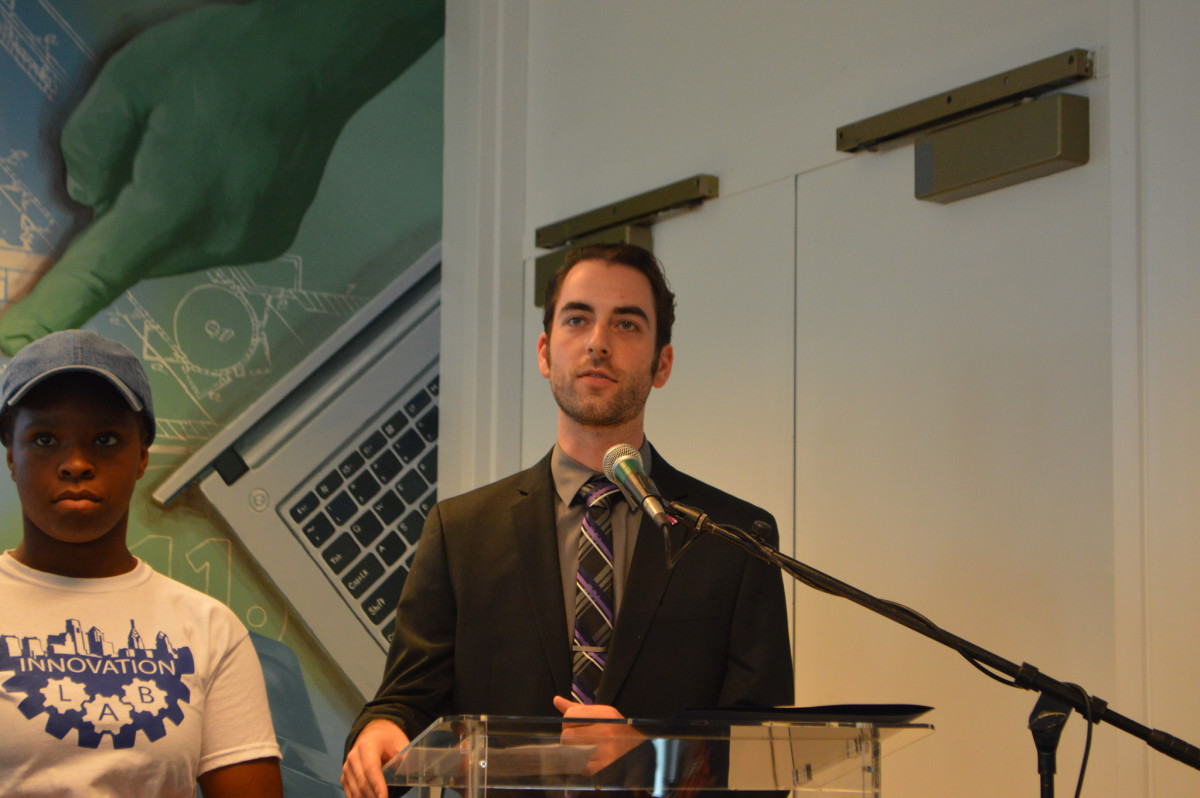
It also feels symbolic, with the city incorporating a feature that civic hackers once cobbled together on a spring day in a dingy Temple University TV studio. The lines between civic hacker and government developer in Philadelphia are blurrier now — it’s not a coincidence that some on the city’s data team, like Wisniewski and Mjumbe Poe (also pictured above), plus former Chief Data Officer Mark Headd, were at those early hackathons. Likewise, former Code for America fellow Aaron Ogle, who himself helped organize an early civic hackathon, is now a city employee who worked on this release.
But the larger question is what this victory suggests about running a municipal open data program.
During his tenure, Headd tried and failed to release this data set. He said he couldn’t get buy-in from Richie McKeithen, who ran the OPA at the time. So was it Wisniewski’s skill at negotiating with city officials that allowed him to succeed where his predecessor couldn’t? Or was it the change in leadership at the OPA? A stroke of luck or a savvy Wisniewski biding his time and seizing an opportunity?
Whatever the case, as cities across the country adopt open data policies, this is a story they should all be watching.
###
Back in December, a brief yet tense exchange took place in the public domain of the OpenDataPhilly Google Group.
City data scientist Stacey Mosley announced in the group that the city was “decommissioning” an older version of the property record real-time data feed, or API, and local open data leaders — Headd and Azavea founder Robert Cheetham — were curious about the changes.
“I also wanted to check in about another undocumented method that was in the API and appears to be going away — Search by Owner Name,” Cheetham wrote. “I know there is a great deal of interest in this type of feature. Could you comment on its removal?”
A new approach.
It was a judicious and carefully-worded question, but the subtext was there: Cheetham, who oversaw the build of the city’s first open data portal and was at that 2011 hackathon when civilian Wisniewski built his OPA Data Liberator, wanted to make sure open data in Philadelphia was not regressing.
“Sorry if you guys were misinformed,” Wisniewski responded in the forum, “but a search by owner method was never approved or supported by this API.”
He continued, evoking his first hackathon, in a comment that seemed to illustrate the tension between the old Wisniewski and the new:
The idea of searching properties by owner name and finding slumlords like the one you mentioned is what got me into civic technology (In fact, you were both there that day). The way we get there is by having responsible conversations with departments, lawyers, and the public; not by a hidden, unannounced API method. I want to have those conversations, and cleaning up this API was a necessary step to having the credibility to do so.
By then, the part about “responsible conversations” had become a common Wisniewski refrain. The job, he said, would be about relationship building and empowering agencies to take ownership of data releases. Open data would “be less about any one individual’s tenure, and more about how we do business as a government,” he told us in the summer of 2014.

It was a decidedly less sexy approach.
He would not rock the boat. He would not make enemies. He would be different from Headd, with his blogging and national speaking gigs. When it came to the release of more sensitive data sets, Wisniewski believed it was not just possible but crucial to get city officials on board. That’s the only way open data will survive a forthcoming mayoral transition, the thinking goes.
And if those in City Hall weren’t on board? Wisniewski wouldn’t even entertain it.
“There is will behind open data,” he told us shortly after he was appointed.
Back then, it sounded a touch naïve. Especially given the circumstances around the departure of Headd, the city’s first Chief Data Officer. Passionate and outspoken about the importance of open data, Headd seemed less willing to play by the rules of government. Not for lack of experience, either: he spent the first decade of his career working for New York state and later, Delaware.
Though Headd, too, spoke of the importance of getting departments to “own” data releases, he also had some other guiding philosophies: “Don’t let people feel like they’re doing you a favor, or going beyond the call of duty by releasing open data,” he wrote in a blog post detailing lessons he had learned at the city.
Also: “You should not seek out a fight if it can be avoided, but you also shouldn’t shrink from one if it can’t.”
And finally: “You should be a little nervous — at all times — that you may have pushed too hard and the city fathers will grow weary and decide that your services are no longer needed.”
Headd wrote that post just a few months before he quit, disillusioned with the administration’s stated commitment to transparency. The final straw came in the form of a conflict with Revenue Commissioner Clarena Tolson over releasing property tax data.
Which brings us back to the conversation on the OpenDataPhilly Google Group last winter. When Wisniewski said he was working on going through the appropriate channels to release the property record data, Headd seemed skeptical. Given his experience in the city, it made sense.
Headd wrote: “If the removal of this [search by owner] feature is part of a longer-term strategy to eventually make some owner lookup information available then I think this process can be healthy. If there is a commitment to make this available at some point, then what does the timeline for that process look like?”
That’s where the thread ends.
In February, Wisniewski told us he was working with the Office of Property Assessment to release the data on that $100 CD. It felt like a true test of his leadership philosophy: could having “responsible conversations” really lead to an important open data release?
Six months later, the data is ready for download.
###
When Wisniewski talks about the data release, he is quick to credit the city department that owned the data.
“This is a victory for the OPA,” Wisniewski said.
The process, he said, involved many conversations with the OPA, working to earn the department’s trust and understand its priorities.
One of those priorities was adding a layer of security by making it clear that the city is keeping a record of who is downloading the data. They do this with a page that comes up before you can get to the data, alerting you that your IP address is being saved. It’s akin to how the city makes you sign your name before you can go home with the property data CD, said OPA chief Piper.
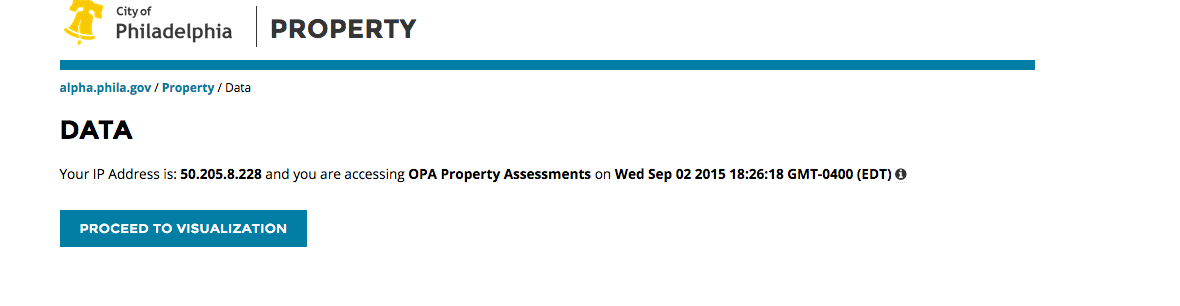
Another priority was nixing a data field that concerned tax relief status because the OPA felt that it was a privacy concern, since the tax relief status is based on income level, Piper said.
To hear the city talk about these concessions, it does sound like Wisniewski’s negotiating strategy did the trick, helping him succeed where Headd did not. There’s also the fact that Wisniewski has been coming up in Philly city government. Just six months after he built his first civic app in 2011, the 23-year-old Wisniewski got hired to help launch the Philly 311 mobile app and has been climbing the ranks and building trust — and clout — ever since.
But the other key to this data release is one that has nothing to do with the differing approaches of Headd and Wisniewski: Just two months after Headd left city government, OPA department head Richie McKeithen stepped down.

Headd specifically mentioned McKeithen when talking about why he wasn’t able to release this data: “We were ready to do it back then, and there was no substantive reasons raised at the time not to, but I could not get past the objections of the former OPA director and others,” he wrote in an email last week.
McKeithen oversaw the city’s property assessment overhaul and received appeals from 31,000, or about 5 percent of property owners, in 2013. His short-staffed office couldn’t review them all by the filing deadline. Was he worried that, with the release of the data, his office would get hit by another wave of appeals?
Whatever McKeithen’s reasoning, he was replaced by Piper, his second in command and a 24-year veteran of the department. To put it simply, Piper seemed more progressive than his former boss.
“We certainly are in favor of anything that increases the level of transparency both in terms of our mission and the data available through this department,” Piper wrote to Technical.ly Philly in a 2011 email about property data.
He struck a similar tone last week when asked about why he supported this data release.
“What we’re here to do is serve the public,” Piper said over the phone. “So if this is the kind of thing that users are looking for within government, we feel this is something we want to provide.”
So, then, is the lesson here that city chief data officers need to play the long game? Wait till the naysayers leave city government? Choose their battles in the meantime? And — if they take a Wisniewski-like approach — does that mean that some data might be locked up indefinitely?

As for Headd, who left Philly to be closer to family in Syracuse shortly after he stepped down, he called this open data release “a big win.”
“I think the work [Wisniewski] and his team have done has been inspiring,” he wrote in an email last week. “Philly is most definitely a national leader on open data because of their work.”
But he hasn’t changed his mind about how to go about implementing an open data program.
He wrote:
My own view is that an Executive Order is issued to better ensure desired outcomes when there are bureaucratic or institutional barriers to that outcome. Otherwise, why would you need one? Suggesting that it is agencies themselves that should decide what data to release and when seems to ignore the vested interest that some of them have in not releasing data.
In other words, the Chief Data Officer’s role is to act as a check, to push back on the parts of government that might be protecting their own interests by choosing not to release data.
Consider Mayor Nutter’s executive order which prohibits gifts to executive branch employees. Should the public settle for letting department heads choose when they thought it was convenient or appropriate to comply with this order, or other executive orders? Probably not – and the same standard should be applied when evaluating compliance with the open data executive order. Philadelphia City Departments are required to release high value data sets, and they should comply. Period.
Beyond this victory, Wisniewski’s approach will continue to be put to the test, in the form of high-profile data sets that haven’t yet been released. He’s working with the Finance Department to release data on all the money the city spends. The Police Department’s “Part II” Crime data is another set that’s long been in the pipeline. And could he get that property-tax data set that Headd fought so hard to release?
This release is a big win for Wisniewski’s style. But in his short tenure, Headd had many of his own wins and shook city agencies that were hiding from open data trends. There’s still more to learn on which method is the most effective, though both surely have their place.
But for now, with the property data release and the launch of the search-by-owner feature on the city’s property app, it’s like the new Wisniewski is answering the call of his former civic hacker persona, known to a few as “The Hacker in Black” because of the monochrome outfits he’d don at some of Philly’s first civic hackathons.
“I believe that the current administration supports transparency,” he told the Daily News back in 2011. “But since the [right-to-know law] was updated relatively recently, there are still some policies regarding data that need to be upgraded.”
Now it’s up to Wisniewski, whom you’re more likely these days to find in a sharp, slim-cut suit than in all black, to make those upgrades.