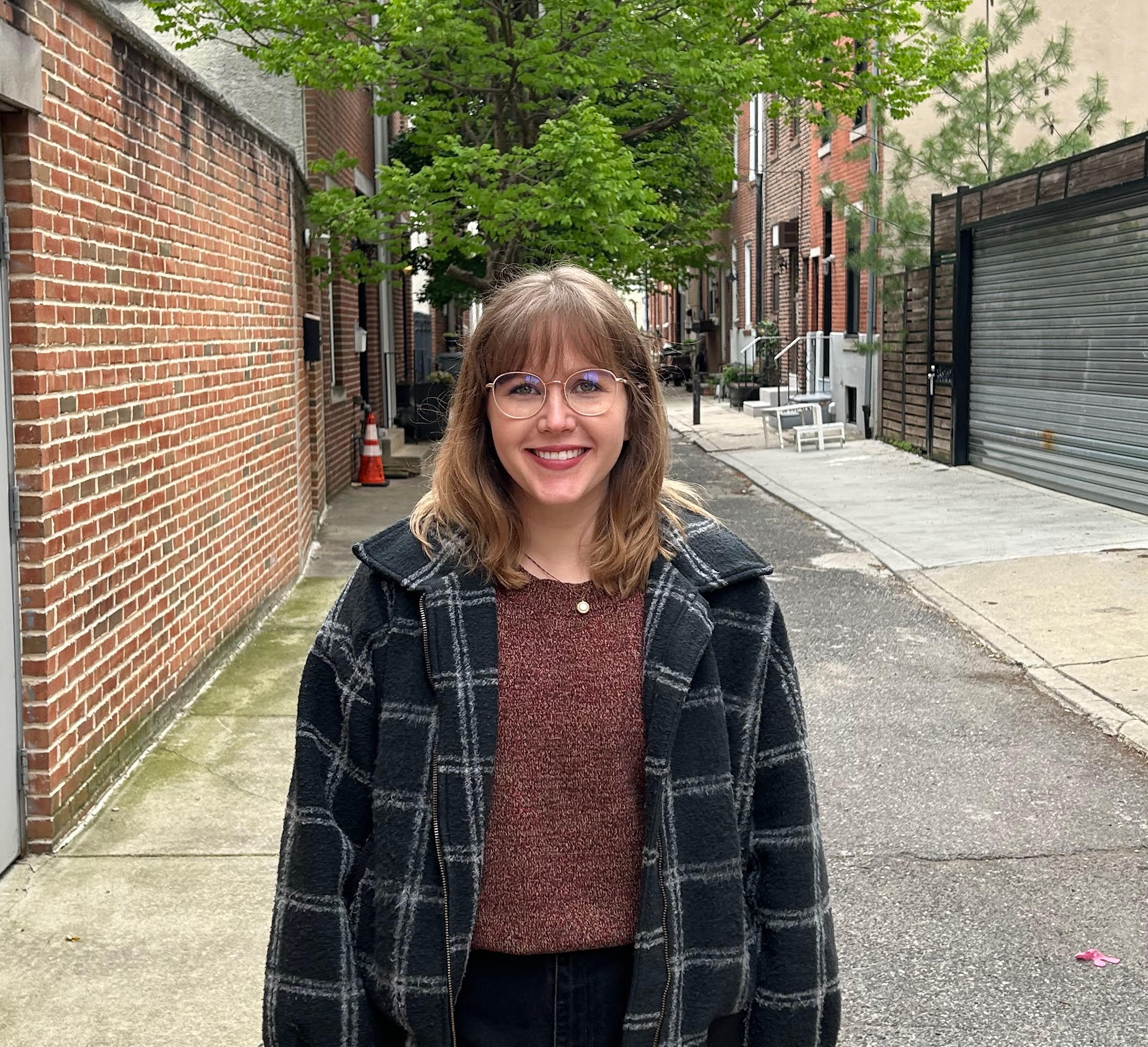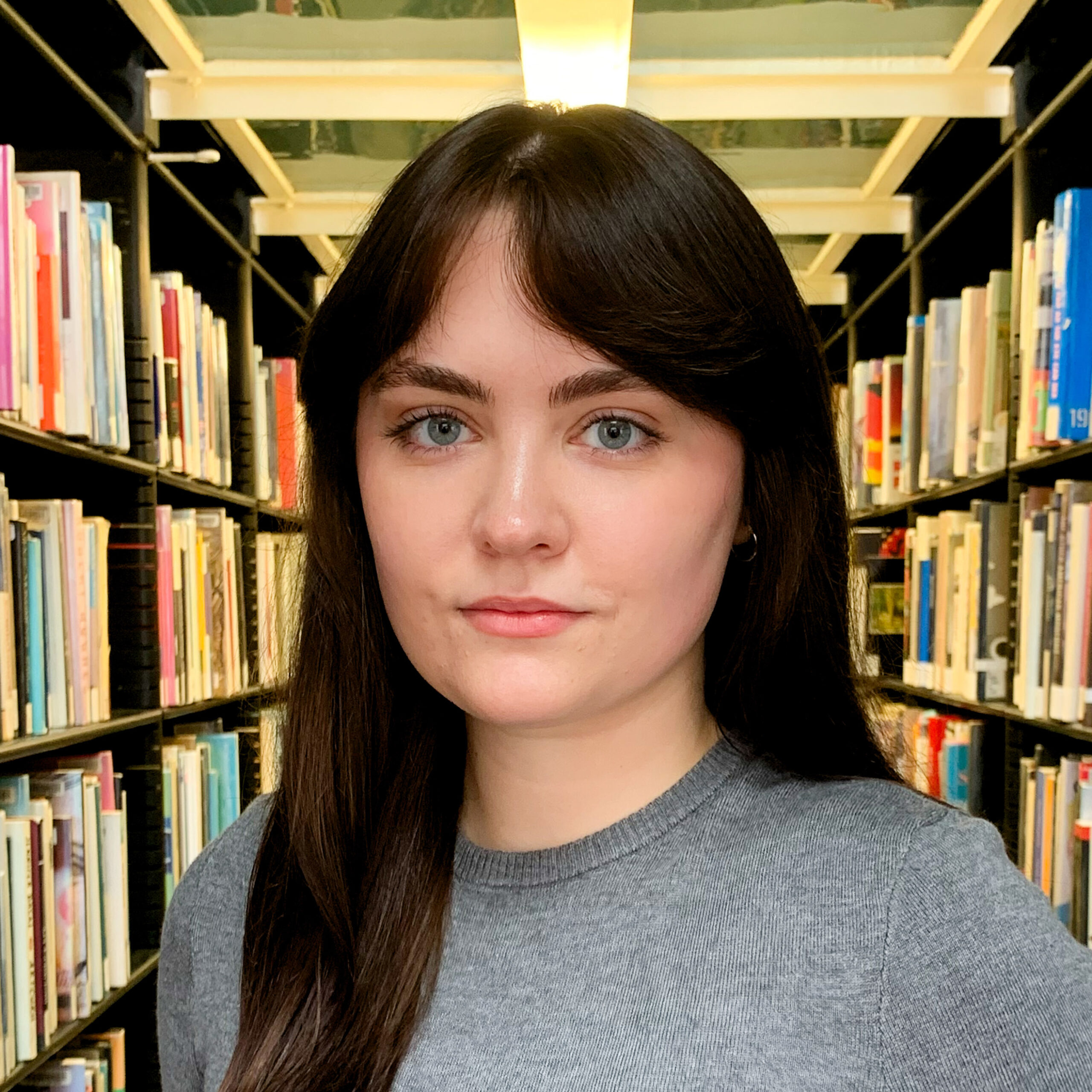

Just a few months before ChatGPT exploded, Nihal Krishan and Phil Linder felt a gap in community conversations. With AI in every headline, they sensed it was more than a technology news story.
Krishan, an AI journalist, public policy scholar and actor with Picnic Theatre Company, and Linder, an artist, painter, former military helicopter pilot and defense technology partnerships manager, recognized the desire to understand how cutting edge technologies like AI were going to impact other aspects of their lives, from dating to art to culture to therapy.
“We wanted to bring our ‘and’ friends together, like Senate policy staffer by day AND spunky psychedelic artist by night, the way Phil and I are,” said Krishan.
The series has become a critical convening point on how AI is shaping creativity, culture and connection
Their idea for events at unique intersections that brought people with dual and sometimes contradictory interests into conversation in the same room resonated. The first event, held on a Sunday afternoon back in April 2023, was standing room only.
Running continuously since then, Generative Series: AI, Art & Culture is a live event series that hosts conversations at the intersection of AI and human experience. Covering topics ranging across music, psychotherapy, online dating, psychedelic art, and more, the series has become a critical convening point on how AI is shaping creativity, culture and connection.
In opening remarks for the fall edition, hosted in collaboration with the AI Collective on the rooftop of the Line Hotel, Krishan shared that their “goal is to bring things from the online zeitgeist together in real life, creating an intersection of arts, policy, technology and culture.”
With attendees from OpenAI, Meta, Google, Amazon, startups, the White House, Capitol Hill, federal agencies, venture funds, Booz Allen and Deloitte, alongside designers, filmmakers, musicians, painters, and graphic designers, the Rooftop Social brought this interdisciplinary community of “and” people to life.

In bringing together a diverse group of attendees, from those with a deep understanding of AI to those at baseline zero, Generative has found a format that works.
While most events in DC provide attendees the opportunity to be the clap-track to a sponsor’s LinkedIn videos, Generative is designed around creating a social element immediately. Starting with demos directly presented by artists, writers, academics and technologists themselves, the program moves immediately into networking interaction with featured presenters in a style that harkens back to early accelerator program graduation days.
To Krishan, if attendees want to congratulate presenters, ask them questions, put them on the spot or make them squirm, that’s part of the Generative experience.

From painting to to music to ‘amplification’ of imagination
At the fall 2025 edition, each of the AI artists had the opportunity to introduce themselves and say a few words on their work. Interdisciplinary artist Patrick Burns’ shared the thought that lingered, setting the tone for the gathered audience of creatives, techies, federal employees, and AI enthusiasts.
“AI is the first tool in human history that is a two-way street, every time you use it, it uses you,” Burns said. “The most interesting thing we have is our perspective. As we use AI, do we get to keep that?”
From visual arts to presentations to painting, presenting artists in the program represent the broad interdisciplinary community Generative brings together:
- Ted Kaouk, a 3x chief federal data and AI officer and author of Generative Work, showcased “The Art of AI Guidance” which revealed through a presentation the learnings from building 30 AI apps in 30 days
- Faaiz Ikeoluma Ibraheem, a writer and photographer from Baltimore, exhibited a prototype of a solo show exploring a DC-based techno club event series titled King Of Silhouettes
- Patrick Burns, an interdisciplinary artist using unconventional materials and methods to create a synthesis of nature and the human touch, showcased canvases of three-dimensional quality and hyper-saturated single color representations
- T Mofid, an Iranian-American artist and art therapist whose work bridges visual art, healing, and storytelling, presented physical and virtual pieces that explore artificial intelligence as a creative collaborator and tool for refinement
- Daniel Summer, supercomputer designer and CEO of Codec Market, presented visual music exercises to the mix of DJ Eb & Flow and beats of Ram Viswanathan, a marketing manager, tabla player, and percussionist, that showed a live synchrony of audio and video representing direct generative creation of music with techniques that could have been used in the 1960s
- Chida Sadayappan, managing director of ML and AI Engineering at Deloitte, presented an exploration of how AI amplifies imagination as a powerful new tool titled “Mind O(ve)r Machine: The Creative Revolution Led by AI”

IRL demos: Learning plus personal connection
From that first 2023 event, Generative has grown to meet the need for in-person connectivity in collective understanding of new technologies. The special sauce? Krishan says it’s these demonstrations that make it work.
“Most people just don’t know the ways in which [AI] can enable somebody, anybody to become an artist and create something that has your own soul and imprint, but also has a machine-like element or influence to it. It’s this meld of man and machine, or woman and machine,” said Krishan. “We start with demos, show people how it’s affecting different realms in the arts and culture, and then have an informed discussion.”

For Daniel Summer, whose work featured moving images generated using analog and digital synthesis techniques from music, the event harkened back to Bell Labs. The storied midcentury hive of innovation that brought together scientists, engineers, and creatives, and whose inventions in sound, recording, transmission, and video changed the world. Surveying the crowd from behind his sound board and a vintage television, Summer reflected that this showcase had the same interdisciplinary mix.
Summer is the CEO of Codec Market, a company that develops video compression algorithms and a super computing platform for them to run on. He credits his art with refreshing his creativity for his work.
“In this creative endeavor I’m making images and making video from scratch using machines and analog equipment. They’re sort of coming at the same problem set from two sides of the same coin,” said Summer.
The AI boom happened with artists first
Technology is one aspect of art. Art is one aspect of technology. Summer emphasized that it’s this interplay between the two where new depths emerge.
“When you build video from scratch, in this case with electrons and rasters, it gives you a bit more sensitivity to the nuance that goes into handling the same thing digitally,” Summer said.
There’s a school of thought that art leads where technology is going, and this event helped to make the case. As the event organizers emphasized, the first adopters of AI were artists, not technologists. Likewise, image generators such as Dall-E and Midjourney were the first generative AI tools to truly dazzle users, and provide a proof point of what was possible for the general public. The boom happened with artists first. Not technologists.

Before heading back into the event, Krishan wanted to make one final point — “There’s something fascinating happening and we want to learn from it, but we’re definitely also here to have fun,” said Krishan.
“We’re a very serious swampy town, I’ve been here over a decade and I feel like it’s very rare to have an event where people who are often very serious come together, but they have more open-ended, playful, meandering conversations and interactions.”
The fun was contagious, and it is clear that that energy keeps attendees coming back for more. In moments of pressure, we’re all looking for release, reminders of why the work we’re doing matters and is connected to a community bigger than ourselves.
Generative hosts events and conversations in this AI art and culture series quarterly. The next event will be on AI & Film, and will be held Sunday, March 8, 2026 from 2 to 5 p.m. at The Line Hotel in Adams Morgan.