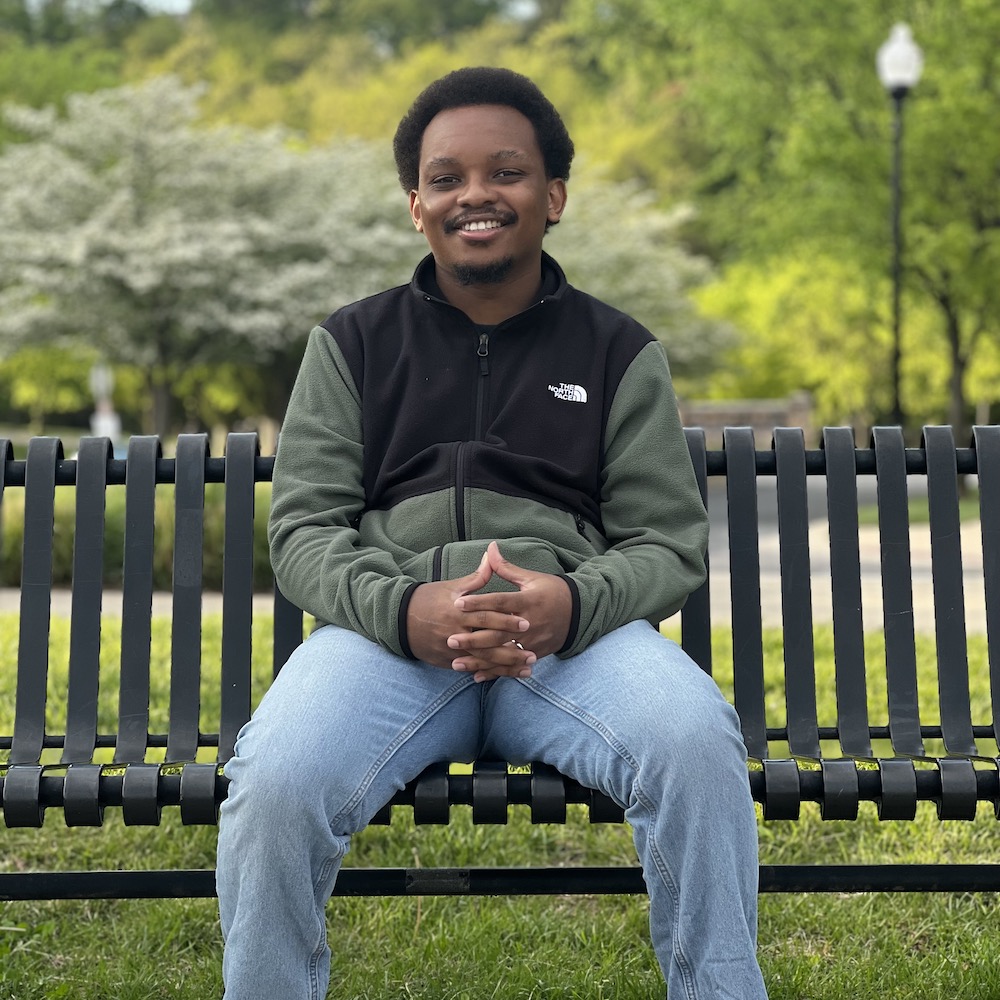
This is How I Got Here, a series where we chart the career journeys of technologists. Want to tell your story? Get in touch.
Guc Ozenci has immigrated to the US twice, and he likens the experiences to starting a business.
“You start learning by failing, right?” Ozenci told Technical.ly. “It’s a startup. Moving to another country, being an immigrant, is a startup.”
Ozenci, who originally moved from Ankara, Turkey to Louisiana in the 90s to get his MBA from the University of New Orleans, is an entrepreneur, consultant and accelerator manager now living in Bethesda, Maryland. His main gig is working as the DC division’s managing director for the Founder Institute, a network of incubators, accelerators and investors founded in Silicon Valley.
Living in a new country and culture takes adjustment, he said — including seemingly small things like grocery shopping and making new friends. He struggled to find career resources when he moved to the US.
Now, he wants to help other immigrant entrepreneurs access mentorship and networks to boost their businesses.
With that said, being outside a comfort zone means growth. That’s why almost half of unicorn startups are founded by immigrants, he said.
“It takes time to adapt,” he said. “That hardship kind of creates the adversity muscle.”
For the latest installment of How I Got Here, Technical.ly caught up with the 30-year tech industry veteran about his career history, what he does now and how being an immigrant shapes his work.
This conversation has been edited for length and clarity.
Where did your tech and entrepreneurship career start?
I’m an economist by education, but then I did an MBA. After the MBA, I directly started in the IT industry. I worked for Vodafone in Europe, Hewlett Packard (HP) and Cisco Systems.
I was always the person at the bridge between the tech people and the client, because they don’t speak the same language.
But then I realized … Why don’t I do my own thing? In 2013, I started a software-as-a-service business [called Peoplise].
It’s always very difficult to be an entrepreneur. Being a professional is not easy, either. Life is not easy.
Guc Ozenci
My expertise was always in enterprise and solutions — selling, creating a solution for a problem — and most of the time, they were not really aware of the problem that they had. It is always a customer discovery process, which I did not know the terminology [for] back then. But this is the core of it.
Fast forward into 2020, right before the pandemic: We’ve been acquired. I exited successfully. Then, actually, not only at that time but before the exit, I started mentoring and investing as an angel to some early-stage startups.
Tell me more about what you do now
After the exit and throughout the pandemic, because we all were stuck at home, I dedicated more time to mentoring and helping [advise] very early-stage startups. First, mentoring at the Founder Institute (FI), and I was mentoring at Halcyon as well, in DC, for the social entrepreneurs.
By the end of the pandemic, we started going out like everybody else, and I started organizing those in-person events. So it started [with] five to 10 people. It has grown since then to 100 people showing up at each event. I organize those in-person events every month.
FI asked me to lead the chapter here, which was natural for me. The other thing is, starting with the pandemic, all the FI chapters throughout the world were virtual. Starting with the DC chapter, we started doing hybrid, because the sessions are virtual; but then, every month, we have an in-person meeting, event, panel or workshop to connect them with the ecosystem.
People really benefited. I’ve been running the accelerator, and then I also have a consulting company on the side for those startups or founders.

Also, I am on the board of Washington Network Group (WNG). It’s a legacy organization with 20,000 members, but the audience is not the same as we have at those in-person events, the tech-y, startup people. I’m chairing the committee on entrepreneurship there to help DMV-area people sharpen their tech skills.
With the Founder Institute … I am running two cohorts, spring and fall every year, and we usually have about 20 startups at each cohort. We help mostly pre-seed stage startups, so showing them the way to build, launch and grow their startups.
What does a typical day look like?
Most of my time goes to the FI.
Although I wear multiple hats, they also have the same purpose, which is helping early-stage startups build, launch and grow their startups.
It’s a startup. Moving to another country, being an immigrant, is a startup.
Guc Ozenci
My typical day — I am a professional person, but a triathlete. So I do race[s] twice a year, spring and fall. It makes me train all year long. Every morning I do my training, either bike, run or swim.
Between 10:30 a.m. and 3 p.m., my calendar is open to meet all those founders who are registered to the FI program — or maybe they are not registered, but I still can help them through either my consulting company or the nonprofit WNG, doesn’t matter. If they need help, I meet them and try to help them, try to connect them to the right resources.
After 3 p.m. I’m with the kids. My two sons come home, and I usually drive them to different tennis training.
Where does the passion for helping startups come from?
The passion should be defined as helping and connecting people, because I’m such an outgoing person. As I meet new people, I learn from them as I try to help them.
If I am successful in helping them, either through connecting them to resource[s] or coaching them, or whatever, sharing my experience and expertise in building a successful venture — this makes me happy.
I love tech, and I can measure and feel in my veins where it will take us. But combining tech with people, that is my passion.
How did moving to the US shape your career?
I came to the US for my master’s in 1995, but after the master’s and the practical training period … I went back to my country, Turkey, and then started working there.
After all those years, I came here again in 2017 — but now with my family, my wife and two kids. It’s difficult for everyone who’s moving to another country.
We were quite lucky, so I cannot complain. My wife is working for the World Bank Group, which means they brought us here. So it was not supposedly “difficult,” because one of us had a job and everything was smoothly operated.
I think, for everyone, the difficult part is adjustment.
Doing business is different, maybe not completely different, but that is culturally different.

Again, we’re lucky, but I still work with so many immigrant founders and volunteer at refugee programs as well. These people are prone to success more, but they do have difficulty reaching out to resources, which includes myself as well. That is why, right now, with all the network that I have, all the people I have known, all the resources that exist in the DMV or East Coast ecosystem, I help those people reach out to those resources.
There’s no soft landing. It is always a hard landing. But if you realize this and work on utilizing your skills, keep on sharpening them. My skills were people skills. I love bringing people together, and I am very good at it.
What advice do you have for startup founders?
It’s always very difficult to be an entrepreneur. Being a professional is not easy, either. Life is not easy.
The most common mistake is that they, entrepreneurs, believe that they know the problem themselves, and they start working immediately on a product. Which is not a big deal — everybody can create a product, right?
The big deal is to understand whether that problem is really a problem, and what the solution is.
They should be courageous. They are, but they can be successful by creating [a] great team — starting with themselves, of course. But they can’t do that alone, and they should not do that alone.