
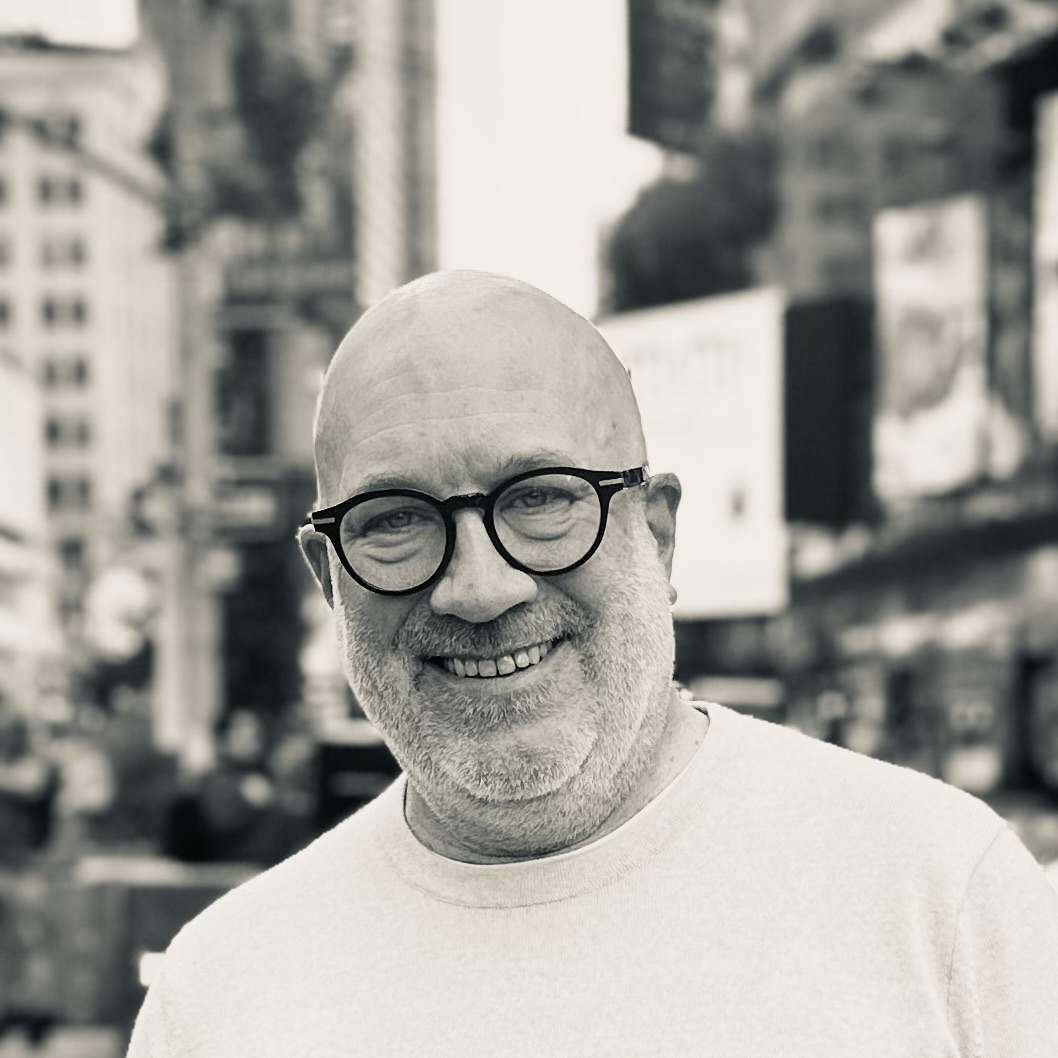
Kris Rockwell doesn’t have a job. He has several — and even he’ll admit it’s hard to juggle it all.
“I’ve been focused on the idea that code is becoming philosophy.”
Kris Rockwell, Praxis Science
The 54-year-old Squirrel Hill resident splits his time between serving as head of product development at the edtech company Play Piper, running his investment firm AOS Ventures, bringing researchers together through his startup Praxis Science, leading his philanthropic foundation, and, most recently, pursuing a doctorate in information systems and communication at Robert Morris University.
“I have six email addresses, six different calendars, four kids at home, and managing it all is its own full-time schedule,” Rockwell told Technical.ly. “My biggest weakness is that I have an inability to say no to anything.”
How does he do it? Certainly not alone.
It takes a village, including his “lovely partner at home,” the people in his office, his cofounders and, of course, his lawyer, who makes sure he isn’t “doing something dumb,” Rockwell, a 2025 RealLIST Innovator, said.
But there’s another common thread that’s kept it all from feeling scattered.
Across Rockwell’s philanthropic, startup and research work is his desire to truly understand new technology and find meaningful, ethical uses for it.
“Lifelong learning, I think, in whatever way we can do that, is really critical,” Rockwell said. “I think technology offers us the opportunity to do that and really expand our horizons.”
In this edition of Technical.ly’s How I Got Here series, Rockwell talks about what drew him to entrepreneurship, how he measures impact and what advice he’d give to anyone who wants a career at the intersection of tech and philanthropy.
This Q&A has been edited for length and clarity.
When you were a kid, what did you imagine you’d be doing when you grew up?
Definitely something technology-related. I’ve been playing with tech my whole life — writing BASIC on Apple computers and early IBM computers.
During my time at Duquesne University — at least this is what I was told — I was the first student to have off-campus dial-in internet access. That was before any of the big web browsers existed, so I was still using Lynx at that time, the old text browser. I believe that I also published the first online publication at Duquesne, so I’ve pursued technology for quite a while.
Early on in my career, I had a company, called Hybrid Learning Systems that focused on e-learning, and I worked in aviation for US Airways, so that certainly fit with what I thought I would be doing because I’ve been involved in or interested in aviation since I was literally born.
Although what I’m doing now through the PhD is a little bit different than where I thought I would be. I’m studying the philosophy of technology and the actual implementation of that technology.
I’ve been focused on the idea that code is becoming philosophy. I think that that’s something that I didn’t expect to find myself in, but here we are.
What first sparked your interest in entrepreneurship?
It was definitely a person, and I’m fortunate to say that person is my father. My family history is that of entrepreneurs, from my great-grandfather to my grandfather to my father, so it’s kind of a natural extension.
Having grown up in the dot-com era, the typical tech view of entrepreneurs was: We want to start businesses to become unicorns. But I think a better viewpoint is that entrepreneurship is a phenomenal path to a living wage and being able to control your own destiny.
What led me here was just a lot of that same drive to really seize opportunities and see what you could do with them.
How do you measure impact as an investor and philanthropist?
Impact is a very difficult metric.
At the end of the day, we just write checks. We write checks to organizations that are doing absolutely incredible work. If there’s an organization that has done something impactful on its own as a result of our support, that’s incredibly meaningful to me.
But as a foundation, you can’t just write the checks. You should participate in some way. It’s very wrong for any foundation to walk into a neighborhood and say, “Here’s how we’re going to help you,” because we don’t know. I don’t live there. I need somebody to tell me what’s needed.
With the 3D printing program we did at Manchester Craftsmen’s Guild, there was one girl I remember. At the end of the term, her parents came up to a teacher after the girl gave her final presentation and said, “Our daughter is incredibly bullied at school, she has no friends, she doesn’t talk. This girl who suffers and goes through that on a daily basis just got up in front of a room full of people to talk about what she did with this 3D printer.”
That’s impact. That’s meaningful to me.
If someone wanted to have a similar career to yours, what advice would you give them?
I will channel my father’s advice, and that is to learn from failures.
I’ve had a number of failures — a bunch of them — and I think you have to look at what happened and then keep going. I think it’s important to understand what you can learn from the situation.
None of this stuff is cut and dry, and I certainly sit in a very easily defined place of privilege, having the ability to do the things that I do, so I don’t want to sit here and say it’s that easy. It’s not that easy. It’s a lot of work.
It’s a lot of perseverance, a lot of being told no and a lot of having to stop and start, but that’s all part of it.
Make sure that at the end of the day, what you’re doing is true to you because if you don’t believe in it, nobody else will.