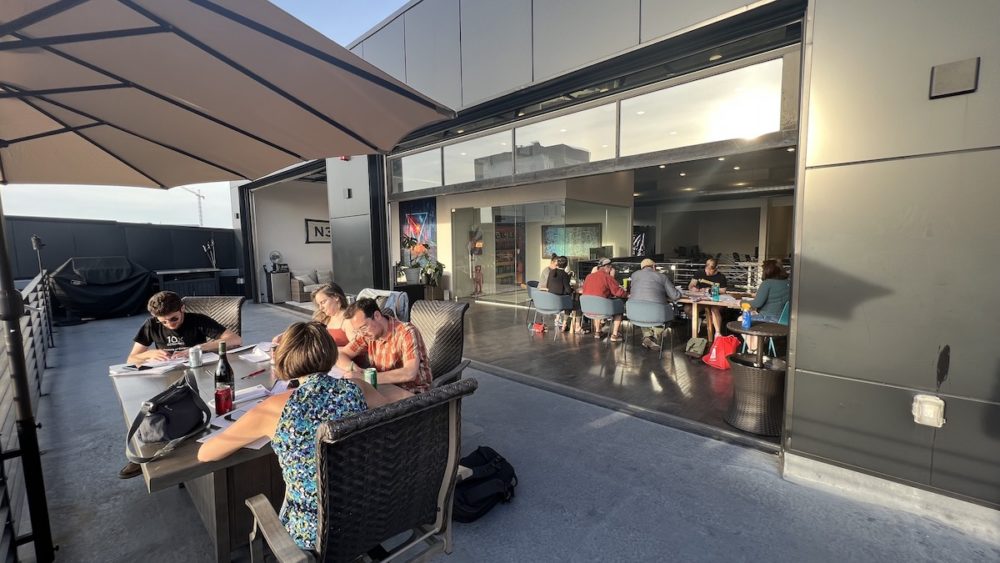
In September of 2006, I walked into a big old house located in Chestnut Hill.
I remember the room was filled with a nervous positivity. Creative Camp, as it was dubbed, was our first local incarnation of an “unconference”, inviting the event’s attendees to fill the schedule with the ideas and projects that they wanted to share.
Whenever somebody asked “why doesn’t this exist?” my next words would be “because you haven’t done it yet — how can we help make it happen?”
At Creative Camp, I chose to share the earliest sparks of what would eventually become Indy Hall in front of a dozen or so people.
Those people included Kevin Lee, David Dylan Thomas, and Lauren Galanter, who are still members to this day.
After sharing, Lauren spoke up to share her enthusiastic support with an idea of her own:
“You could even call it something like ‘Independents Hall’ — like a hall of independent people, working together”
That’s when Indy Hall got its name. Before there was a space, a business, or even a community to speak of, there was a person who wasn’t me offering something to make the idea better.
I left that Creative Camp unsure what would happen next, but galvanized to keep having those conversations.
Johnny Bilotta was the first person to tell me: “Philly needs this. We need this. I need this.”
I kept meeting people, one by one. Every week, sometimes every day, another person told me something similar.
Soon, I started connecting those people with each other. Often over a meal or drinks. Sometimes in each other’s living rooms or back patios.
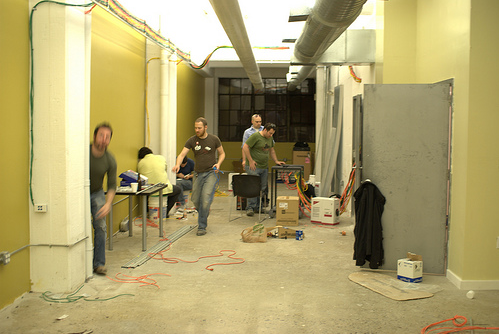
Before we organized anything resembling an “event”, we’d find other people’s events and go to them together.
Whenever somebody asked “why doesn’t this exist?” my next words would be “because you haven’t done it yet — how can we help make it happen?”
That’s how we started organizing some of our own events. BlogPhiladelphia was one of the first, teaming up with friends like Annie Heckenberger, who I’d only ever met on Twitter, to rent out a ballroom at the Warwick Hotel for a day of learning and sharing. More similar events followed.
For many of us who had chosen alternative paths in our work, this sense of togetherness made it feel like anything was possible.
Sometimes folks are surprised to learn that our first brushes with coworking weren’t even in a coworking space.
A few of our early community members — Jason Tremblay and Dave Speers — suggested that we try going to the same cafe on the same day.
On purpose! How novel.
I’m always the first to admit that those days at Chapter House on 9th and Bainbridge weren’t the most productive. The Wi-Fi wasn’t good, and the barista probably would rather us not be there.
But those days proved something that many of us now know to be true: working alone sucks, especially when it’s your only option, and spending a few hours working alongside people you like is the battery recharge we’d all been looking for.
Eventually, the club started asking for a clubhouse.
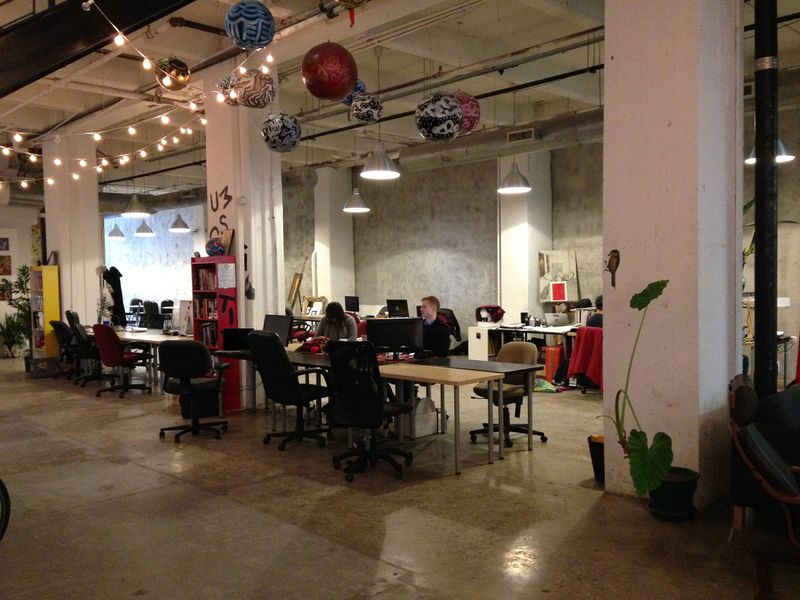
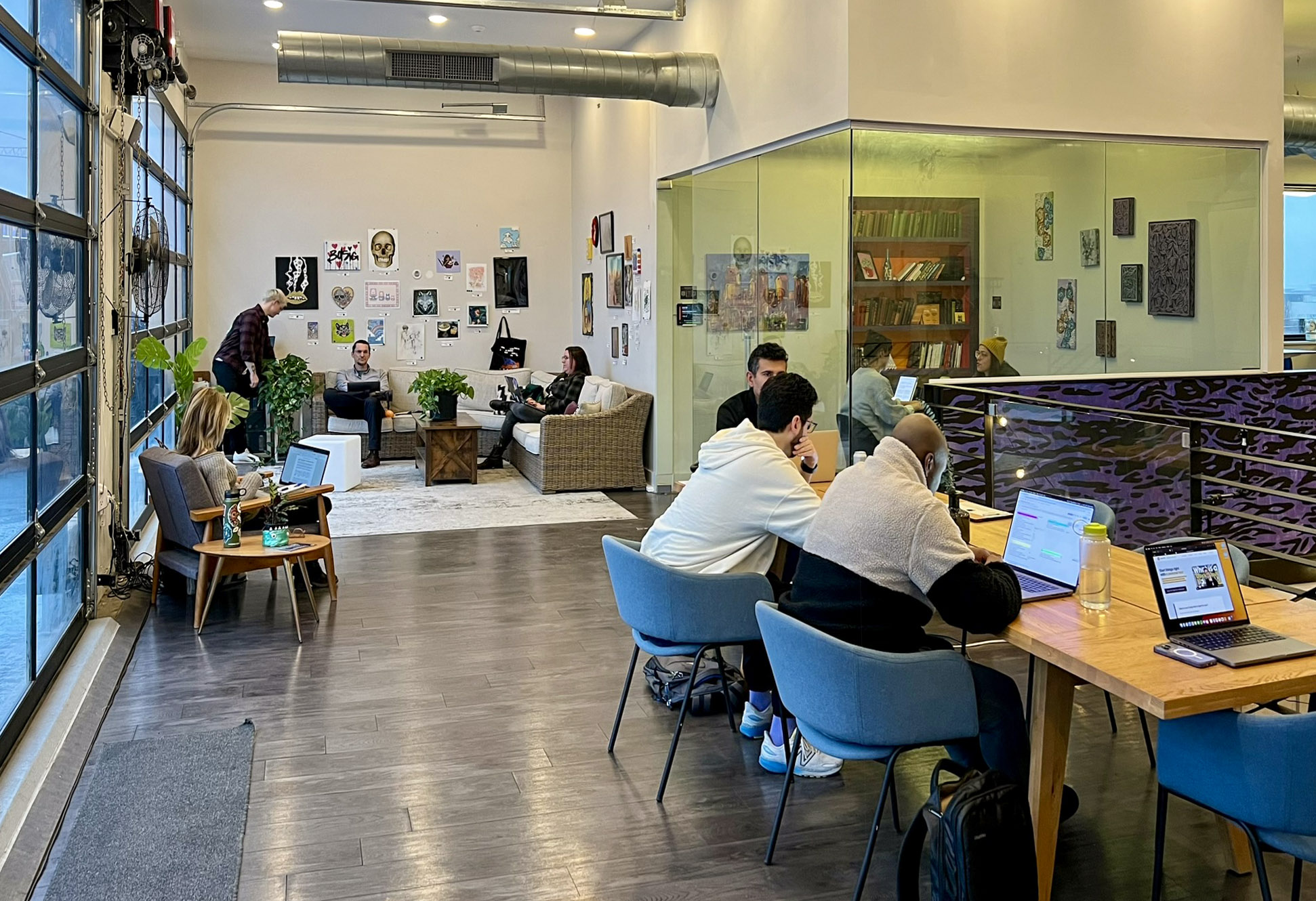
What if we could do this anytime we wanted? What if it was easier for us to find each other?
I shared the lessons I’d learned following other early coworking spaces, notably a pioneering spot called Citizen Space that I’d learned a lot from.
I teamed up with a partner, Geoff DiMasi, who lent a 23-year-old Alex Hillman two things: his wisdom and his credibility.
By the late spring of 2007, we were actively looking for potential places to call home. We scouted spaces from Craigslist.
We found a tiny, split-level loft on Strawberry Street, an alley in Old City.
The older couple who owned the building had designed and built it themselves, with a dream of their own.
Even though they didn’t understand us or our business model, they saw the dream that our community shared. They gave us a 6-month lease to try it out.
30 days later, we were on the front page of the business section of the Inquirer. I was quoted talking about not wearing pants and talking to a cat that I didn’t have. “Wow, seems like this is going to work out for you guys,” one of the owners said.
Neither of us knew how right she was.

Before we had our own space, we had people who wanted to be around each other.
Indy Hall is special for many reasons, but the thing I think has set us apart is that the people always came first.
People who are genuinely curious about each other and what we could do together that we couldn’t on our own.
People who were generous with their time and willing to share what they knew and what they had.
Yes, having an address made it easier for us to find each other.
But it’s the people — and the way you contribute to each other — that has made this 20-year journey possible.
“It’s not what we’ve done, it’s how we do.”

There are lots of ways we could celebrate, but the idea that really landed for me was when Adam said the line above.
This month, we’re not celebrating that we’ve managed to survive for 20 years.
We’re celebrating the way that we’ve shown up for each other for 20 years.
Since that first Creative Camp, Indy Hall has existed because someone showed up, said hello, and shared something of themselves that would benefit the others in the room.
That simple idea lets me trust that even when I’m not 100% sure how it’s gonna go, if the people show up for each other, we’ll all be better off for it.
And that’s all I ever wanted.
To help and encourage each other be a little bit better every day.
Thanks for 20 years of those days. May we co-create many, many more.