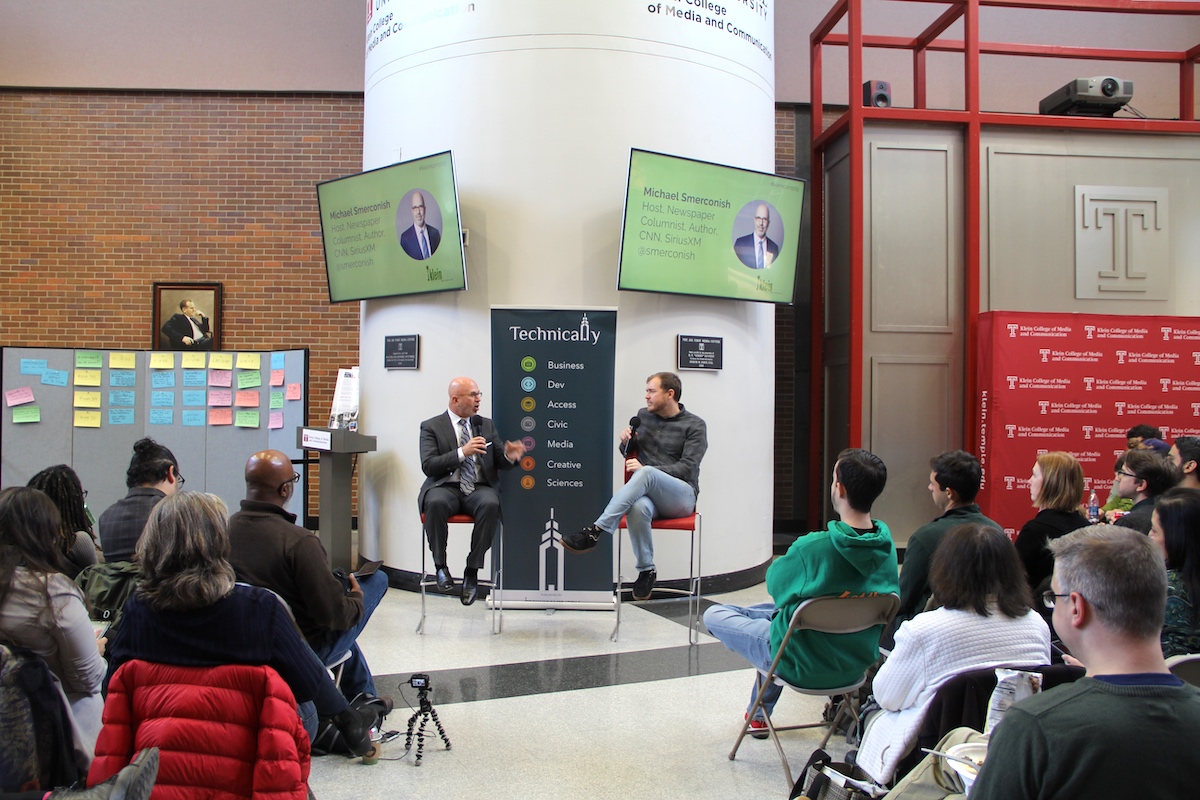
If the future of media is hopelessly bleak, no one got the memo at Saturday’s Klein News Innovation Camp.
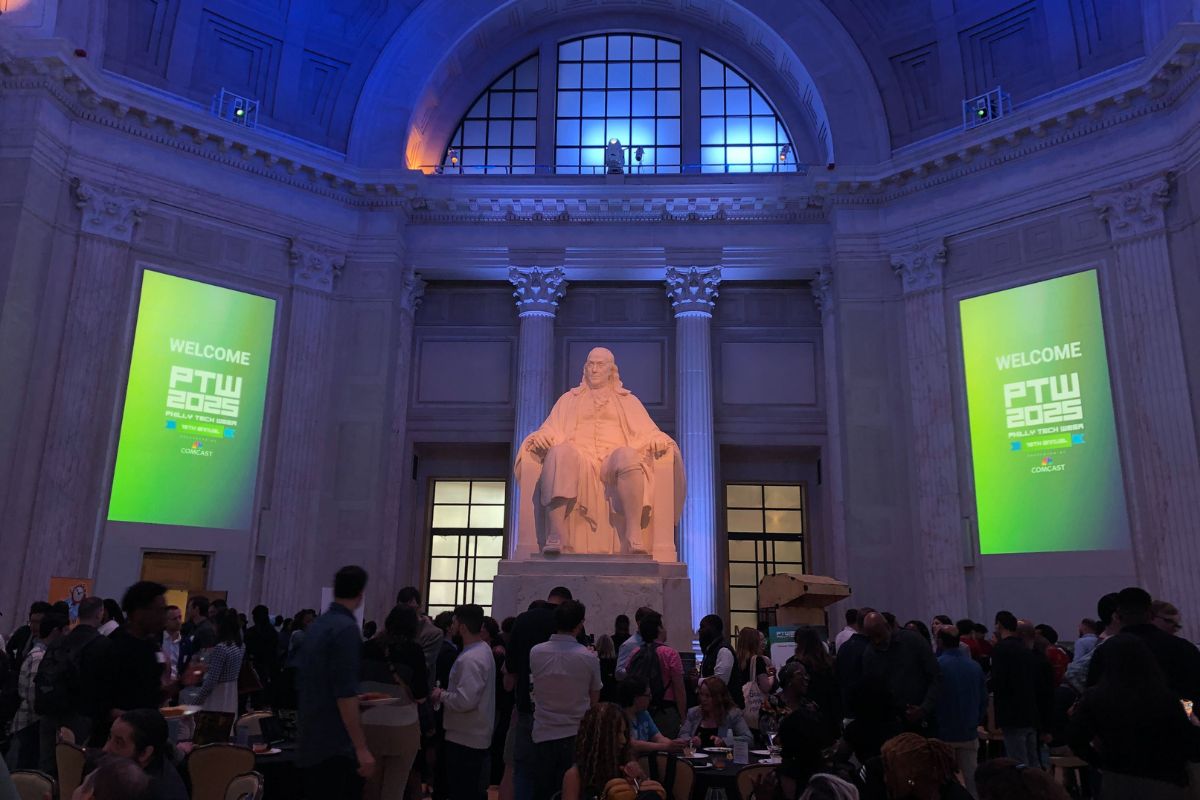
Media pros from around the Mid-Atlantic came together for the 11th edition news unconference, which was organized by Technical.ly and featured presentations around the future of news. After swapping Twitter handles over a breakfast spread provided by event sponsor Temple University’s Klein College of Media and Communication, attendees were off to a day that would feature journalism geekery and Klein Camp’s first-ever freelancer pitch auction.
The first block of the day featured sessions like former WHYY VP of News and Civic Dialogue Chris Satullo’s provocatively titled presentation “Are the News Media Killing Democracy?” plus a panel on “Funding the Future Newsroom” and a heated discussion around collaborative journalism presented by members of Broke in Philly.
“You can gamify collaboration — all journalists like to see their name out there,” Billy Penn Editor Danya Henninger explained during the collaborative journalism session. Henninger said she believes that encouraging collaboration across platforms increases the likelihood that a piece could be seen online or on the air, which makes everyone involved look good.
For Sara Lomax-Reese, the president and CEO of WURD, collaborative coverage translates into deeper storytelling experiences.
“We’re all still trying to get the story first,” she said. “Nothing replaces the urge for scoops or to be first. The real power of the collaborative approach is to tell more complex stories in deeper, more meaningful ways.”

One collaboration that turned into meaningful coverage was presented by SAP and the Associated Press as part of the second block of presentations. “A Conversation on D&I in the Workplace” looked at the process that led to an enterprise software company partnering with a major news organization on a workplace diversity survey inspired by the #MeToo movement.
“Data and numbers don’t always give us the full information we need to understand an issue,” said Emily Swanson, director of public opinion research for AP. “Personal information and reporting help give us the whole story.”
When asked how smaller companies with limited financial means can take action and launch their own D&I initiatives, SAP’s Lloyd Adams suggested taking on one issue at a time.
“You have to start somewhere, even if you just pick one thing you want to improve upon,” said SAP North America’s managing director for the Eastern region. “But don’t let perfection be the enemy of good. [The change] really does need to be something that is imperative, and the leadership team needs to live it.”

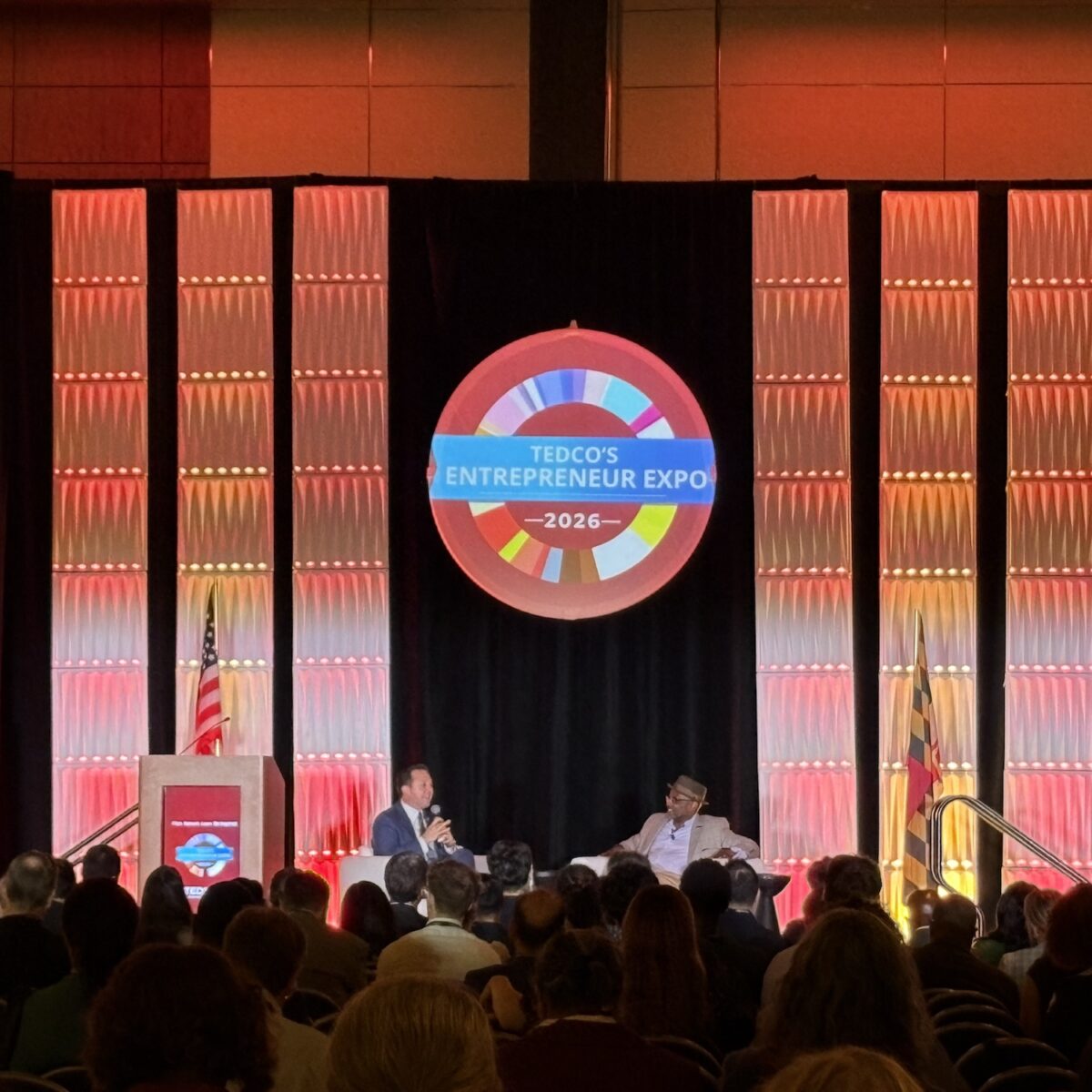
This year’s lunchtime keynote fireside chat welcomed CNN host and SiriusXM radio personality Michael Smerconish, who spoke to Technically Media cofounder and CEO Christopher Wink about the evolution of his career alongside the changing media landscape.
“Opinions are in demand, but facts are in short supply,” as is civility — especially on Twitter, Smerconish said. (As he discussed news and entertainment, and how the lines between the two are becoming more blurred, Smerconish and his lunchtime audience were visited by a rogue sparrow who proceeded to unleash its own tweetstorm for the remainder of the talk.)
Following lunch was the inaugural freelancer story auction led by Wink, who kicked things off with a lively introduction before letting the bids begin. Eight freelancers pitched stories, some in the very early stages of development, to editors from Billy Penn, WHYY, Philadelphia magazine, The Philadelphia Inquirer, Generocity, NBC Philadelphia/Telemundo62 and Technical.ly. All pitches were sold, including one to surprise bidder Julie Hancher of sustainable lifestyle blog Green Philly.
Afternoon sessions featured sessions on community-building through podcasts and dinner parties as well as strategies for thriving as a remote reporter. There were also unexpected gems, such as Aram Zucker-Scharff’s “A Distributed Future for Journalism,” which described an internet experience that is more decentralized and open. Zucker-Scharff, a developer for The Washington Post, shared a step-by-step process for creating DIY servers and static websites that could distribute content and operate outside of the influence tech giants like Amazon and Microsoft, which he said control over 230 million IP addresses combined.

The ability to house websites on servers that can bypass state-sanctioned censorship in nations that limit access to certain content, or to just save your own work in the event that your former employer’s website goes away, opens the door to possibilities journalists should pay attention to, Zucker-Scharff explained.
“Now is the time to get in and influence how these systems are built,” he said.
One of the most inspiring presentations came from Alison Burdo of the Initiative for Better Gun Violence Reporting. Turning the tide of gun violence begins with refocusing on those impacted most by it.
“The shooter’s narrative is the least important narrative,” she explained. “The victim’s narrative should be the focus.” Burdo shared that the majority of gun violence victims survive, and for every news story that covers gun-related deaths, there are many more stories about survivors and their communities that are not getting airtime.
Burdo’s session on covering community gun violence was co-hosted by WHYY Community Contributors and Engagement Editor Chris Norris, who offered strategies for avoiding fear-based reporting and embracing opportunities to engage with communities affected by gun violence directly.
“Go to community events and embed yourself,” Norris said. “Take off your reporter hat, and put on your neighbor hat.” For Norris, building trust is as important as presenting the narratives around the epidemic of gun violence.
To close out her presentation, Burdo shared a call to action that summed up the entirety of the day and its lessons: “Report with intention.”