It’s 10 p.m., and a man is in the kitchen turning on the stove to make breakfast, convinced it’s morning.
This is the kind of scenario that happens for people with dementia, said Peter Bacas, cofounder of Wovenly. For caregivers, he said, episodes at night are especially challenging. Short of calling emergency services, options for immediate support are limited.
Bacas set out to change that with his startup.
He previously helped build Lucira Health, developer of the first COVID-19 test authorized for people to perform entirely at home in the US. His wife, a dementia clinician, introduced him to the challenges family caregivers face and the need for better support.
“I found my inspiration to start this business because of the frustrations that she had expressed,” Bacas told Technical.ly.
“One of the primary challenges is that if or when a family caregiver is stressed… that gets in the way of them being able to appropriately care for a patient with dementia.”
Peter Bacas, Wovenly
Founded in 2023 by Bacas and physician Sachin Nagrani, Wovenly supports the family caregivers who support dementia patients by managing things like medications, appointments, behavioral changes and household safety.
Outside of pediatrics, the healthcare system is generally not structured to treat a family member as part of the patient’s care team.
“One of the primary challenges is that if or when a family caregiver is stressed, anxious, depressed or burdened, that gets in the way of them being able to appropriately care for a patient with dementia,” Bacas said.
Wovenly contracts with health systems and clinics, including providers participating in Medicare’s GUIDE model, which pays for coordinated dementia care and caregiver support. The company then provides monthly appointments and on-demand help from a team of licensed clinical social workers.
From diagnostics to dementia care: A service, not an app
When a patient experiences something like that 10 p.m. episode, the caregiver can contact a Wovenly social worker, who can coach them through managing the immediate situation. It will then follow up the next day with safety recommendations and notify the patient’s medical provider.
It’s a healthcare service, not an app or patient portal, Bacas stressed.
That means already overwhelmed families don’t have to learn to navigate a new technology platform. Caregivers can communicate with Wovenly social workers by phone, text, email or video — whatever feels most comfortable.
Bacas studied bioengineering at the University of Pennsylvania and spent much of the next decade working at healthcare startups, beginning with Penn spinout Drop Diagnostics.
RELATED NEWS
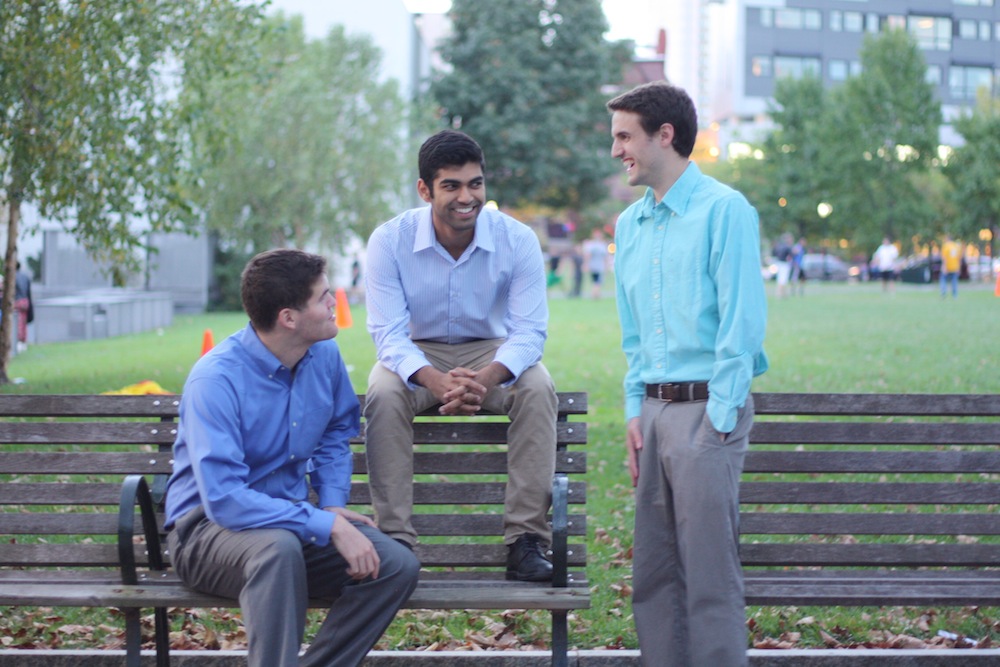
These 22-year-olds are building a better flu test
It’s going to take three to four years and a lot of money to get their first medical device to market, but the guys behind Drop Diagnostics say they’re in it for the long haul.
He then joined Lucira Health, where he helped build the company over roughly five years.
“It was exciting to see this thing that I worked on for so long be available on Amazon and have it shipped to my house,” Bacas said.
He later helped restructure genomics company IDbyDNA and worked through its sale to Illumina in 2022.
Dementia care represented a shift away from physical medical products. Bacas began working full time on Wovenly with Nagrani, a family medicine physician, in May 2023. They formally established the company that November.
Growing through health system partnerships
So far, Wovenly’s provider partners include Texas Tech University Health Sciences Center, Oregon Health & Science University and BSA Health System. The company is also working toward an agreement with Stanford University.
Wovenly is looking to add more health systems, hire additional care staff and build technology that could automate administrative work without replacing the human support at the center of its model.
Bacas and Nagrani initially funded the company out of pocket and have not yet taken salaries. Wovenly has since raised about $1 million through a friends-and-family round and angel investments, Bacas said.
Its backers include Robin Hood Ventures, Ben Franklin Technology Partners and Jumpstart New Jersey.
The company’s next stage of growth will involve adding more provider partners and hiring social workers as enrollment rises.
Bacas is also searching for a head of engineering to expand Wovenly’s internal technical infrastructure and explore how artificial intelligence could support its care teams.
For now, the company uses tools including Claude and ChatGPT for corporate tasks such as strategy, creating materials, developing marketing campaigns and processing data. AI is not being used with patient information or in frontline care.
Bacas sees a future role for it in administrative work that consumes social workers’ time but does not necessarily require their training, including appointment coordination, records access and moving information between systems.
But the technology remains secondary to the relationship Wovenly was built to support. Bacas said the company’s larger purpose still lies in the frustrations that inspired him to start it.
“My wife and her colleagues shared a clear vision of what dementia care should look and feel like,” Bacas said, “but were repeatedly blocked by limitations in the systems around them. We set out to fill those gaps and help bring that vision to life.”