
Startup profile: Wood Wide AI
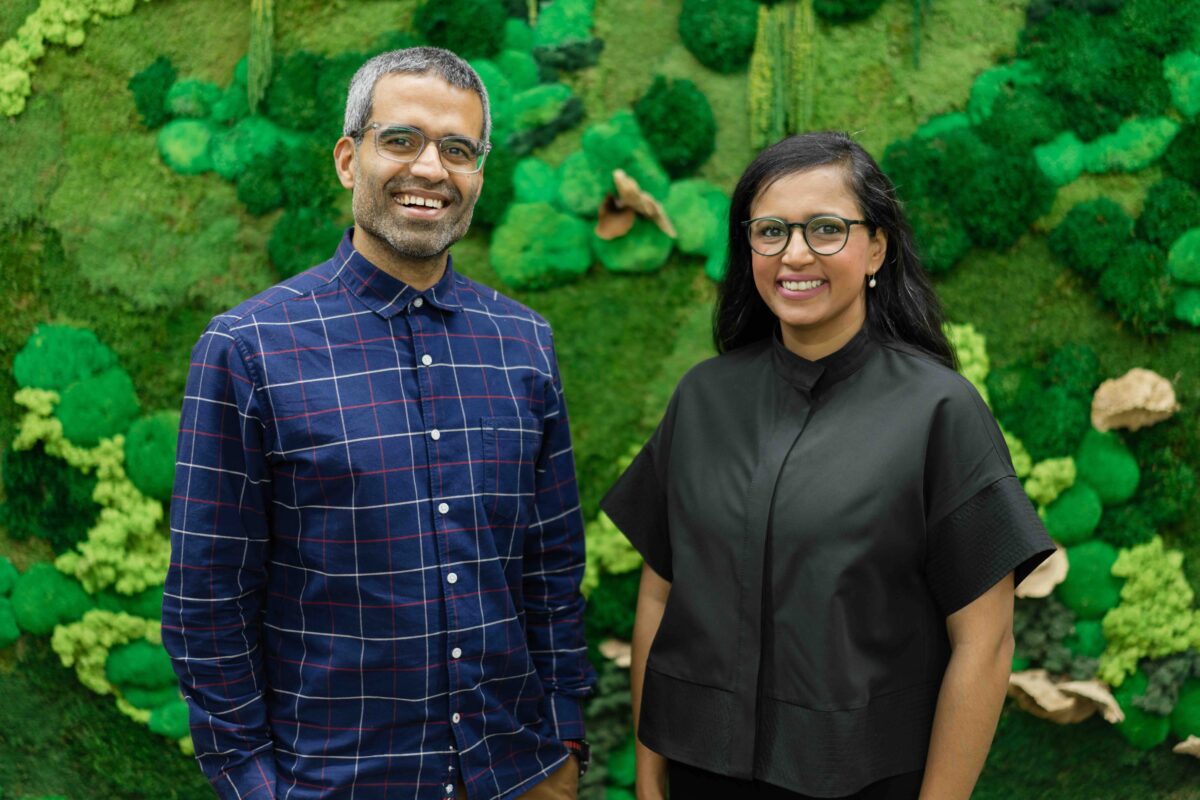
- Founded by: Pradeep Ravikumar and Varsha Raj
- Year founded: 2025
- Headquarters: Pittsburgh, PA
- Sector: AI/ML
- Funding and valuation: $3 million raised, according to the company, at an undisclosed valuation
- Key ecosystem partners: CMU’s VentureBridge, Pear VC’s PearX and Innovation Works’ AlphaLab
AI systems aren’t yet reliable enough to be used in high-stakes situations — even if businesses are increasingly turning to LLMs to make business decisions.
Wood Wide AI wants to fix that.
The Pittsburgh-based startup, still in stealth, is building an API, or tool that can plug into existing AI systems and make them more reliable when working with numbers and structured data. It’s an idea that’s already about a decade in the making, according to cofounder Pradeep Ravikumar.
“I really hope in the next five years, when people are going to use AI systems for numeric reasoning, it’s going to be with reliable AI.”
Pradeep Ravikumar, Wood wide AI
“I would say, there’s been 10 years or so of research funded by DARPA and others, where the focus has been on how do we get AI to be a lot more reliable,” Ravikumar told Technical.ly, adding, “We see this huge potential for companies and individuals to be able to use AI to make more intelligent decisions, but just using LLMs is not going to cut it.“
Traditional language models are trained on vast amounts of text and learn to find statistical patterns in language. Ravikumar’s academic work proposes building a web of smaller, specialized models that understand what numbers actually mean in certain contexts.
Featured on Technical.ly’s 2026 RealLIST Startups, Wood Wide was cofounded in 2025 by Ravikumar, a professor of machine learning at Carnegie Mellon University, and his wife Varsha Raj, a longtime product leader at UPMC Enterprises.
After completing Innovation Works’ AlphaLab accelerator program, the company received some early support through a $3 million pre-seed funding round from investors Pear VC, Switch VC and Ardent Venture Partners.
Why LLMs struggle with structured data
LLMs have been known to struggle with mathematical reasoning.
A common early example of this was when popular AI systems would say 9.11 was greater than 9.9. Those mistakes are because the systems are primarily meant to reason through language, Ravikumar said.
LLMs also struggle to draw reliable conclusions from numbers in context. It’s a limitation that some researchers say makes them ill-suited, for now, for tasks like informing economic policies or diagnosing patients from numerical data.
With Wood Wide, the idea is that LLMs hand over this behind-the-scenes reasoning to the company’s API to produce answers or recommendations.
“The association between different words in one novel is pretty much the same association between different words in another novel,” Ravikumar said, “but the same is not true for numeric data.”
For example, an LLM may see the number 100 appear in two very different contexts: a 100 bpm heart rate measured by an Apple Watch and Apple’s stock price closing at $100. To a language model, both are just instances of the number 100 appearing near other words and it has no reliable way of knowing one number belongs to the world of health data and the other to financial markets.
This is something humans can see instantly, as we generally understand what numbers are trying to measure, where they come from and what decisions they can inform, but LLMs still struggle with this.
Numeric reasoning is just one piece of Wood Wide’s focus. The company is looking to reason through all types of structured data, which could mean anything from color codes in a product catalog to star ratings on a movie review platform.
The opportunity for this tech is clearest in fields where structured data is abundant, Ravikumar said.
“I really hope in the next five years, when people are going to use AI systems for numeric reasoning, it’s going to be with reliable AI,” he added, “and right now it’s only a tiny fraction.”
Small company, big ambitions
It’s an interesting time to be in the field because AI is moving so fast, Ravikumar said, but this is actually a boon to small companies like Wood Wide, which has just a team of six.
“We ourselves are an AI company, and we are building AI infrastructure, but we also are huge consumers of the existing infrastructure, and so that makes it very exciting,” he said. But there’s also a lot to do, with too few hours in the day, he added.
The startup’s name nods to the wood wide web of old-growth forests, where different species of trees communicate and share resources through underground networks.
It’s fitting for a company that’s aiming to become foundational infrastructure for AI systems.
“The companies that build the foundational layer of the AI infrastructure over the next two or so years will define the next decade,” Ravikumar said, “and numeric reasoning is one of those unsolved foundational layers, so that’s what we are building.”