
The Nylon Capital Center in Seaford has officially come back to life.

The Mill, a coworking and small-office space launched in downtown Wilmington, Delaware, 10 years ago, opened its third location nearly 100 miles south in Sussex County on July 15.

Built in the 1950s, the former shopping center was once the thriving hub of a DuPont company town, home to its nylon factory. The City of Seaford spent decades trying to revive the property before Mill founder and 9th Street Development partner Rob Herrera took on the project in 2022. He’d already expanded the coworking brand to a second New Castle County location.

“I hope it becomes a catalyst for a new generation of entrepreneurs.”

Rob Herrera, The Mill

“I made a commitment that we would have one of those facilities in all three counties,” said former Delaware governor and current Wilmington Mayor John Carney at the grand opening. “So the logical thing was to do it right here, with [Herrera’s] leadership.”

The event showcased The Mill Seaford’s communal workspace, private offices, shared desks, conference rooms and gathering space.

“I hope it becomes a catalyst for a new generation of entrepreneurs,” Herrera said, “and one small piece of a much larger resurgence here in western Sussex County.”

Keep scrolling for a look inside The Mill Seaford and at the people who helped bring it to life.

The Mill over the years

2015: A first look at The Mill⁠
Before construction was complete, Herrera outlined plans for a downtown Wilmington coworking space designed to serve people across professions, demographics and price points.

2016: Building a brand and opening downtown⁠
Technical.ly followed The Mill’s construction, branding and April 1 opening in the former Nemours Building.

2017: One year in⁠
Herrera reflected on the relationships formed inside the space, its early shortcomings and what he wanted to build next.

2020: The Mill expands to Concord
The Mill opened its second location in a renovated 1980s office building near Concord Plaza, adding more than 40 private offices and an indoor-outdoor communal workspace.

2021: Coworking through the pandemic⁠
The Mill never fully closed during the COVID-19 shutdown, though its downtown space was nearly empty. Technical.ly spoke with members who kept coming in, including some who needed quiet workspace, separation from home or simply the presence of other people.

2022–24: Expanding for a new era of work⁠
The Mill redesigned and expanded its Wilmington footprint as hybrid companies sought smaller offices, flexible leases and reasons for employees to work together in person.

2023–26: The move downstate
Technical.ly tracked plans to bring coworking and stronger business connections to Seaford, followed by construction and the opening of The Mill’s first Sussex County location.
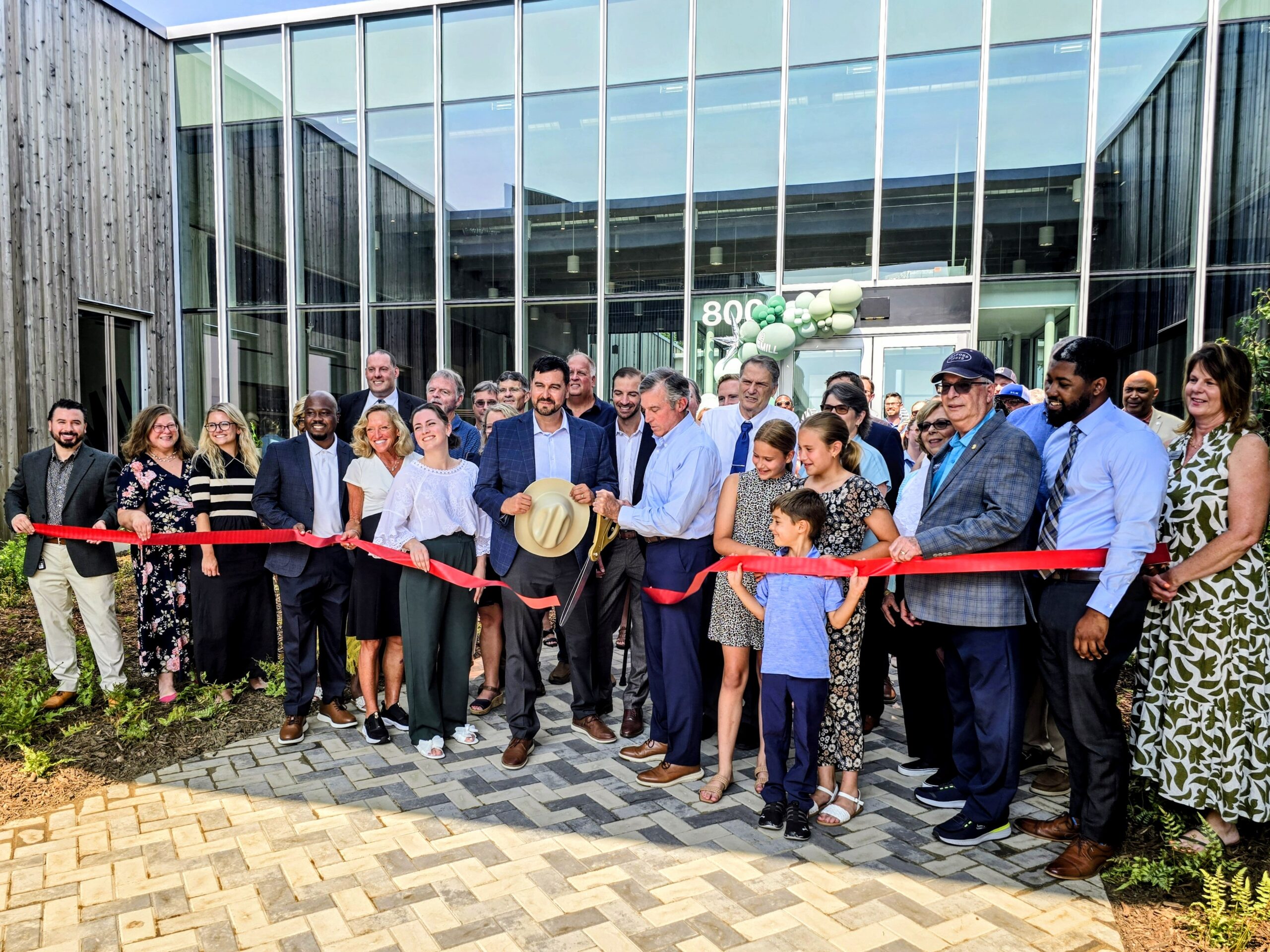
A group of people stands outside a modern building as a man cuts a red ribbon, celebrating a grand opening event.
State and local officials joined The Mill founder Rob Herrera, members of the 9th Street Development team and Seaford community leaders to cut the ribbon on The Mill Seaford on July 15. (Holly Quinn/Technical.ly)
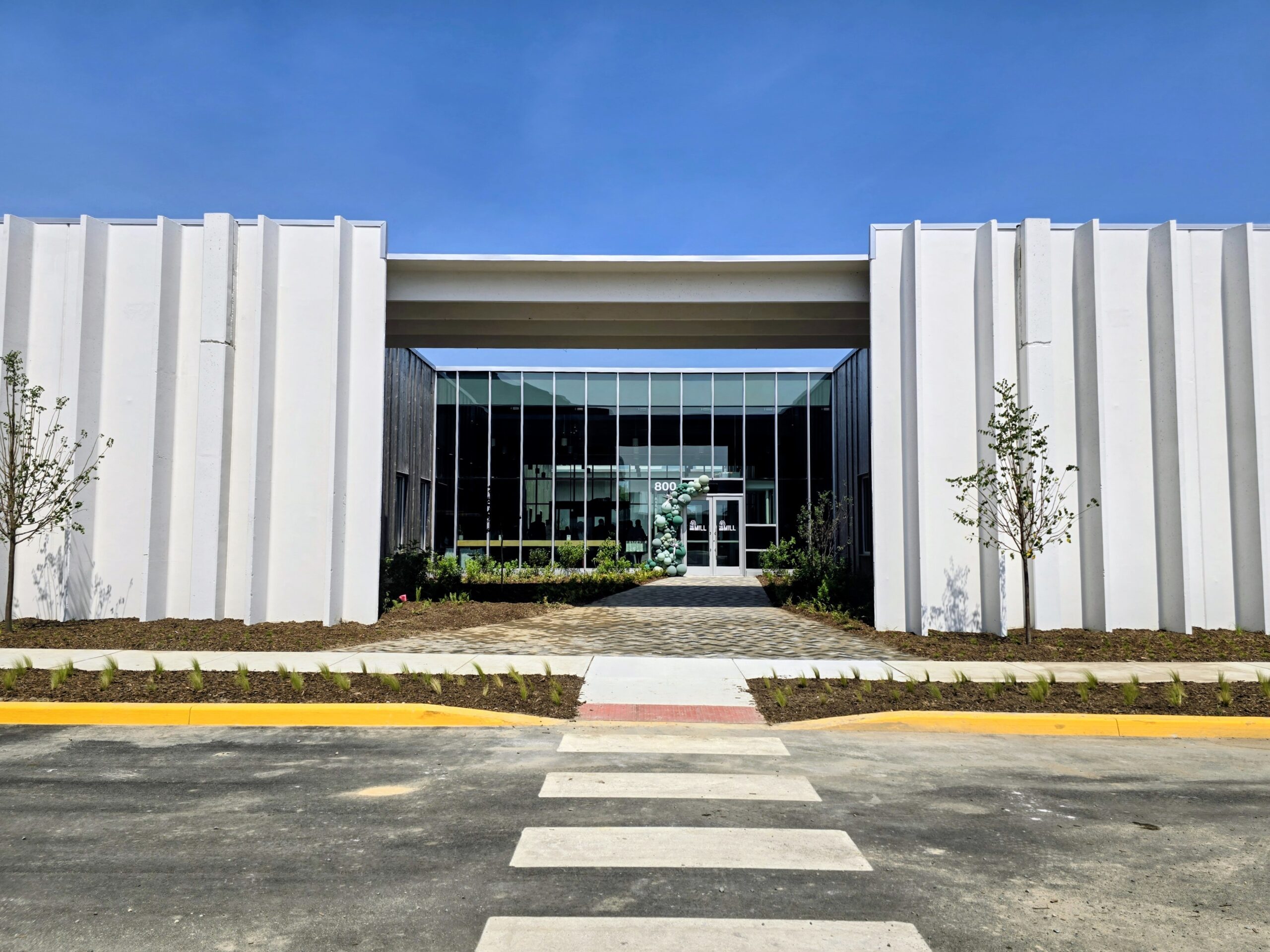
Modern building with tall white walls, large glass entrance, and newly landscaped grounds, viewed from across a street with a crosswalk under a clear blue sky.
The Mill occupies a renovated section of the former Nylon Capital Shopping Center, once a busy commercial hub in the DuPont company town. The property is now being redeveloped as the Nylon Capital Center.(Holly Quinn/Technical.ly)
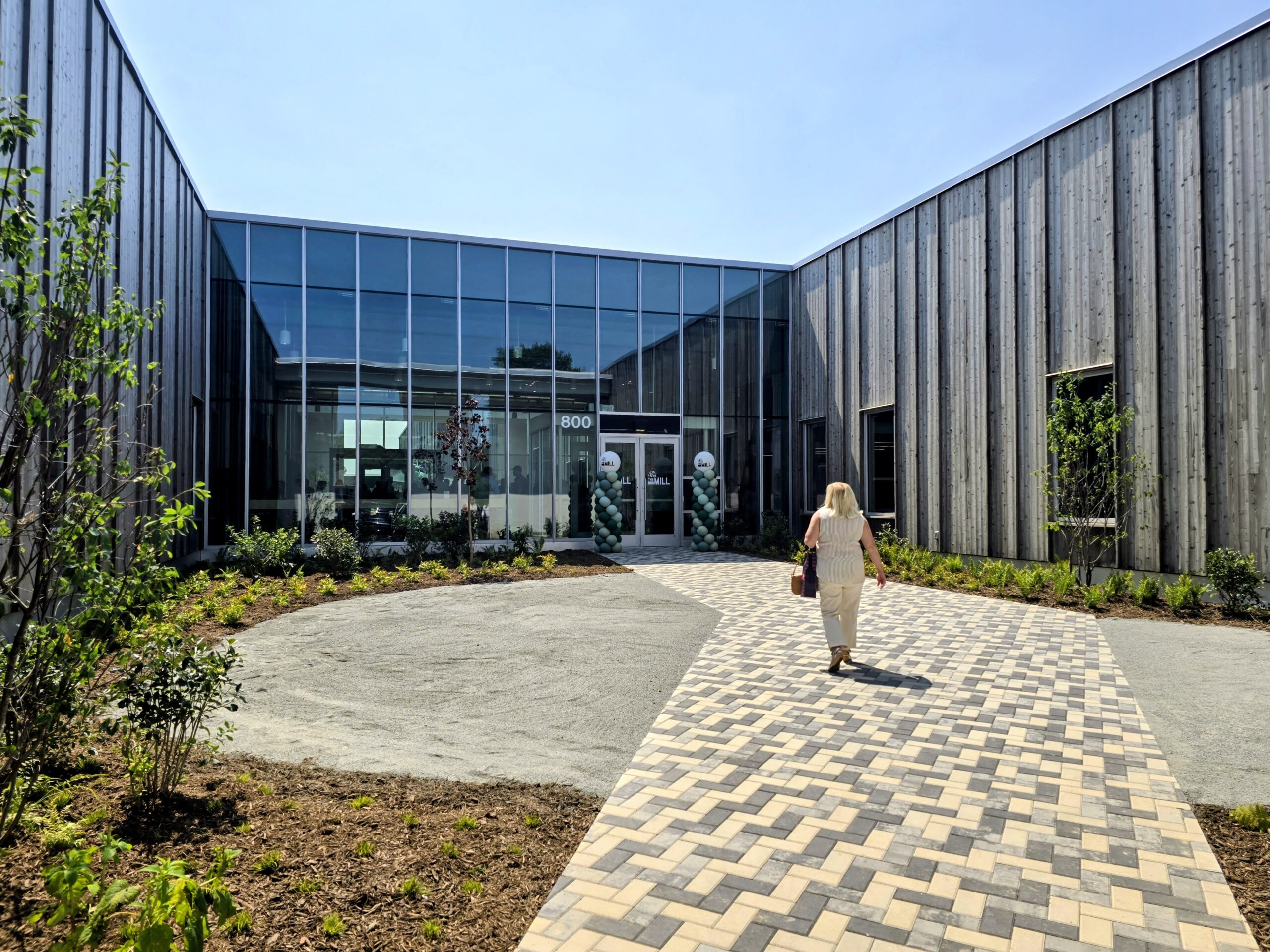
A person walks toward the glass entrance of a modern building with wood-paneled walls and a patterned brick pathway on a sunny day.
The Mill Seaford is the coworking company’s third Delaware location and its first in Sussex County, nearly 100 miles south of the original downtown Wilmington space.(Holly Quinn/Technical.ly)
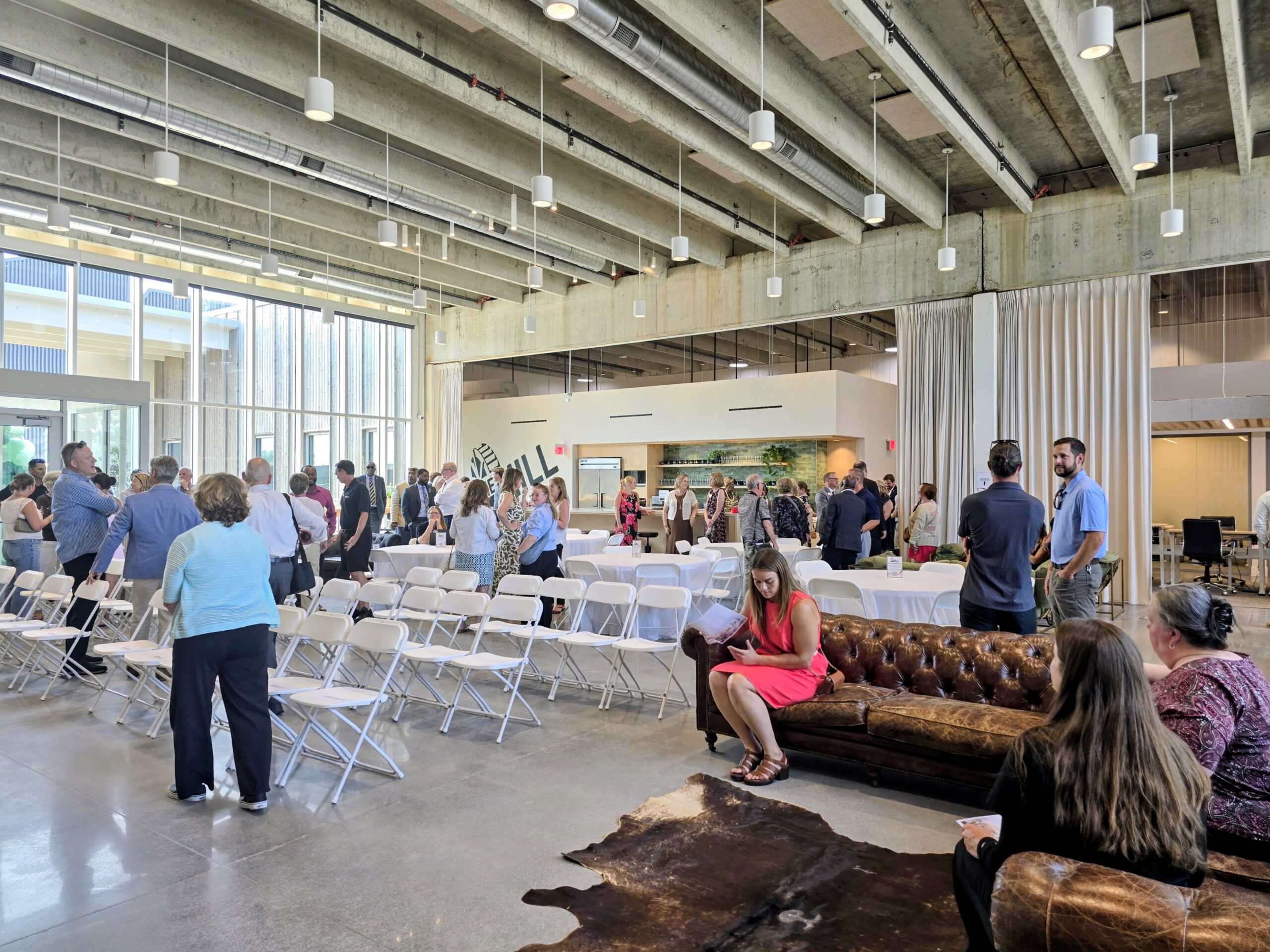
People gather in a modern, open room with folding chairs, a leather sofa, and exposed ceilings. Some are seated, while others stand and converse. Natural light fills the space.
The grand-opening program filled The Mill’s central gathering space, designed for community events as well as day-to-day coworking.(Holly Quinn/Technical.ly)
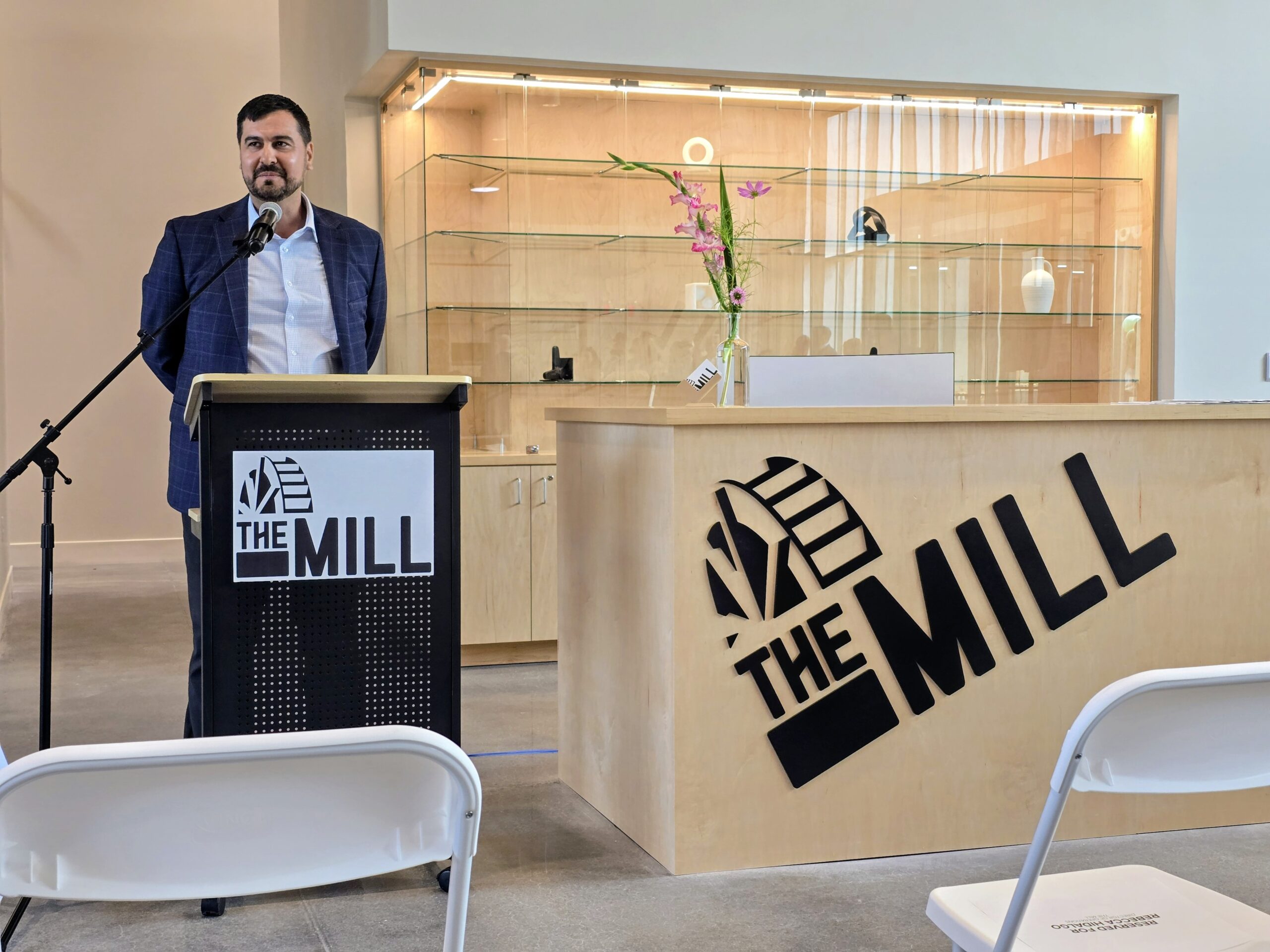
A man in a suit stands at a podium labeled "The Mill" next to a modern wooden reception desk with the same logo, in a bright room with chairs and shelves.
Rob Herrera opened the first Mill in downtown Wilmington in 2016. Ten years later, he described the Seaford project as the biggest challenge he has taken on. (Holly Quinn/Technical.ly)
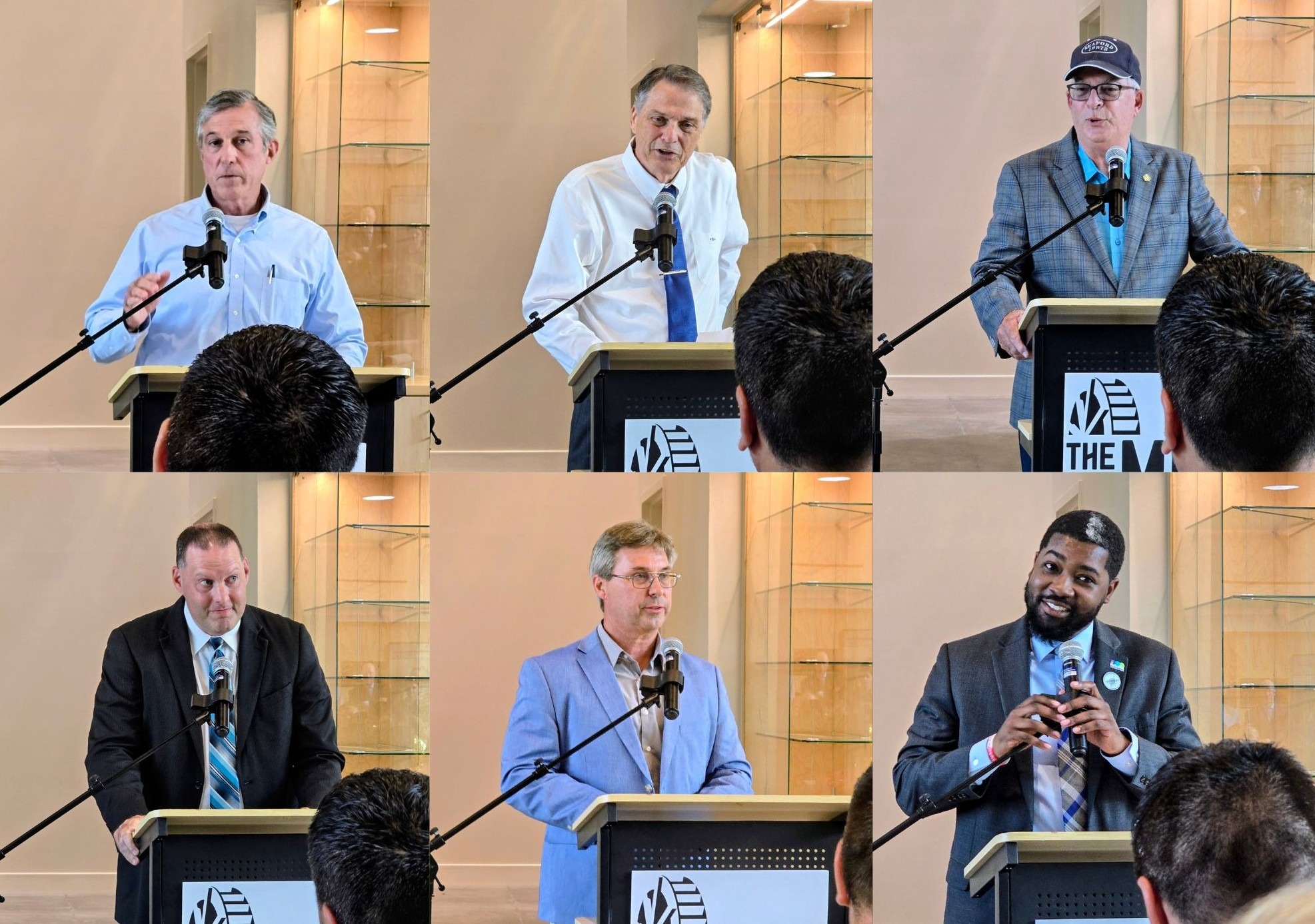
Six men, each at a podium with microphones, speak to an audience in a professional indoor setting.
Speakers included former Delaware Gov. and current Wilmington Mayor John Carney, state Rep. Danny Short, state Sen. Bryant Richardson, Seaford Mayor Matt MacCoy and Delaware Division of Small Business Director C.J. Bell. (Holly Quinn/Technical.ly)
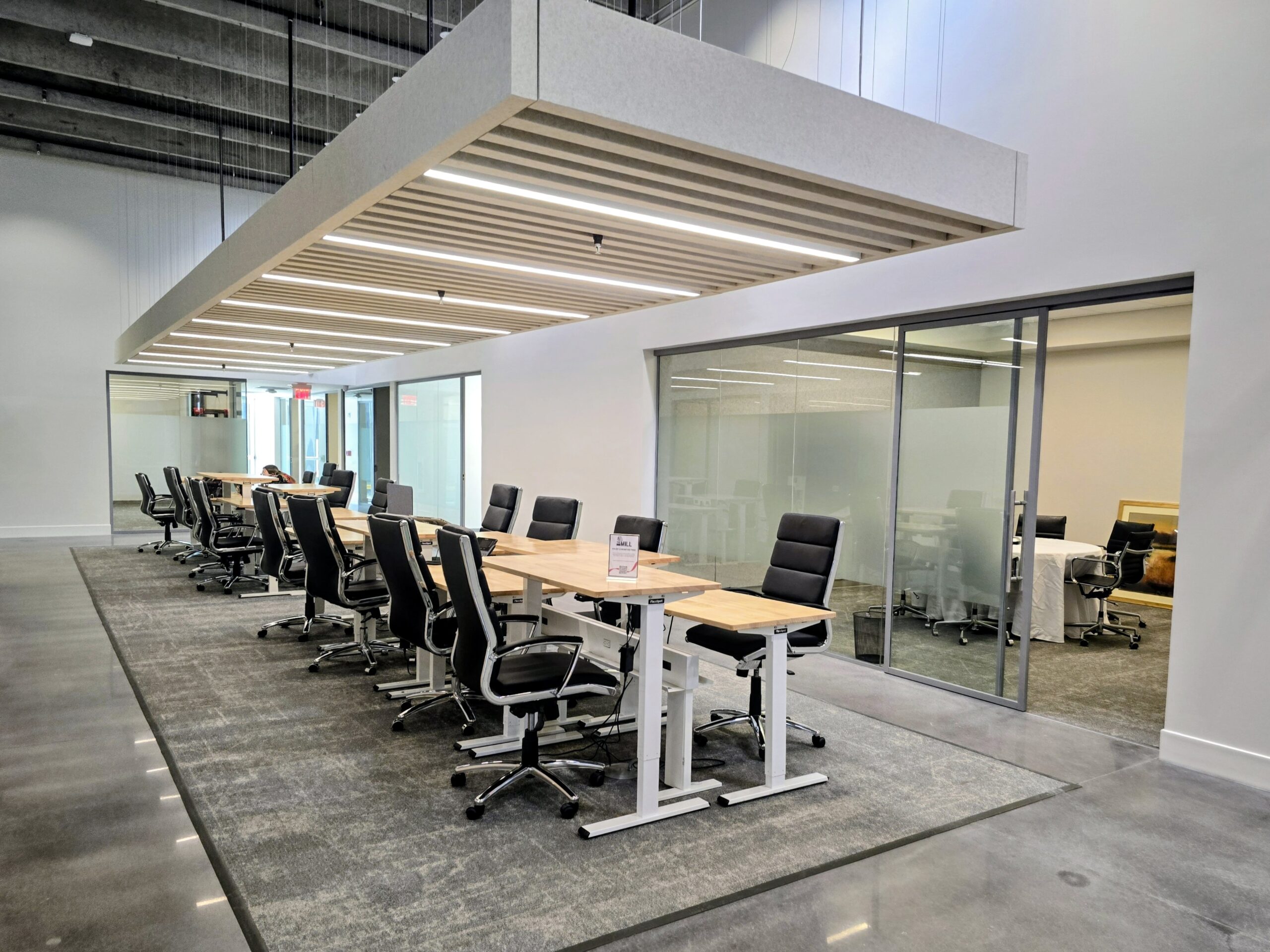
Modern open office space with long shared desks, black chairs, a large overhead light fixture, glass-walled meeting room, and polished concrete floors.
The new location includes communal work areas, shared desks, private offices, conference rooms and phone booths for entrepreneurs, small businesses and remote workers. (Holly Quinn/Technical.ly)
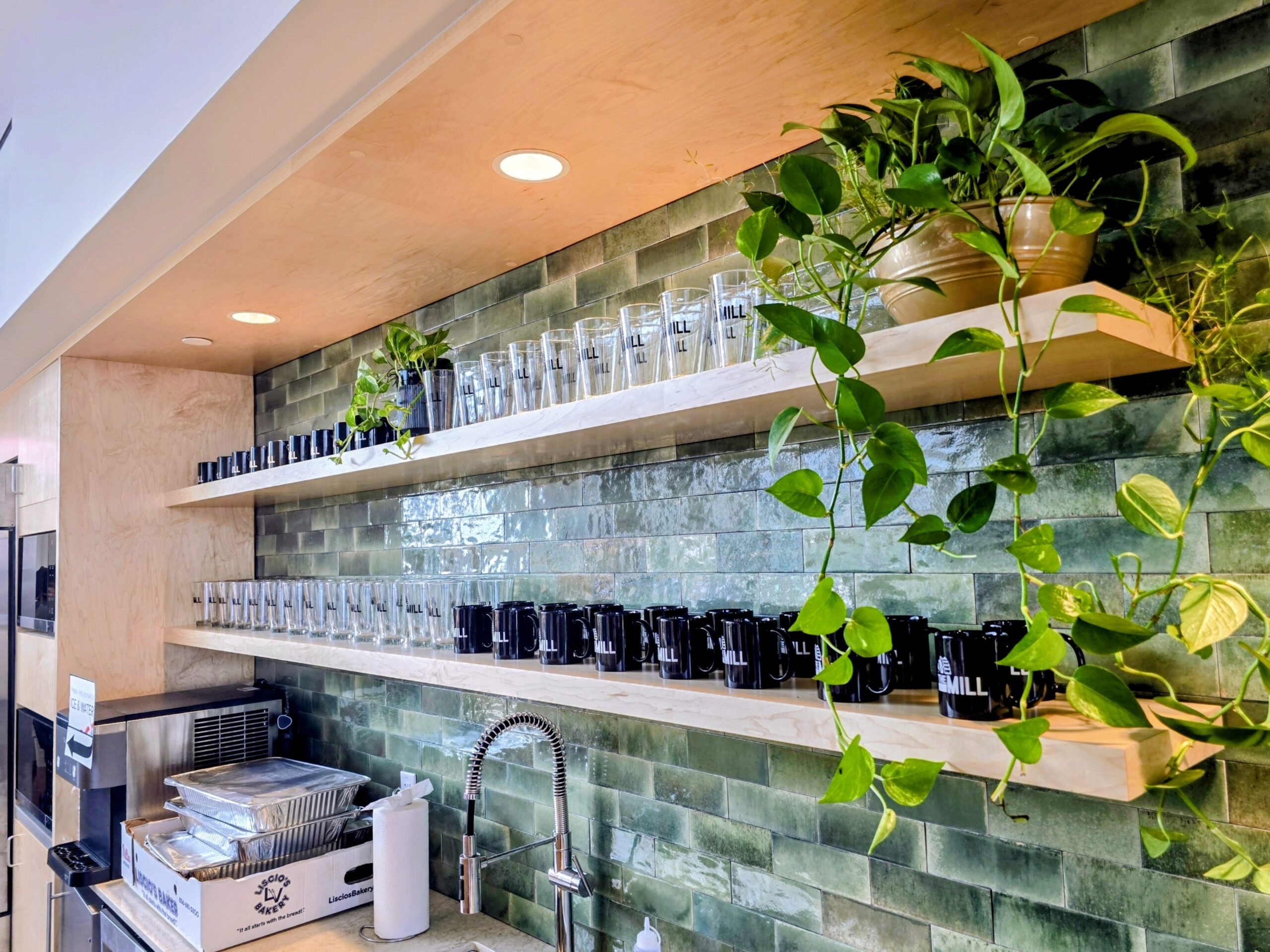
Two wooden shelves holding glasses, black mugs, and potted plants are mounted on a green tiled kitchen wall above a sink and counter with various kitchen supplies.
A shared kitchen sits beside the main gathering area, with Mill-branded mugs and glassware lining the shelves. (Holly Quinn/Technical.ly)
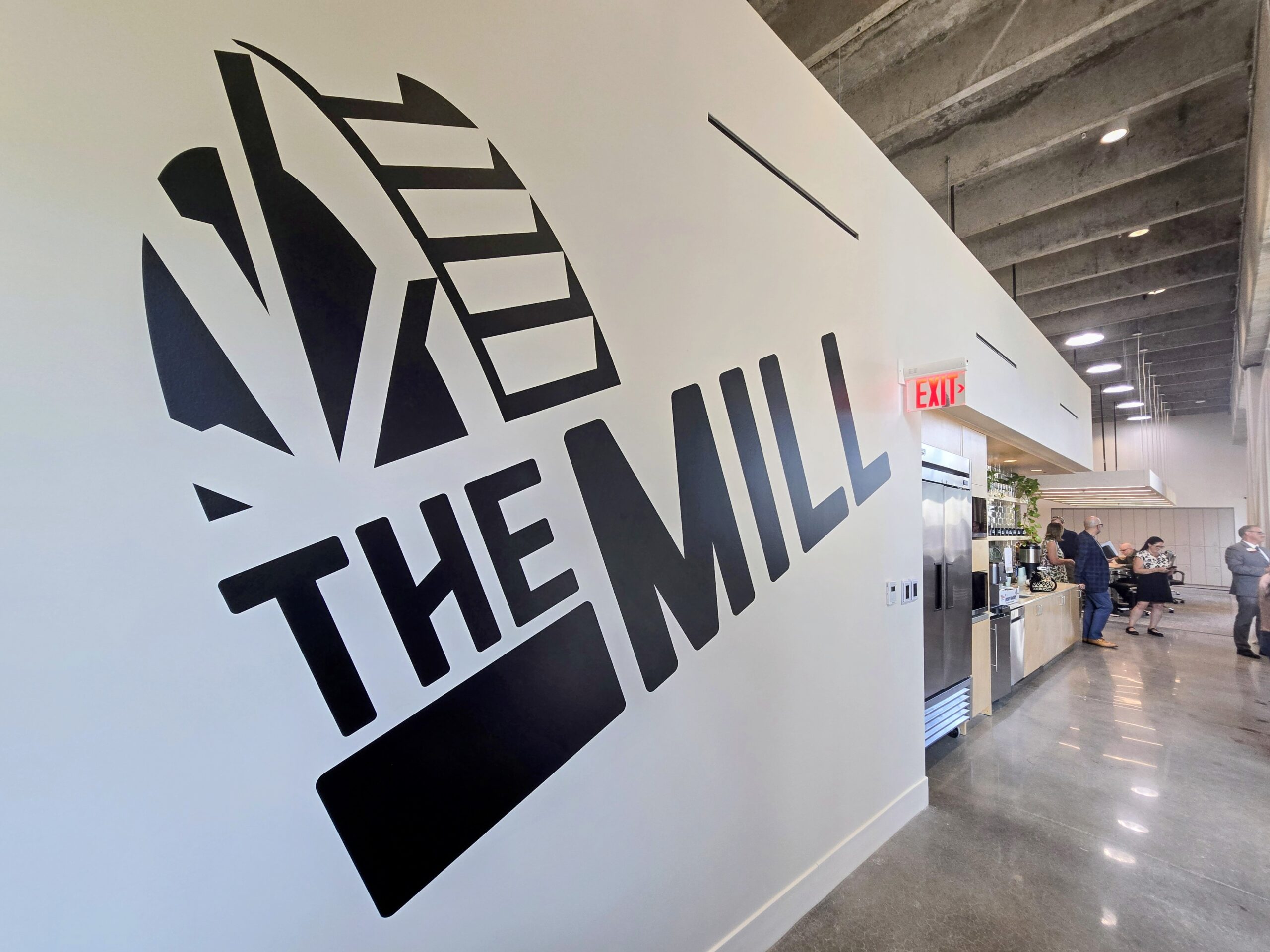
Large black "THE MILL" mural on a white wall inside a modern, industrial-style space with exposed ceiling and people gathered near a coffee area.
The Mill’s name references Eleutherian Mills, the du Pont family’s early industrial site on the Brandywine. (Holly Quinn/Technical.ly)
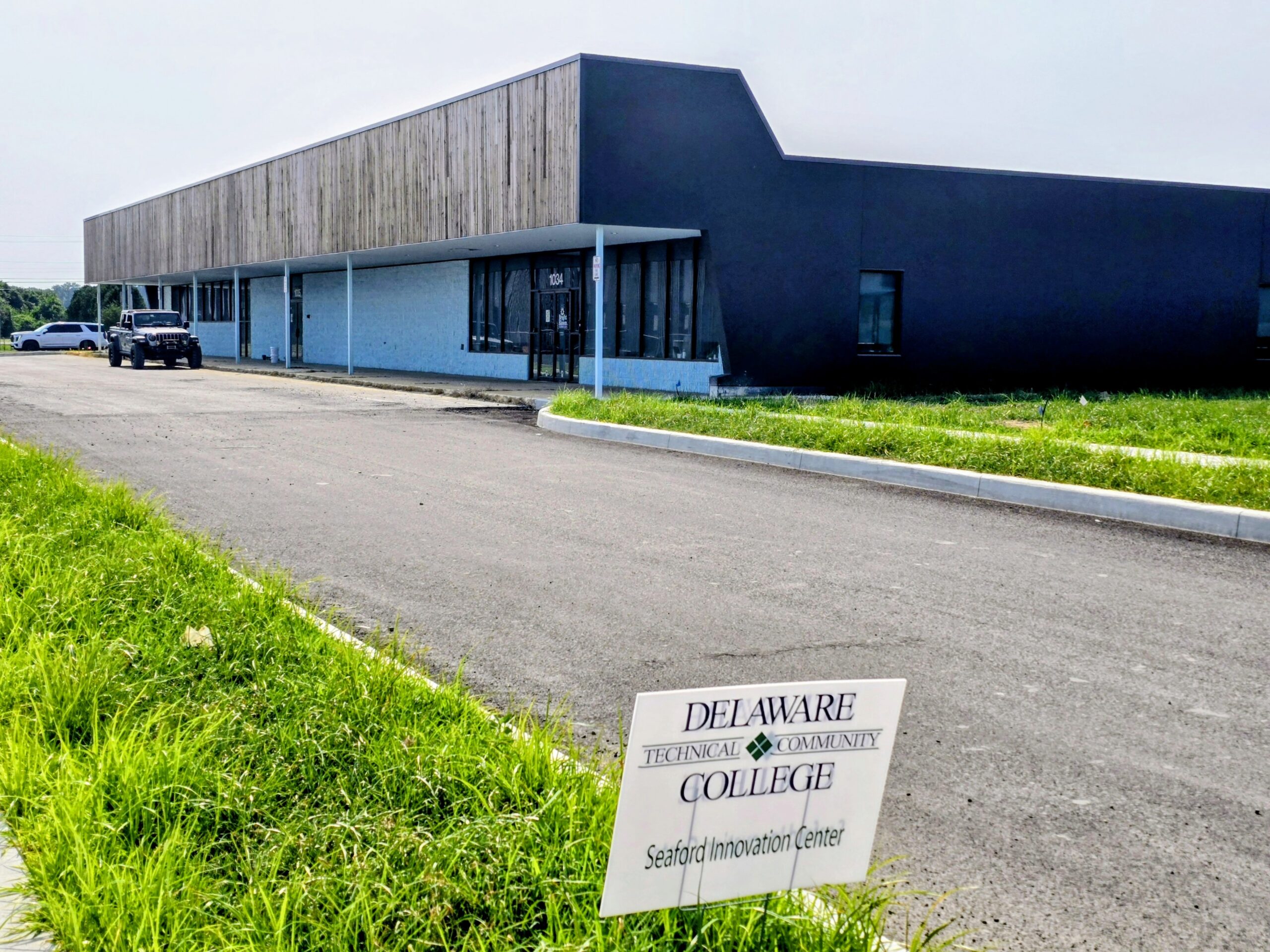
A modern, single-story building with a sign in front reading "Delaware Technical Community College Seaford Innovation Center." A black SUV is parked near the entrance.
The Mill is one piece of the broader Nylon Capital Center redevelopment, which includes new space for Delaware Technical Community College and a mix of banking, education, healthcare, retail/restaurants and community uses. (Holly Quinn/Technical.ly)