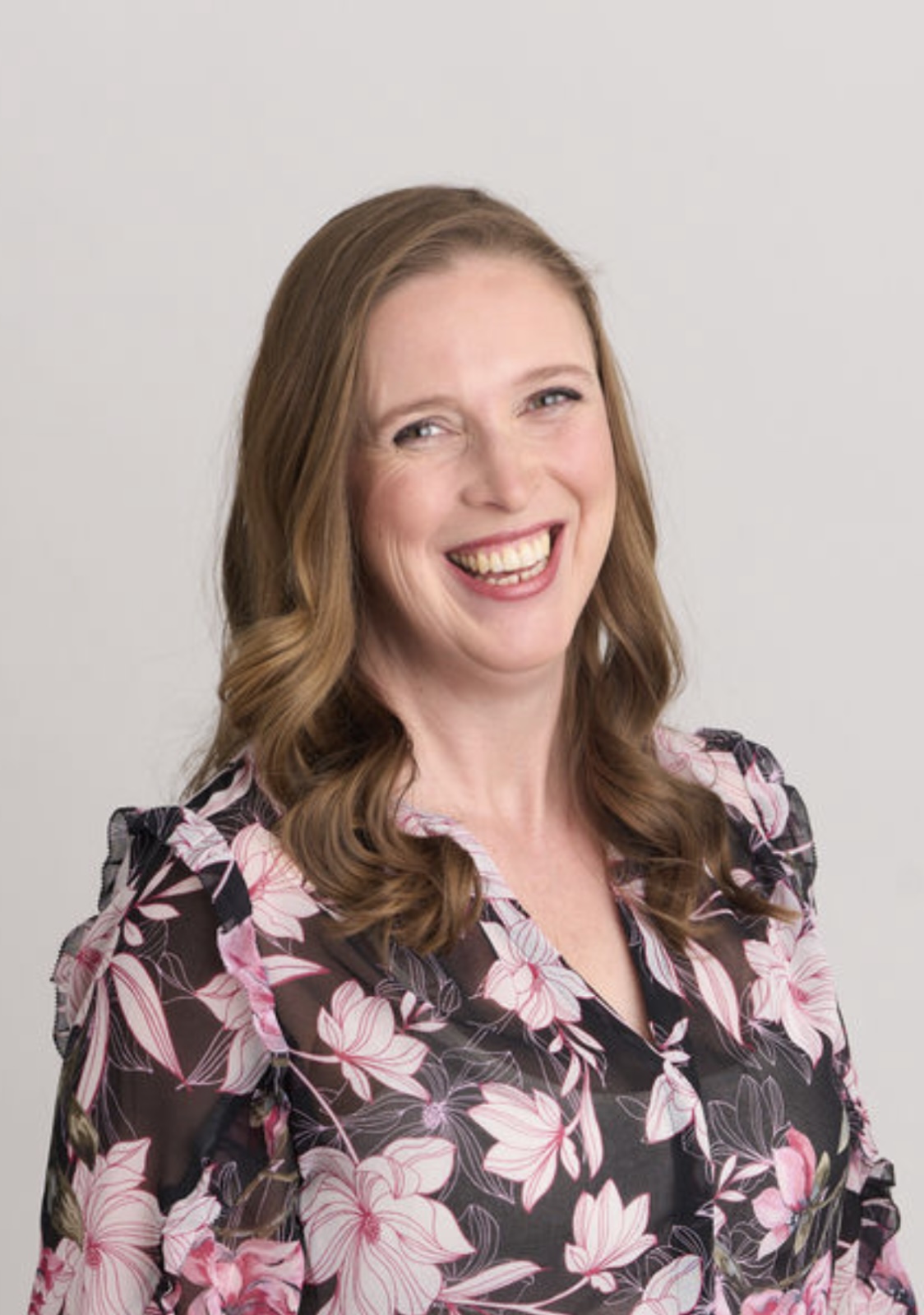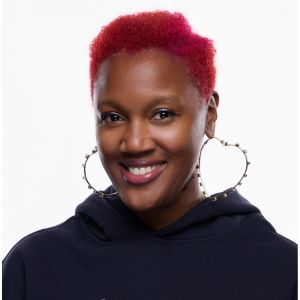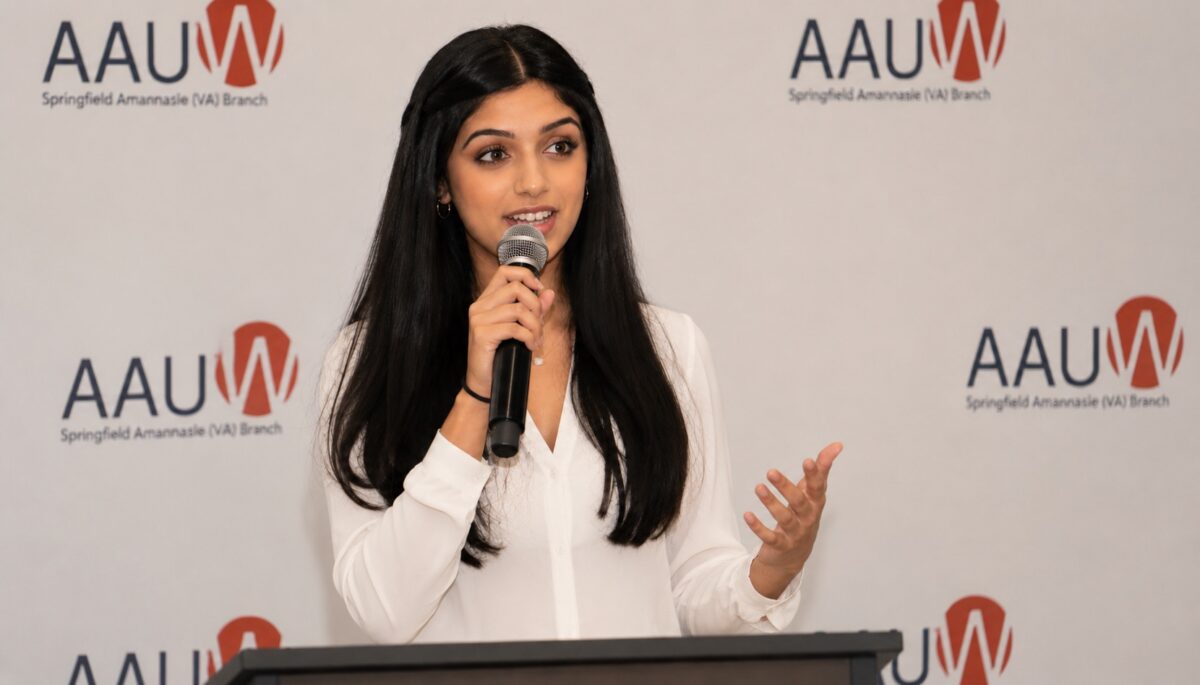
Growing up, Navya Tuteja watched her mom navigate job accommodations because she was hard of hearing.
It seemed very exhausting, Tuteja said. Inspired by that experience, the Northern Virginia teen is building a free AI platform that helps neurodivergent people and people with invisible disabilities assess whether a job is right for them.
While location and benefits are typically easy to understand, Tuteja said, Raaha compiles other important information — like remote work options, or schedule predictability — to come up with a customized “job fit” score.
Launched late last month, the platform already has 150 users exploring potential jobs.
Tuteja recalled her mom’s needs not being taken seriously. After she was hired, accommodations were inconsistent, because hearing issues are an invisible disability.
“Getting the opportunity isn’t the hard part,” 17-year-old Tuteja told Technical.ly. “I think the hard part is ending up in an environment that was never built for how you work.”
Others seem to feel the same, judging from Raaha’s early demand. Launched late last month, the platform already has 150 users exploring potential jobs, she said.
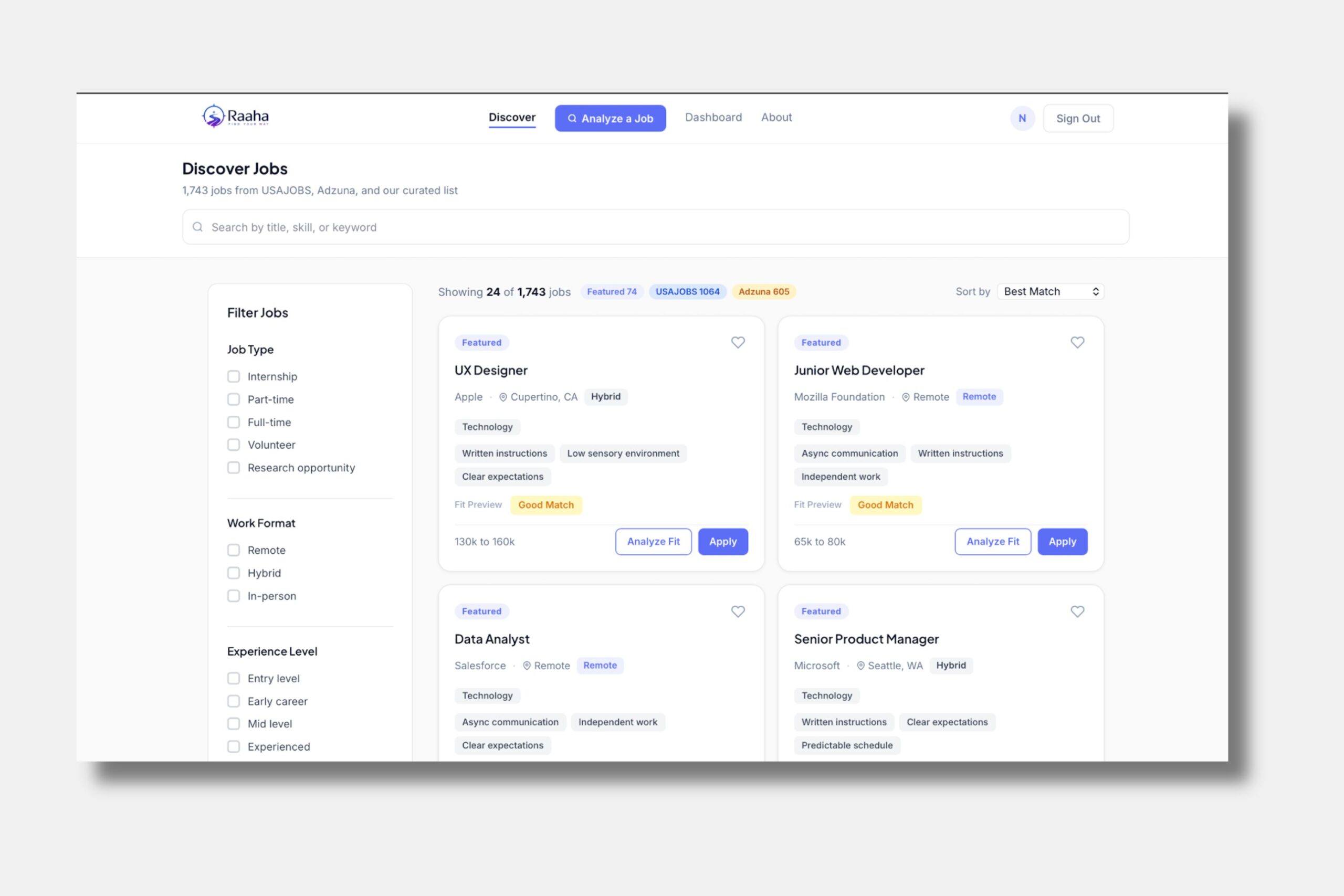
Raaha also curates lists of open opportunities, which you can filter by required skills or experience level, and sort jobs by best match based on your profile. There’s also a chatbot for people to practice for interviews — including asking for accommodations.
Tuteja’s work doesn’t stop there. A rising high school senior founded the nonprofit Empower InvisAbilities, which hosts STEM workshops for neurodivergent people and works with schools to make education more inclusive. She also wrote a children’s book about a neurodivergent girl named Iris, and how she navigates the world.
Making your past work for you, instead of against you
Raaha means “path” in Sanskrit, which Tuteja said embodies her goal for the platform.
“It’s that idea that every person has a past that works for them, and this tool is there for them to find it,” Tuteja said.
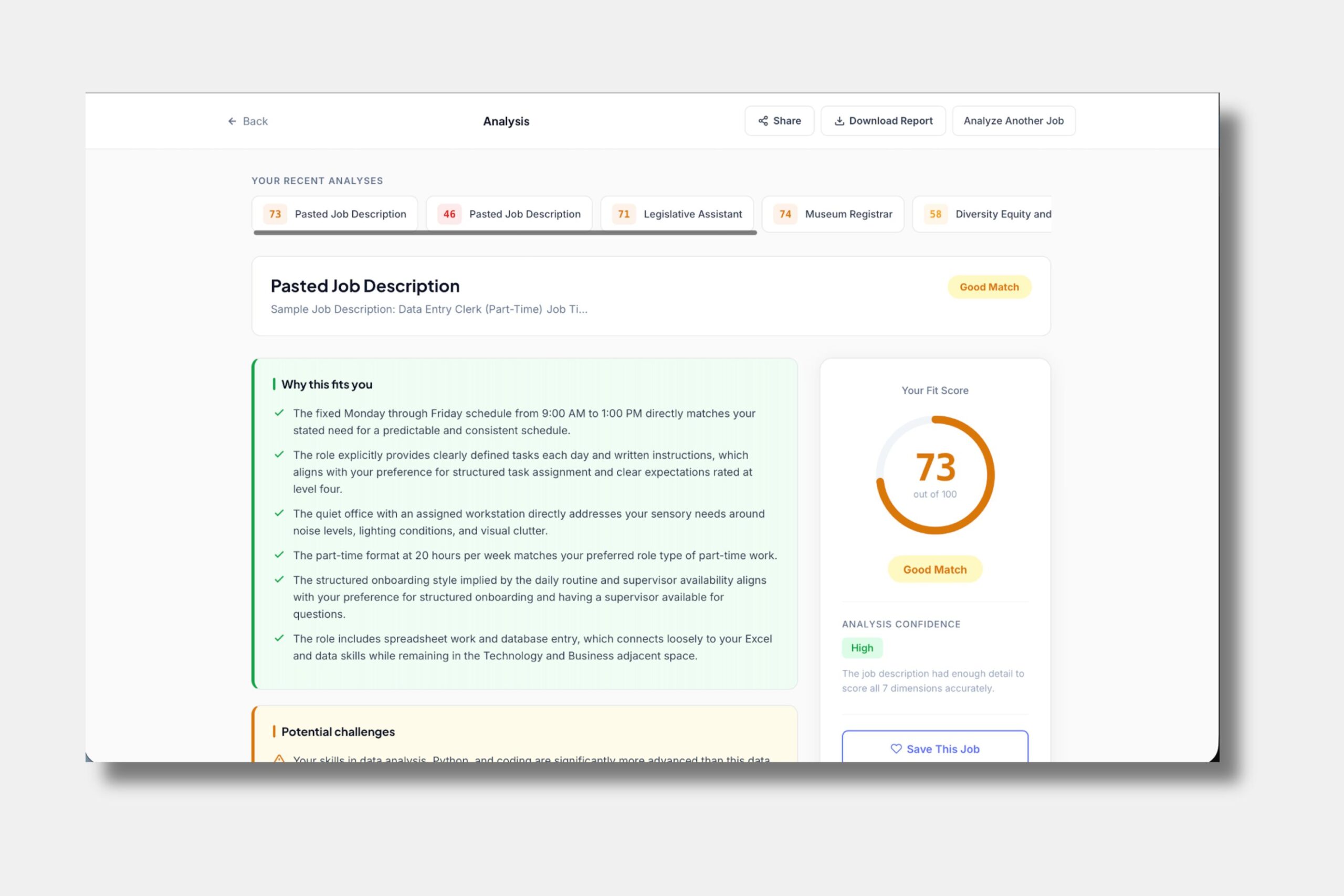
Raaha users first take a 12-question quiz on how they work best, where they describe sensory preferences and communication styles. Once you have a profile, you can paste in a job description and get a match score calculated using seven different aspects.
“Things like unclear expectations, vague communication [or] unpredictable schedules,” Tuteja said, “can completely change if a job is manageable.”
Raaha’s AI models are trained via public job postings, Tuteja said, including Adzuna and USAJobs, and she solicited feedback from neurodiversity specialists.
Tuteja started working on the platform when she first started attending STEM-focused Thomas Jefferson High School in Alexandria, she said, but the majority of the work happened over the last year.
She used Claude’s API to build the app, working on school nights, weekends and spring break (when she wasn’t studying for the SAT). More free time with summer break allowed her to launch it in June, as this project is separate from her school work.
“When I couldn’t sleep at 1 or 2 a.m. I would spend time developing the back end, making the scoring logic,” she said.
Expanding to include employers
Tuteja’s focus is on getting the platform in front of as many job seekers as possible. She’s been in conversations with colleges so students can use Raaha in looking for internships.

Raaha is purely focused on candidates as of now, and profiles are not shared with employers, Tuteja said. But she’s considering partnering with employers in the future with the goal to educate them in what neurodivergent job seekers are looking for. Part of that could be through providing anonymized data of what applicants are looking for in jobs.
With her senior year quickly approaching, Tuteja is applying for college. She wants to be a lawyer and is interested in corporate and intellectual property law.
“I just want to help people and make things more accessible for people,” Tuteja said. “I love debating, I love arguing. I think it’s like a great way to put my passion into also helping others.”