• Entrepreneurial ecosystems involve dozens of organizations of different sizes, none of which can speak for the whole. The CMO function that coordinates narrative in a company doesn’t exist at the ecosystem level.
• Storytelling makes the invisible visible. Ecosystem builders do work that doesn’t show up in grant reports — introductions, trust-building, silo-breaking — and narrative is the tool that surfaces it.
• Anika Horn’s forthcoming book “It Takes a Valley” documents 52 practitioners doing this work, and is crowdfunding now on Kickstarter.
For any given company, someone owns the story. A chief marketing officer, a communications team, a founder with a social media following. They decide what narrative the organization projects.
Ecosystems don’t work that way.
An entrepreneurial ecosystem is, by definition, a collection of organizations—accelerators, universities, investors, event organizers, coworking spaces, government agencies, individual connectors—that together create the conditions for new businesses to start. No single entity controls it. No one can claim to speak for the whole.
Which raises a question ecosystem builders don’t ask often enough: if no one owns the story, who tells it?
Anika Horn has spent more than a decade trying to answer that question. She hosts the podcast Ecosystems for Change, now in its seventh season, and publishes a newsletter read by about 1,500 practitioners. Among the few hundred most-devoted “ecosystem builders” around the country, she is a familiar face at conferences and convenings. She’s active in the ESHIP Alliance, a new nonprofit focused on establishing pro-entrepreneurship norms in local economic development and community development.
“The smallest unit of change is a conversation.”
Anika Horn, It Takes a valley
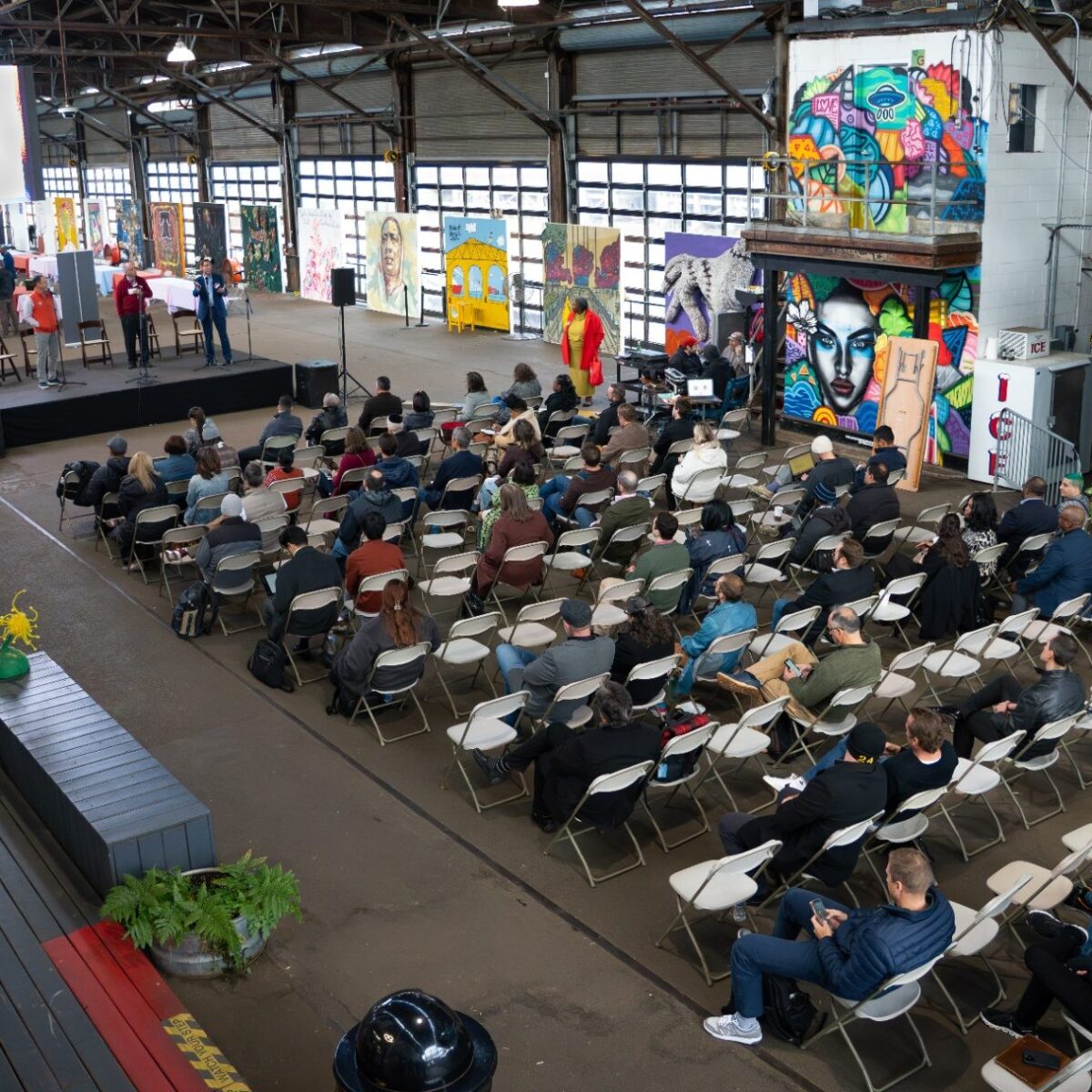
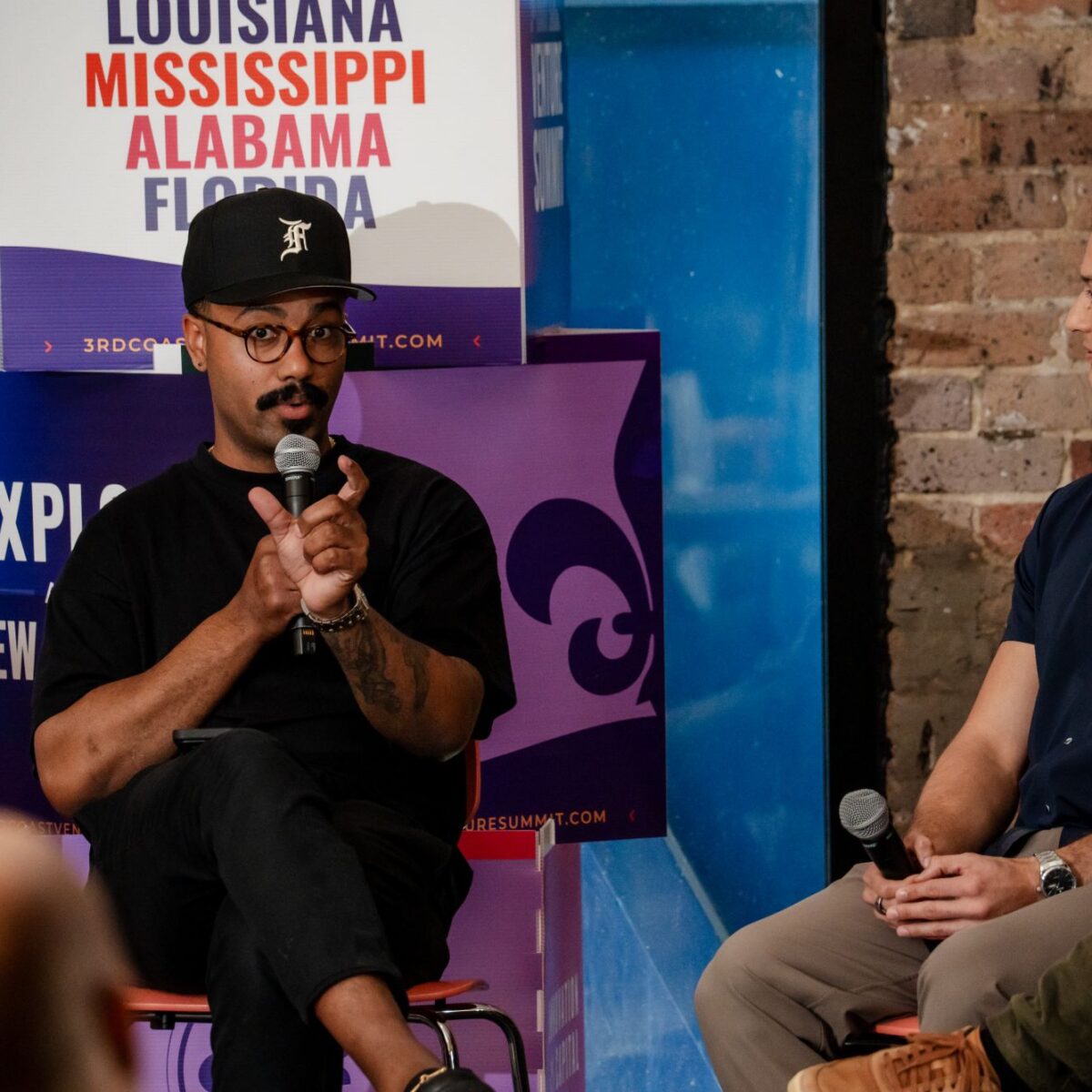
At last month’s Technical.ly Builders Conference in Philadelphia, we sat down to talk about why storytelling keeps showing up in her work, and why she’s now writing a book about ecosystem building more broadly.
“I came to it accidentally,” Horn said. Born and raised in a small East German town, she moved to Richmond, VA, in 2015. There she kept meeting entrepreneurs whose work she wanted to share — a high-end moonshine maker, a bakery using heirloom grains, a custom t-shirt company. “This is what Richmond is about,” she said to herself. “It’s this creative potential.”
She started talking about these builders online, in person, to anyone who would listen. And she noticed something: The storytelling wasn’t separate from the ecosystem building. It was part of it.
“The smallest unit of change is a conversation,” Horn said. “And to me, that is storytelling. Listening to those conversations and then seeing what that bigger picture is.”
The work that doesn’t show up in metrics
We know entrepreneurship matters: It’s a primary driver of economic growth. It follows that enough organizers and advocates care about who gets their entrepreneurial shot. That’s given rise to an “ecosystem” approach to economic development. Sit long enough with that approach, and you’ll need to sort out information flows — and what’s been called “trust infrastructure.” Storytelling is a tested approach.
Call it what you want, case studies demonstrate developing and distributing shared narratives outperform fragmented approaches.
Orlando economic development leaders tracked growth in tourism visits and business attraction inquiries. Over a decade, Technical.ly has shown regions with a storytelling provider saw faster startup valuation growth than peers without one. An analysis of German regional branding strategies showed authentic people stories worked by first shaping local identity, which then traveled farther with that buy-in.
Here’s the problem Horn kept running into: Ecosystem builders do work that doesn’t show up in metrics.
Consider the connector who makes introductions at every event. Out of ten introductions, one might lead to an investment, new hire or meaningful connection. But that connector’s contribution never appears in a grant report. Neither does the trust they built, the silos they bridged or the information they helped flow from people who had it to people who needed it.
“If it’s intangible doesn’t mean it doesn’t exist,” Horn said. “It just means it’s not visible yet.”
This is what storytelling does in an ecosystem: it makes the invisible visible. Not in a fluffy, inspirational way — in a practical one. When an ecosystem can articulate what it is and why it matters, funders can evaluate it, talent can find it and practitioners can learn from it.
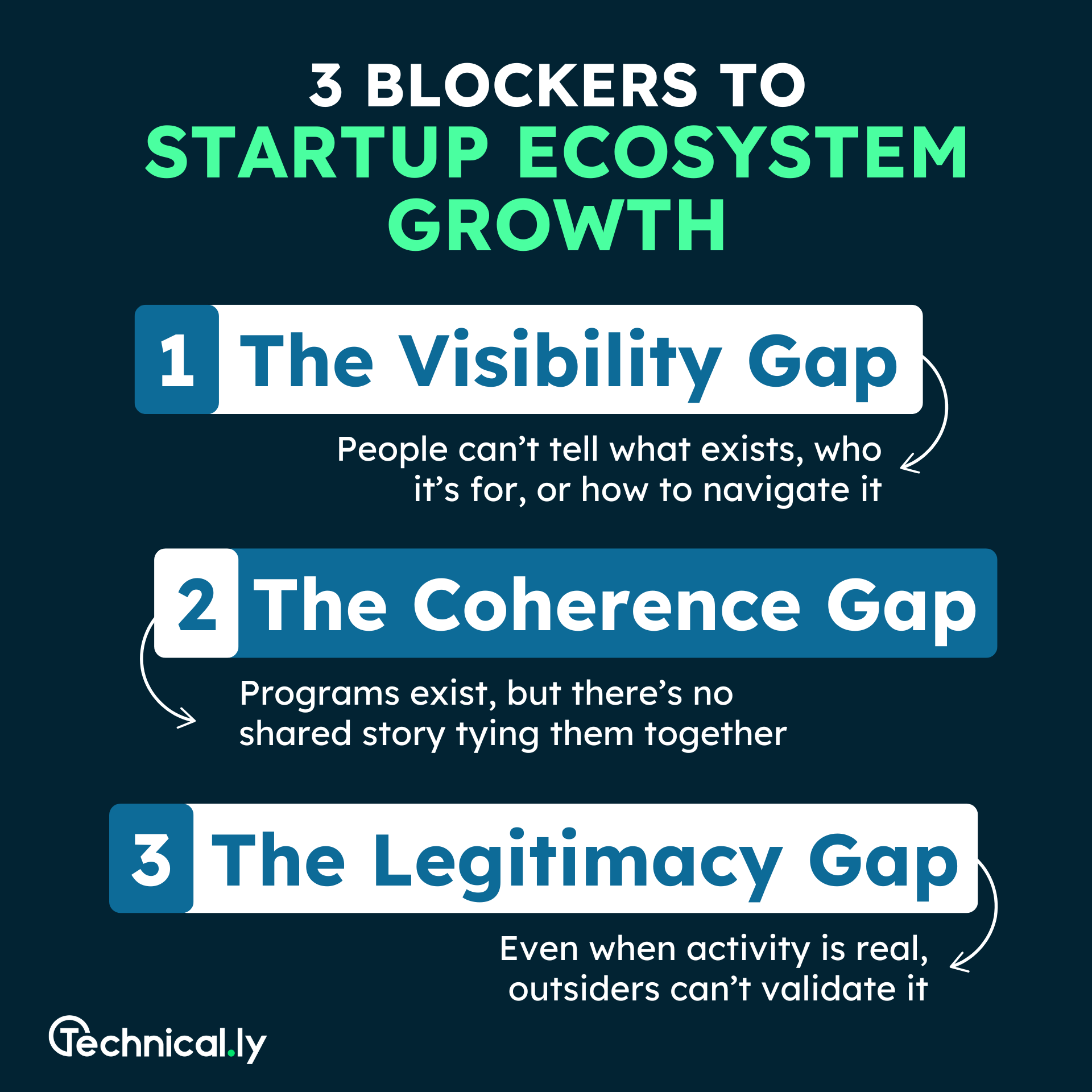
Without that shared narrative, the ecosystem remains illegible. Programs exist but go underutilized. Successes happen but don’t compound. Newcomers can’t find the door. We identify this as three stages of gaps to address: one of visibility, then coherence and legitimacy.
Traditional marketing doesn’t solve this problem. In fact, it often makes it worse.
A mirror to help a community understand itself
Most organizations with marketing functions talk only about themselves. Their grant reports, their programs, their impact numbers. This is understandable. They’re accountable to their own funders and boards. But it means the ecosystem as a whole never gets described.
True storytelling in this context is inherently generous. It surfaces other people’s work. It connects dots across organizations. It holds up a mirror so the community can see itself as a community, not just a collection of competing programs.
“I often feel like it’s just holding up a mirror to people and telling them back what I just heard them say,” Horn said. “So we can all make sense of the field.”
This is also, not incidentally, what we try to do at Technical.ly. For 17 years, we’ve operated on the premise that ecosystems need independent storytelling infrastructure — someone whose job isn’t to promote any single organization, but to make the whole system legible. Regions with that infrastructure grow startup ecosystems roughly twice as large as those without it.
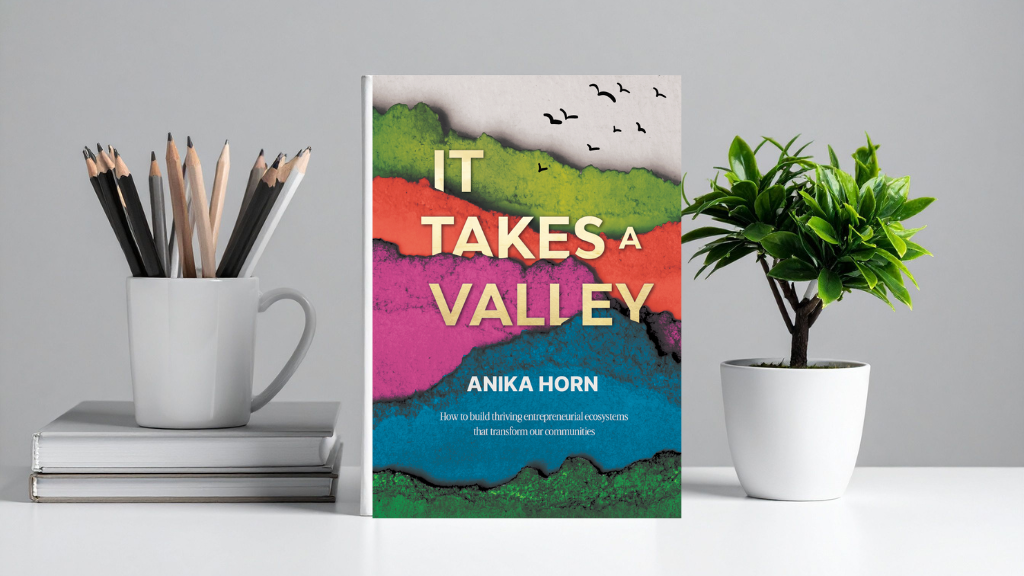
Horn’s new book, “It Takes a Valley,” documents 52 ecosystem builders from Puerto Rico to Nebraska to Australia. It’s not a 101 — it assumes you’ve heard of ecosystem building. What it offers is stories from the messy middle: practitioners navigating conflict, building trust and activating their communities without a playbook.
“I wanted to write a book that captures their stories in all their complexity and nuance,” Horn said. “Not people who were well-funded and powerful and can talk about how well everything went in hindsight. It’s people who are in the messy middle dealing with this right now.”
She’s self-publishing and crowdfunding the first edition. The Kickstarter campaign runs through June 19.
For ecosystem builders trying to explain their work to funders, boards, or skeptical city council members, storytelling isn’t a nice-to-have. It’s the coordination mechanism that replaces the CMO function ecosystems can’t have.
That’s one challenge that is addressable.