There’s a specific, visceral road rage that comes with hitting a pothole, especially one that’s sat unrepaired for months.
A Pittsburgh startup thinks its patent-pending, pothole-filling robot can help make those repairs faster by not relying on multiple crew members and a road closure to mend it by hand.
“The City of Pittsburgh tries to fix potholes and they try to do it as fast as they can, and they do a really good job, but they can’t do it fast enough.”
Dan Yates, Silly Surfacing
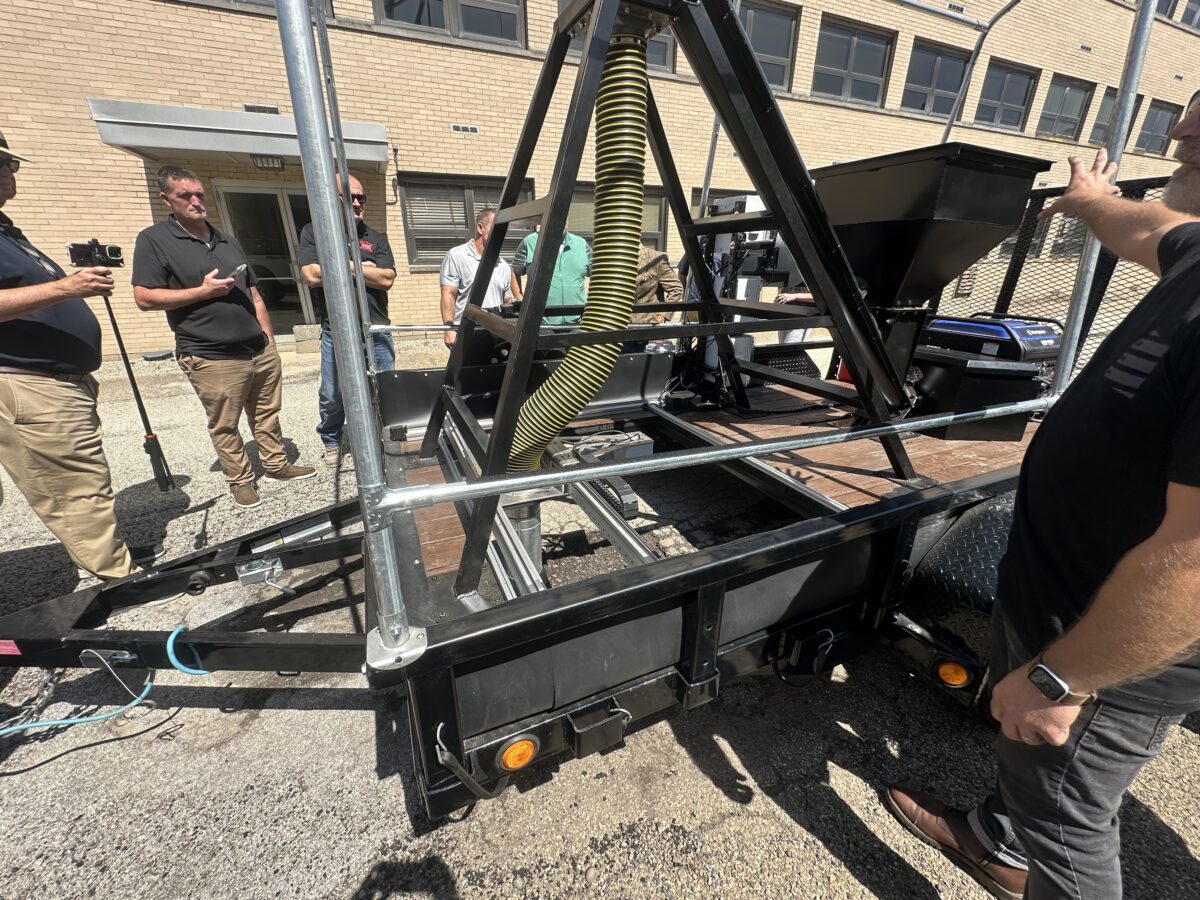
Silly Surfacing, founded in 2024, today held its first public demo, showing off its new tech. The prototype uses a depth-sensing camera to capture 3D imaging of a pothole, then calculates the size and amount of material needed to make the repair. A few minutes later, the computer directs a robotic gantry to place the material in the hole.
“The City of Pittsburgh tries to fix potholes and they try to do it as fast as they can, and they do a really good job, but they can’t do it fast enough,” Dan Yates, the lead engineer on the project, said before the demo. “We make too many potholes here in Pittsburgh and it’s the same across the country.”
The company’s goal is to create a self-contained, completely autonomous robotic system that could repair these holes with only one crew member present, allowing them to stay in the truck — and potentially out of harm’s way — while also keeping the road open to drivers.
Drivers spend an estimated $26 billion annually on vehicle repair costs due to potholes, according to AAA. It’s a multi-million-dollar problem for PennDOT too, as it costs about $9 million annually to make pothole repairs statewide.
The University of Pittsburgh’s IDEA Lab, which includes Yates, along with over a dozen engineering interns, built the robot prototype for Silly Surfacing. It’s been about a year in the making, Yates said.
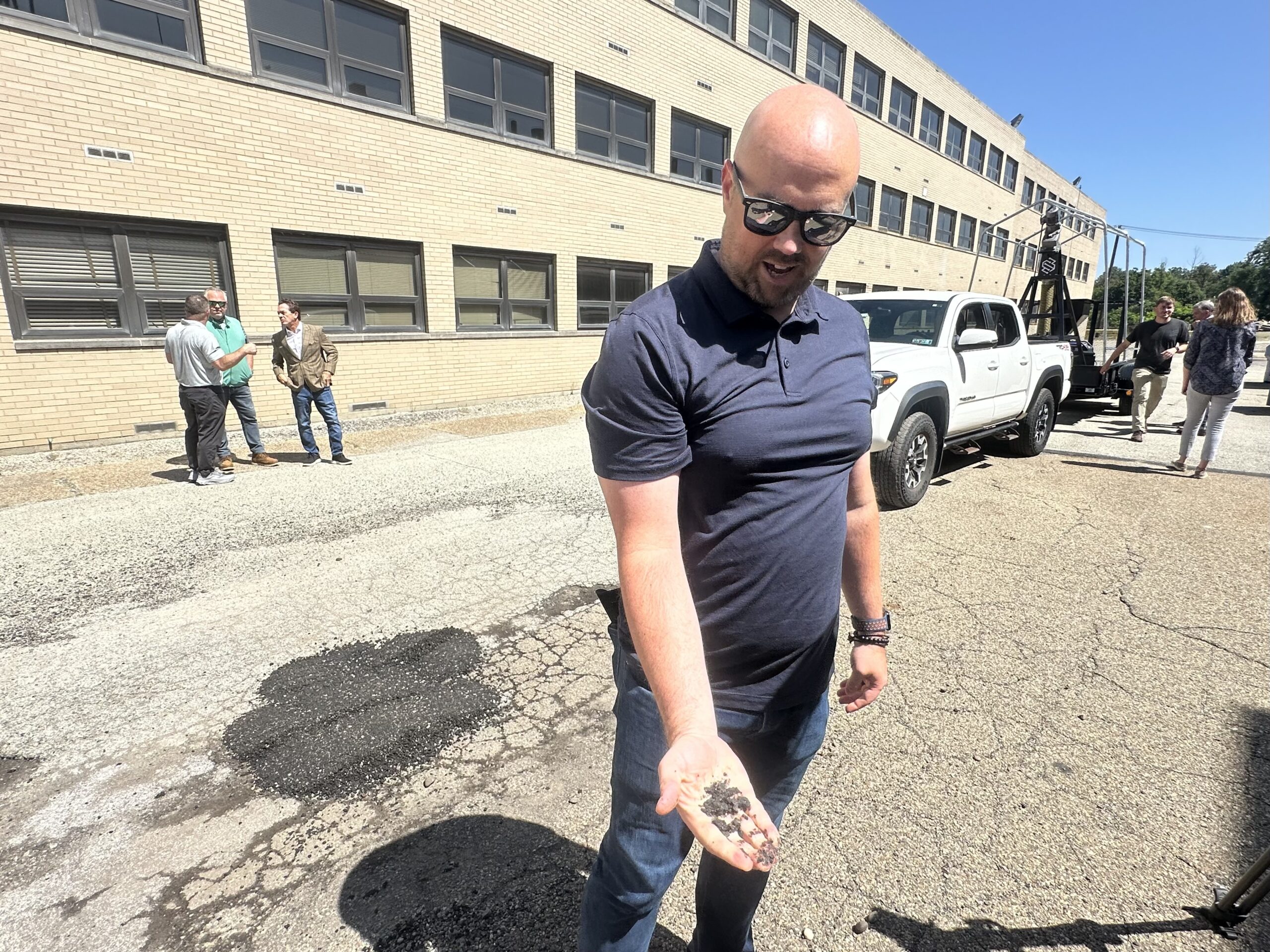
Founder frustrations spark innovation
Cofounders David Dietrich and Keith Giuliani came up with the idea for Silly Surfacing out of a shared frustration with Pittsburgh’s potholes.
“We’re car guys,” Dietrich told Technical.ly.
What started as kitchen table drawings has since turned into a company that was part of Innovation Works’ 2025 accelerator cohort.
Up until this point, the startup has been bootstrapped by cofounder and CEO Giuliani and has been running off a $100,000 grant investment from Innovation Works, Dietrich said. Now the company is seeking a $5 million investment to build out its team and continue developing additional features for the robot.
“We’ve got the middle part figured out,” Dietrich said. While the robot prototype can scan and fill a pothole, it needs other features to make a full repair, like the ability to clean out the hole before the job can start and the tamping afterwards — the patting down process that makes the area smooth again.
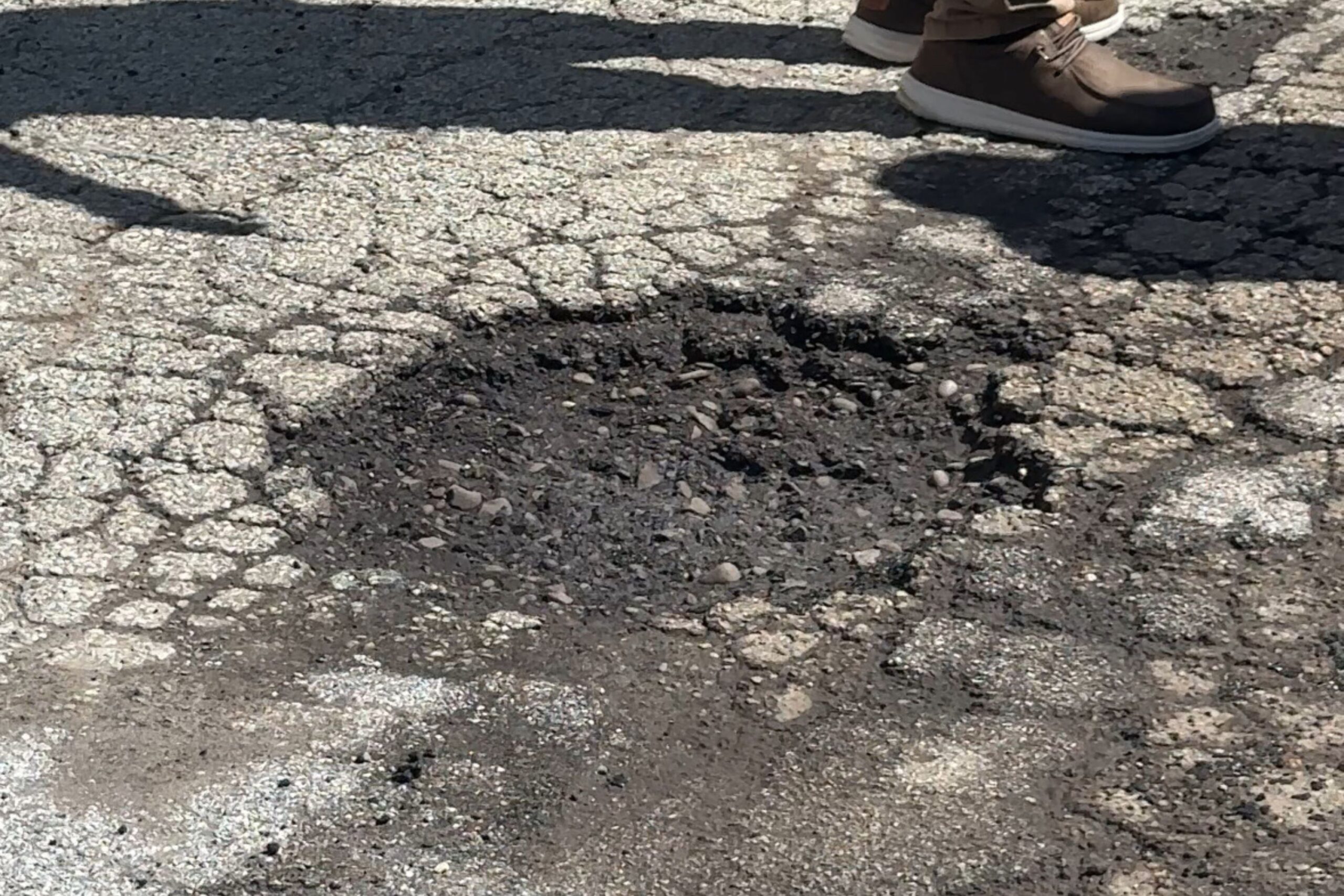
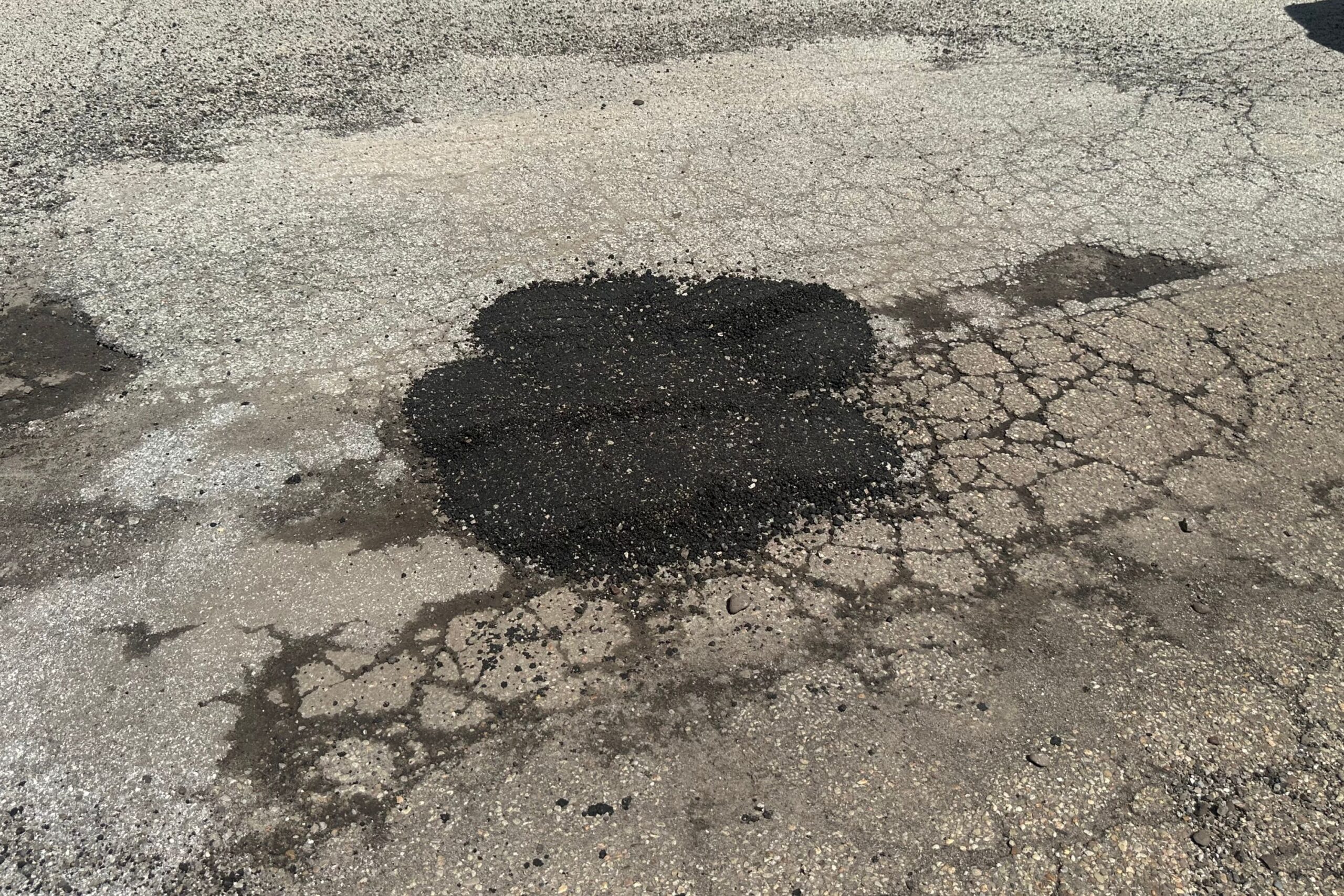
Once the company builds out those additional features and finds a vehicle manufacturer to strap its robot to, it plans to target private property owners, like parking lots, “so they don’t end up like Mills Mall,” Dietrich said. Eventually, the company will seek government clients too, he added.
Technologists, plus local and public officials, were present at the live demo. Rep. Jeremy Shaffer (R) — a former startup cofounder representing the 28th District, a northern part of Allegheny County — said the new tech was exciting for Pennsylvania.
“We spend a considerable amount of money filling potholes each year,” Shaffer said, so tech that can decrease the response time to these problems and keep PennDOT workers safe is “very appealing to any government.”