Thanks to a new $1.25 million Air Force contract and government vote of confidence, KEF Robotics in Pittsburgh is continuing its mission of helping unmanned aircraft navigate the skies.
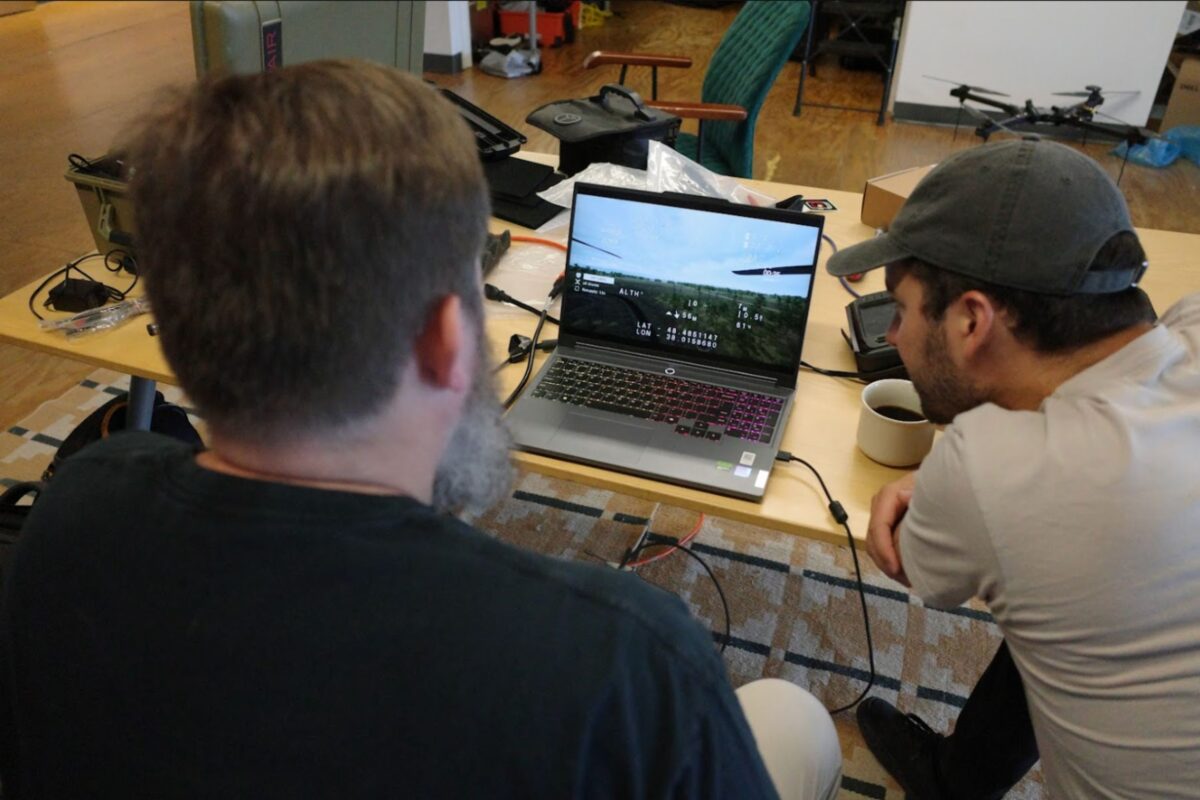
KEF’s primary product, Tailwind, provides the software needed for autonomous planes to fly without a map. The team of 22 is based mostly in Pittsburgh — the company also has an office in Oslo with four engineers — and sells to customers in the US, Europe and Ukraine.
“It was like the quiet work that we’d been doing for six years that was validated by us being selected amongst all the other vis-nav providers in the US.”
Fraser Kitchell, KEF Robotics
Its new 18-month contract is with the Air Force Research Lab through the Small Business Innovation Program (SBIR), which funds small businesses in the research and development phase. The contract will help with scaling, crafting a more reliable piece of equipment and bringing down prices to build a wider customer base, KEF Robotics co-founder and CEO Fraser Kitchell said.
The contract will also help Tailwind further integrate with ATAK, a widely used mapping platform in the Air Force, without any “clunky handoff.”
“We can do a seamless integration,” Kitchell said, “so everybody who has [that system] can just add a plugin from KEF and have ‘vis-nav’ for their aircraft.”
KEF had to wait almost nine months from notice of contract to award, thanks to a government shutdown and the brief derailment of the SBIR program. The delay was especially difficult because of the US drone market’s current explosion, Kitchell said, which industry data predicts could reach $102.7 billion by 2030.
Watching the boom from the sidelines was hard. “We thought we’d be working on this last fall. We instead just kicked off last week,” he said.
While SBIR funding typically works to help springboard new technology from small businesses, KEF’s Tailwind product is long-established. For the company, the new $1.25 million serves a different dual purpose — helping KEF to focus on end users and offering validation for the work it does.
“This was basically a vote that the product we’ve built is the most flexible and adaptable and affordable visual navigation product in the US market,” Kitchell said.
The company has already worked with over half of the Blue UAS List, or US-manufactured aircraft that the government can purchase, Kitchell said, which he sees as evidence that the product was becoming industry standard and could integrate into Air Force systems.
“It was like the quiet work that we’d been doing for six years that was validated by us being selected amongst all the other vis-nav providers in the US,” Kitchell told Technical.ly.
The power of Pittsburgh: An accessible airport and a robust defense ecosystem
Some companies might consider moving after earning such a large contract to more traditional tech hubs like Silicon Valley. But, KEF Robotics finds it has everything it needs in Pittsburgh.
“We do have a national and international reach, but home is where we still spend most of our time,” Kitchell told Technical.ly.
KEF tests its products in Pittsburgh at a leased airport about 20 minutes away from its main office in East Liberty, flying “every fair-weather day.”
The benefit of its main office outside of flying proximity lies in the collaboration of Pittsburgh’s defense ecosystem. KEF partners with a number of other Pittsburgh businesses and defense organizations, including the Army Artificial Intelligence Integration Center located conveniently in East Liberty.
“The defense ecosystem is pretty strong and getting stronger in Pittsburgh, and we’re very active in that,” Kitchell told Technical.ly.
That collaboration extends to those new in the defense field. KEF Robotics is planning on hiring in Pittsburgh over the course of its 18-month contract and has already taken on “a lot of Pittsburgh hires” within the organization.

KEF also mentors local students by giving tours of its facilities to schools and robotics teams. Alongside working with the Bloomfield-Garfield Corporation, KEF makes its impact by looking to hire locally every year through CMU or a local high school student in the summers.
Kitchell is predicting commercial sales to be up 300% this year and possibly still growing from selling more licenses to its navigation software. KEF plans to also maintain their Department of War funded research arm.
“I think we kind of show that Pittsburgh can build a business that’s successful,” Kitchell told Technical.ly.