In June 1889, Andrew Carnegie published “The Gospel of Wealth,” arguing that the rich had a moral obligation to distribute their fortunes for public benefit.
Still entrepreneurially ascendant in his 50s, the Pittsburgh steel baron’s landmark essay helped establish American philanthropy’s distinctive character: private wealth addressing public problems that government couldn’t or wouldn’t solve.
A century later, Pittsburgh’s industrial economy was floundering. Over the 40 years that followed, however, a slate of foundations and philanthropists are credited with a kind of revival led by arts, culture and economic opportunity. Amid a dazzling string of startup successes in robotics and artificial intelligence, Technical.ly named Pittsburgh our entrepreneur ecosystem of 2025.
What worked, and the risks that progress has exposed, would be familiar to Carnegie, and his gilded age critics.
The United States remains the most philanthropic “Western” country — and it’s not close. Americans give 1.5% of GDP to charity; seven times more than Europeans. The US has roughly 120,000 private foundations holding over $1 trillion in assets.
This is deeply entrenched in our systems. The United States privatized more of its response to social ills than the Europeans. That infrastructure shapes how Americans think about economic development in ways that don’t exist elsewhere.
“In the US, anytime there’s a policy discussion, people always think, ‘Who’s the big philanthropy to pull into this one?’” said Victor Hwang, CEO of Right to Start, on a recent Builders Live recording. Before government, Americans often look to private donors. That pretty much doesn’t exist to this extent anywhere else.
But that infrastructure is unevenly distributed. Silicon Valley’s community foundation holds $15.7 billion in assets, according to a 2023 census. Those in Columbus and Cleveland in Ohio each have more than $3 billion. The American median is much lower: roughly $50 million, and assets range widely. For example South Dakota ($870M) holds more than Washington DC ($518M), a region with six times as many people. This geographic variation is true across all kinds of charitable giving: individual gifts (which account for two-thirds of overall giving), foundations, bequests and corporate philanthropy.
Tulsa’s philanthropic leaders call themselves America’s “most generous city,” and have included in their purview economic development, including entrepreneurship support, workforce development and talent attraction in their mission. In contrast, none of Philadelphia’s institutional foundations have an economic development lens, and there’s practically no entrepreneurship focus whatsoever. (An embarrassing showing in recent economic mobility research has spurred the launch of two new efforts, which may or may not correct for this.)
So some regional economic development strategies are philanthropy-rich; others have almost nothing. But what should philanthropy actually do when it shows up at the economic development table?
Making change on a generational timeframe
Hwang, who previously led entrepreneurship initiatives at the Kauffman Foundation, said the hardest question inside any foundation is deceptively simple: Who is the customer?
Is the customer the entrepreneur? Is it the nonprofit grantee? Is it the entrepreneur today, or the entrepreneur in 10 years? Or the foundation in a hundred years? That varies depending on who you ask within the foundation, Hwang said.
Elected officials theoretically answer to voters. Philanthropy has no equivalent accountability mechanism — which creates both flexibility and risk.
In a 2020 interview, then-Knight Foundation CEO Alberto Ibargen told me philanthropy’s distinctive value: “We offer risk capital for the public good in a disinterested way.”
Knight spent 15 years and roughly $170 million investing in Miami’s identity as an arts, culture and innovation hub. The foundation made bets, mistakes and reversals. Change was made over a generation, Ibargen said, not a grant cycle. Today, he said, “this is a town that thinks of itself, acts as if it is, in fact, an arts and culture kind of capital.”
That patient approach is showing up in new forms. Taylor Eubanks, strategist at Midwest House and a former Kansas state economic development official, pointed to a model in Wichita.
The Kansas Health Foundation runs Building Power and Equity: a 10-year commitment to 30 organizations — many Black and brown-led — providing $100,000 annually to each. No year-to-year grant cycles. No dictating specific programming.
“They’re positioning themselves as an anchor, not as the conductor,” Eubanks said. “They’re funding the connective tissue between organizations, rather than dictating what each one does.”
The model is explicitly a portfolio approach. Kansas Health Foundation has almost certainly picked some winners and some losers. But that’s the point: Spread risk across many bets, give them time to compound and accept that not every investment will succeed. The anchor-plus-portfolio approach reduces the single-point-of-failure risk that has derailed ecosystems when a charismatic leader departs.
The next generation of could-be Carnegies
If you’re looking at rising unemployment, homelessness and hunger in your community, do you really prioritize long-term entrepreneurship investment over immediate crisis response?
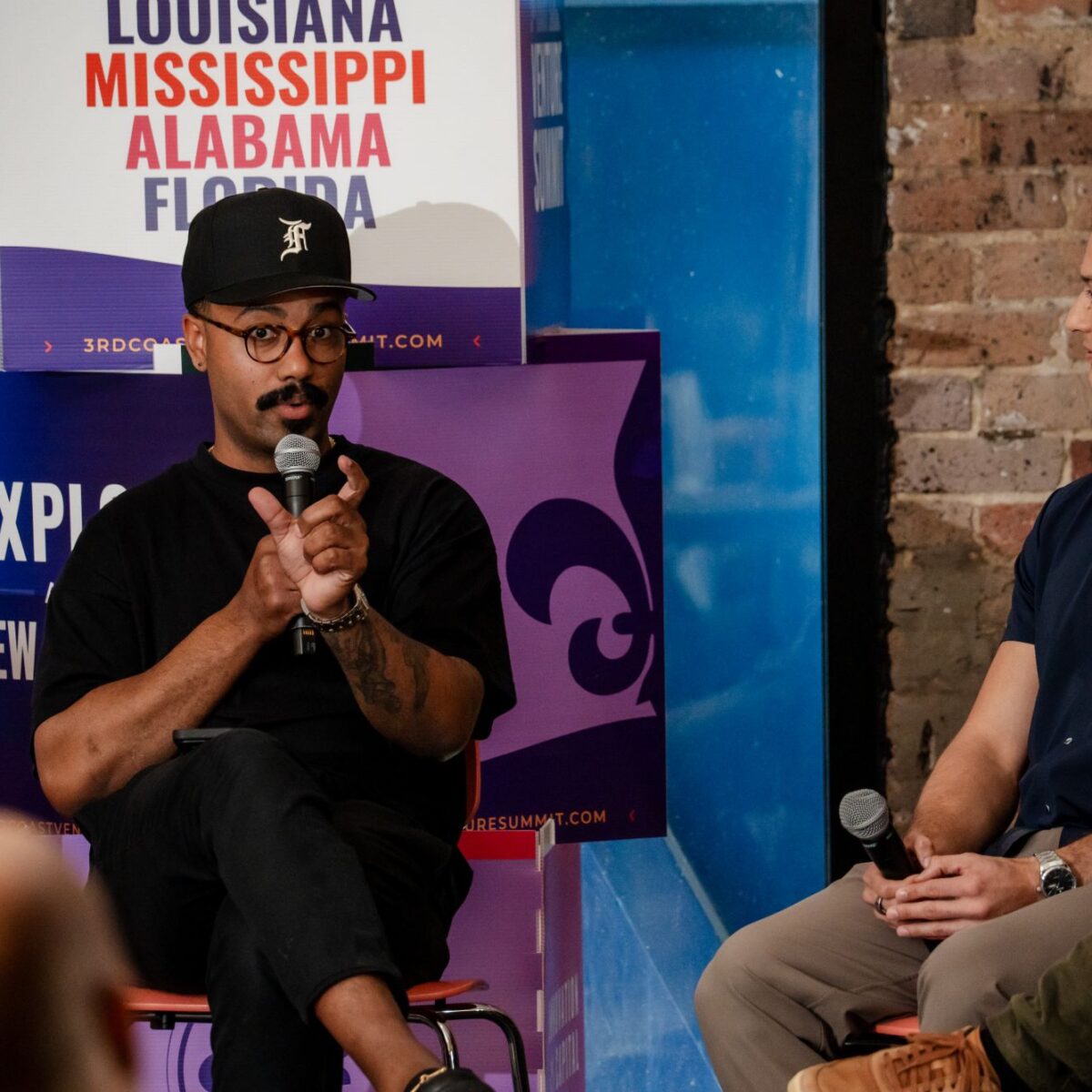
Rae’Mah Henderson said yes. She’s an energetic entrepreneurship organizer in Birmingham, AL, and another co-host of Builders Live.
“If you have the ability to take autonomy of oneself, if you have the ability to make decisions, to innovate, you’re going to live longer,” said Henderson, a former Techstars investment associate. “You’re going to have pathways out of those things.”
Hwang put it in systems terms: How do you design a society that gives people the power to build their lives from the bottom up?
Government is better positioned to respond to immediate crises. Philanthropy, operating outside electoral cycles, can take the longer view. That’s why Kauffman’s work funding pro-entrepreneurship research and organizing in the 1990s and 2000s mattered, Hwang noted, before it was widely accepted as a philanthropic cause.
The data still reflects that history. Of the $592 billion Americans gave to charity in 2024, economic development isn’t even a tracked category. One in four dollars went to religious groups, by far the largest category. Education and human services each get 14%. Entrepreneurship and ecosystem building fall within public-society benefit — an 11% slice that also encompasses civil rights, voter registration and beautifying parks. Philanthropy funding economic development remains the exception, not the rule.
Philanthropy’s role in economic development isn’t to replace government or compete with the private sector, Eubanks said. It’s to fund what neither will, Hwang added: patient, systems-level work that won’t show returns for a decade or more. A recent MakeStartup report argued entrepreneur support could use the kind of strategic leadership that philanthropy could offer.
The risk is that foundations become permanent gap-fillers for problems society should solve through democratic means. The opportunity is that they can take bets elected officials can’t — and sustain them across political transitions.
Pittsburgh’s ecosystem didn’t emerge from one grant cycle. It emerged from generations of industrial wealth converted to institutional investment. Carnegie’s gospel, updated for the innovation economy. New challenges emerge. Like Carnegie, Pittsburgh’s philanthropic and economic development leaders face occasional fire for being too influential.
Good-faith accountability is healthy, especially since foundations face no elections. Any critics, though, should recognize that entrepreneurial ecosystems with an absent philanthropic sector would often prefer the risk of heavy-handed foundations.
Pittsburgh now has a new generation of could-be Carnegies. Whether that’s a worthy goal is another matter altogether.