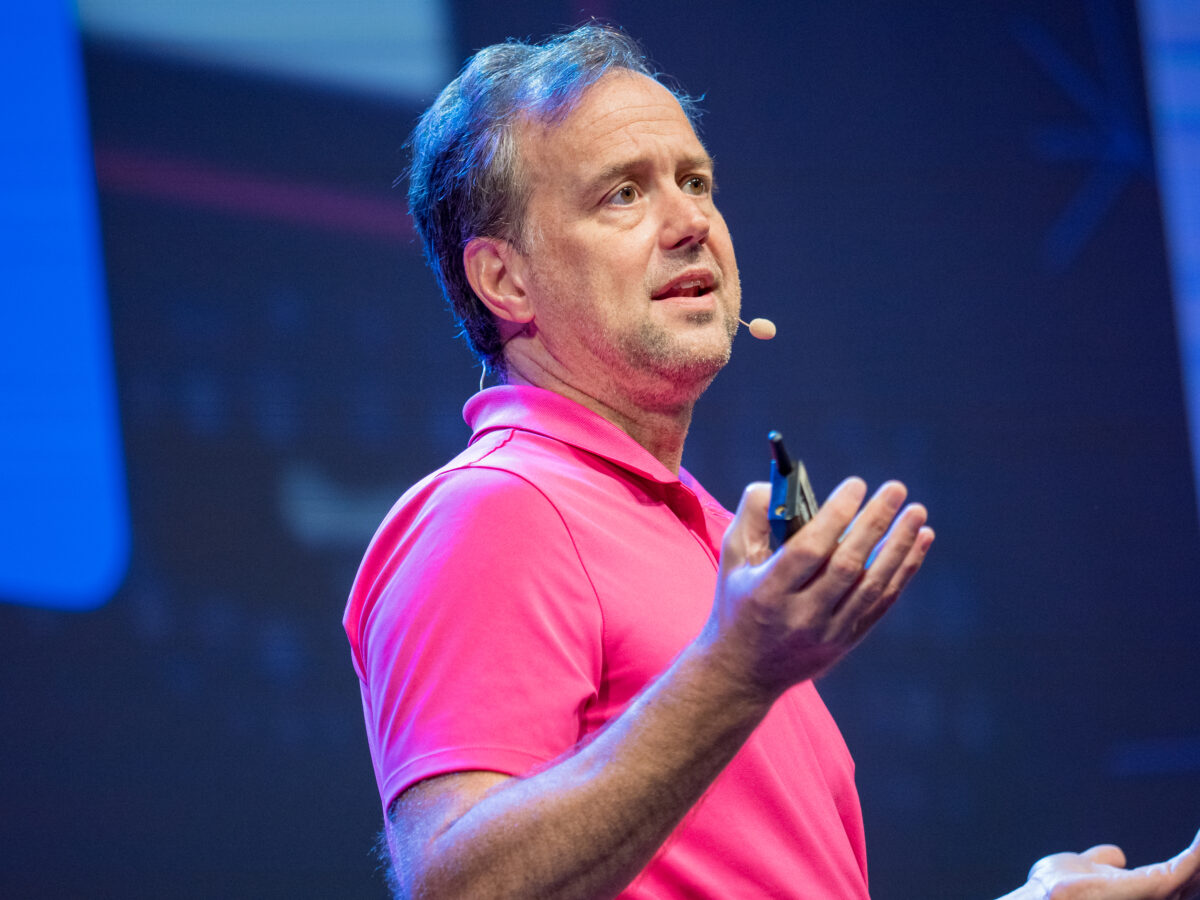
Vibe coding and AI is shifting how software engineers do their jobs. But Erik Troan believes the real key to a tech career isn’t writing code — it’s solving problems.
“The industry is an interesting place right now,” Troan told Technical.ly. “Engineers are having to rethink how they do their jobs. My true value is understanding how complex systems fit together.”
Helping the 250 technologists under his purview adapt to “fundamental” changes in the industry is a key part of his CTO role at Pendo, the Raleigh software analytics firm he cofounded that provides product usage insights for companies of all sizes, from startup to Fortune 500.
“Anybody could write code, you could download this stuff and anybody could play with it.,”
Erik Troan, Pendo
Throughout his career Troan has navigated major shifts, from the open-source movement to the current AI boom. After teaching himself to program on an IBM PC in the early 1980s, he became the first engineer hired at the major open source player Red Hat, known for creating the first commercially marketable open source software products. He later founded and sold a Linux-focused startup, and eventually joined Pendo as a cofounder in 2013. The firm went on to become a unicorn.
In this edition of How I Got Here, Technical.ly chatted with Troan about being a part of the open source movement, lessons learned from an acquisition and advice for executives in helping software developers adapt.
How did you first get involved with technology?
My dad was at IBM. He signed my brother and I up for an Apple II programming course at the library.
We moved to Raleigh when I was about 10, and my dad bought an IBM PC. I just started playing with it and using it. I always liked the problem solving of it.
I’m sure if there weren’t computers, I would have been a mechanical engineer. I like putting things together and making them work. Computers are just where I found it.
You were Red Hat’s fifth hire. How did you get there?
I was at NC State, a computer science major, and I was graduating. I had a full ride to a PhD program, so I fully intended to take that route. I needed a summer job. I actually got an offer from IBM. I wasn’t excited about it.
I started what we call an instant messaging connection now [with the Red Hat cofounders]. They hired me for the summer. For less money than IBM would have paid me.
Then at the end of the summer, they asked if I would think about staying. I postponed graduate school for a year.
A year later, I decided to go back to graduate school part time. Three weeks in, instead of taking notes on the class, I was doing design work for other things. My brain is clearly not in the class. I dropped out of there and I went full time at Red Hat.
What stood out to you about Red Hat?
Red Hat was changing the way people built software. We’re part of the open source movement. People had never done it before.
As you got into the late ’80s and early ’90s, programming languages became things. If you wanted to do basic development, there was a big entry fee. It made it harder and harder for people to get started.
The whole open source movement — the thing I think it doesn’t get enough credit for — is it made development free. Anybody could write code, you could download this stuff and anybody could play with it. I don’t think it will ever be undone now.
That really excited me. Bringing the technology back into the hands of people. I’m super proud to have been part of that.
What roles did you have at Red Hat?
I had a weird journey. Red Hat was worth General Motors’ kind of money. It was a crazy time, and I looked around when I was 25 years old, and I was running a 120-person engineering team.
I didn’t have the age and the maturity. I did what any 25-year-old does and went back to school. I went part-time at Red Hat and I went back and got a master’s degree in economics of all things. Then I had a baby, and then I went back to Red Hat for another year.
When I went back, I ran product marketing. I’d been at Red Hat for seven or eight years. It was my only job. There were 650 people. I had started at five. It wasn’t the company I joined anymore. I had an idea for a new company and a new technology.
Did I like to set out to be a founder? No, I just had something that I got excited about.
What was the idea for your first startup, rPath?
It was this idea that, how can I let people work with Linux themselves, on their own? A way to take a Linux operating system and customize it into your own personal operating system. When you install Windows, the first thing you do is you install things and remove things. How do you do that at scale?
We got some big customers. But we never got repeatability in the business.
I learned a ton. I learned that no matter how cool the technology is, you need to be solving a business problem, not just have cool tech. We kept trying to pivot into new things instead and fight our way through it, and that was a mistake. It was acquired by SAS, but it was not a good outline. Nobody made money.
How did Pendo come together?
I was ready to go back to work. I was looking at a company in Richmond I’d been introduced to, and while I was looking at that, the guy said, “Hey, you need to meet this Todd guy.”
So Todd and I got together for coffee one morning on a nice day. We clicked. He asked me if I could join as a co-founder. I was the last co-founder in the door.
Why did you want to build in the Triangle region?
The Raleigh-Durham region has a ton of technical talent. We have great universities. We’re a young region, so the energy is always really good. We get new restaurants all the time. It’s very dynamic. It’s fun to be in a region that feels like it’s growing and not dying.
I was very fortunate to be able to build a career in tech startups here. I know that’s not an easy thing to do, but I hope people come here and keep trying, and they would start growing that part of the economy even more.
What advice do you have?
I encourage engineers to communicate with each other, collaborate about how these tools are useful. Even if you don’t necessarily like them, if it feels disruptive and it causes you stress. I don’t always like them.
You’re going to be expected to do this for the rest of your career. Find the parts that are exciting, and figure out a way to define your job so you understand why you got into this.
For executives, continue to communicate and be transparent with why you’re asking people to do things. Different people are going to learn in slightly different ways, and they’re going to adapt in different ways.
If you try to ram everything through, you’re probably not going to have a great outcome. It’s going to take time. I don’t think we’re at the top of the learning curve yet. We’re still pushing that boulder uphill.