
This story was made possible through support from TEDCO, the Maryland Technology Development Corporation, which enhances economic empowerment growth through the fostering of an inclusive entrepreneurial innovation ecosystem. TEDCO identifies, invests in, and helps grow technology and life science-based companies in Maryland. Learn more at tedcomd.com. All stories are independently reported, with no partner review.
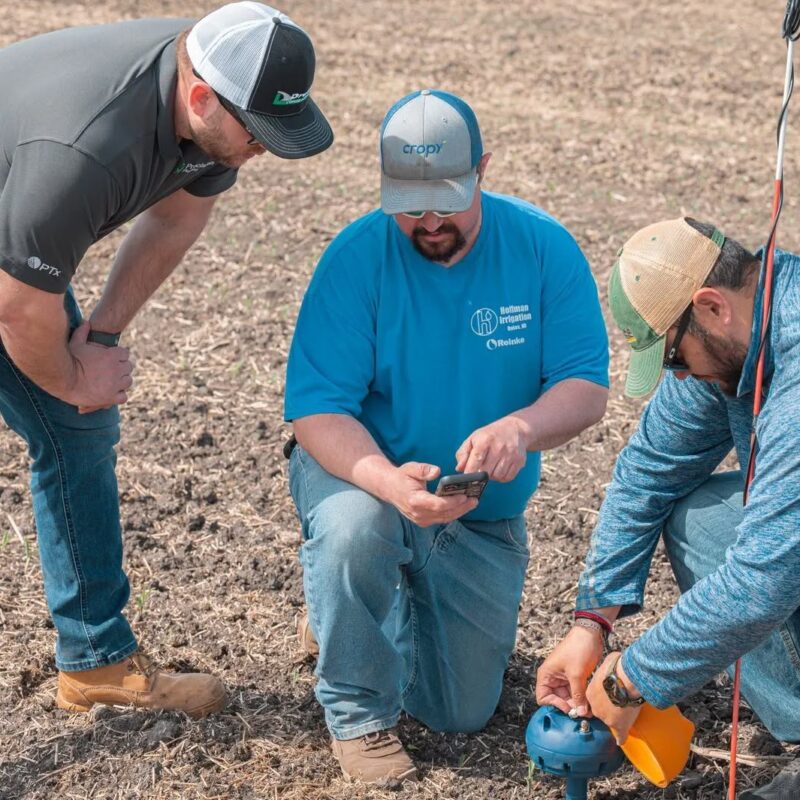
For many environmental researchers, field sampling doubles as a workout, lugging gallons of water samples back to the lab for filtration and analysis.
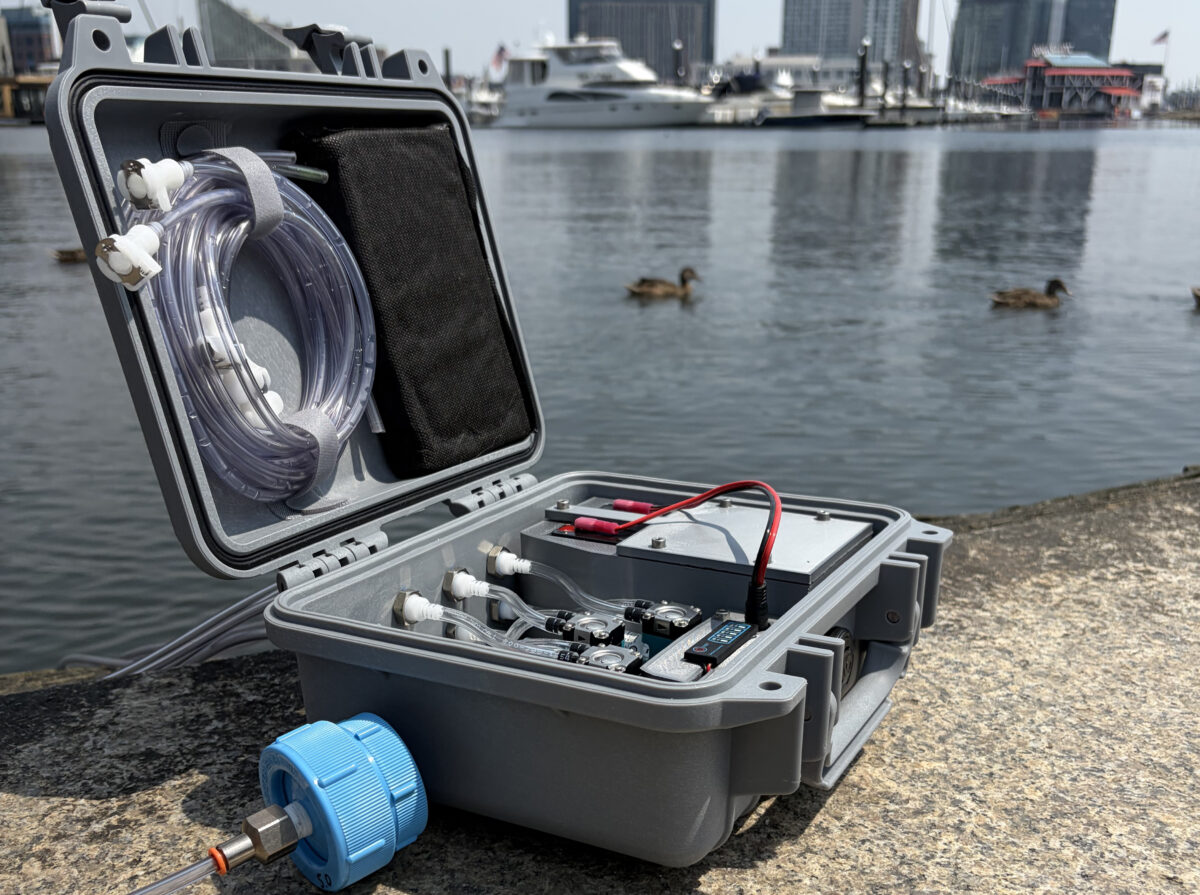
A new device from Baltimore-based Nuquantic wants to take some of the weight off. Its portable environmental DNA (eDNA) system lets scientists filter samples on site rather than hauling water home.
Hopkins molecular biologist Peter Thielen originally developed the device to help his research crew on sampling expeditions.
Initially marketed to researchers, the device is already being used in a Cambodian study to test village water for viruses with results still pending, according to CEO Kelsey Abernathy. She also sees an opportunity for less technical professionals, like wastewater or other environmental monitoring groups.
“You can send out people to do sampling that aren’t necessarily highly trained researchers,” Abernathy told Technical.ly about her goal for the tech.
The system also aims to help with another challenge samplers face: DNA deterioration. EDNA degrades the longer you wait to process it, so filtering in the field — which Nuquantic says it can do in about 10 minutes per liter — helps protect the sample.
“You have a way to potentially preserve that DNA for your downstream processing,” Abernathy said, “which will hopefully give you a better signal.”
It retails for a little over $1,800. The company priced it just under competitors like Smith-Root, whose portable eDNA sampler costs around $2,000. Nuquantic’s system also works with a variety of filters, Abernathy said, while competitors often require customers to buy their brand-name filters.
From lab to market
Baltimore’s Early Charm Ventures established Nuquantic after licensing the technology from the Johns Hopkins University Applied Physics Laboratory.
Hopkins molecular biologist Peter Thielen originally developed the device to help his research crew on sampling expeditions. It quickly became popular among his colleagues, Abernathy said, who began asking him to fashion custom units for their own work.
Abernathy, who also serves as CEO of venture studio Early Charm, said the group entered into a one-year agreement last August and brought the device to market in about 10 months. That’s the venture studio’s model, licensing promising IP out of universities and commercializing it.
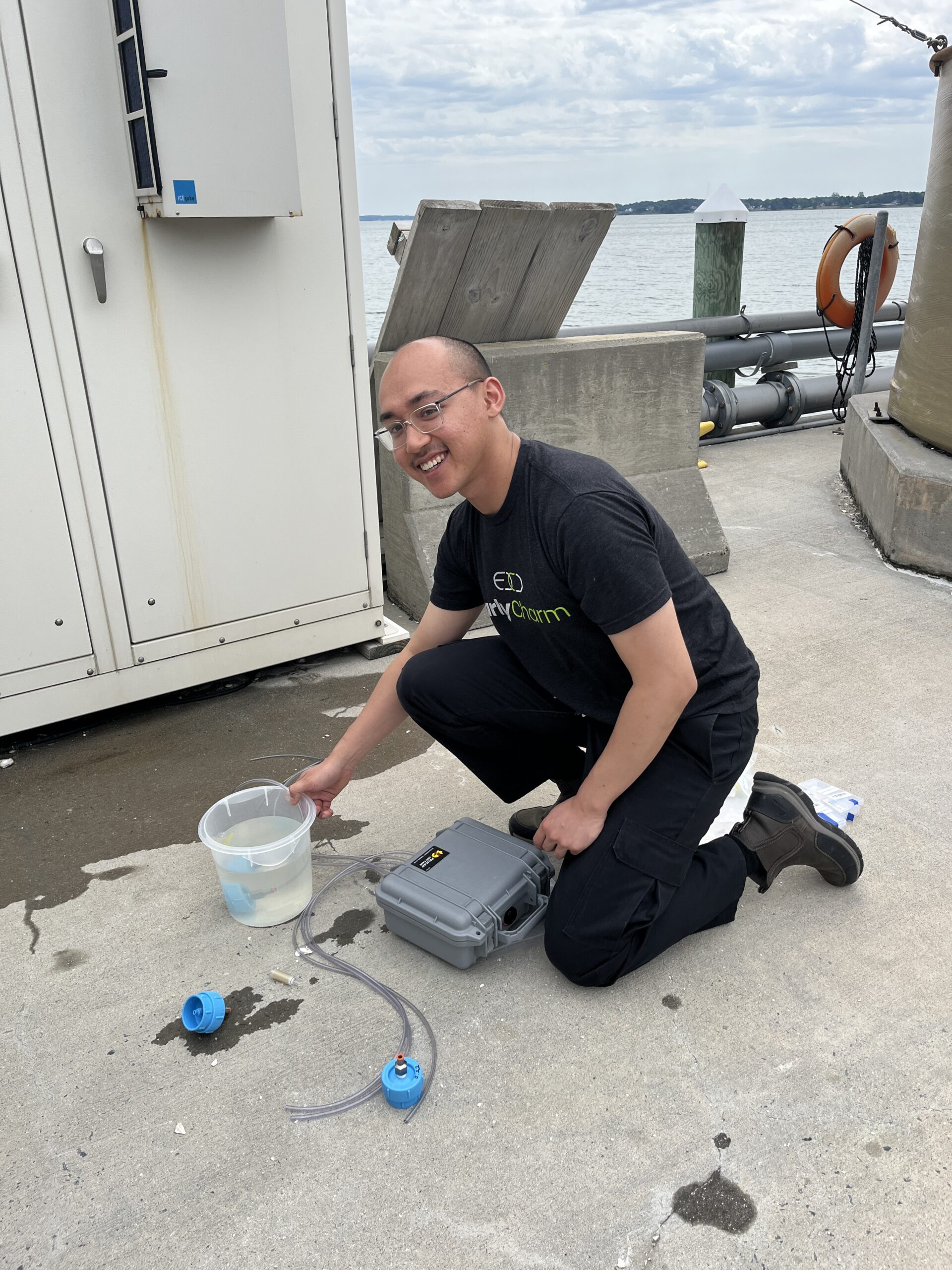
TEDCO helped fund the product’s commercialization through the Maryland Innovation Initiative, which awarded Nuquantic $300,000 to continue its development. During this phase, engineers upgraded it from a single-pump to a three-pump filtration system and improved the battery power. TEDCO also pointed the Early Charm team toward potential defense applications, including using the device in remote areas where lab equipment isn’t readily available.
Moving forward, production of the device will continue on the Early Charm factory floor in Pigtown, and Abernathy says the ultimate goal is to get the tool in the hands of more people.
“It takes away a huge amount of effort to load a sample collection,” Abernathy said. “It’ll make it so much more accessible to a wider range of groups.”