
This story was produced with support from the Howard County Economic Development Authority, which operates the Maryland Innovation Center and helps entrepreneurs and businesses of all sizes access the funding, guidance, and connections they need to grow in Howard County, Maryland.
Startup profile: Noxide Esports
- Founded by: Nicholas Minarik
- Year founded: 2025
- Headquarters: Columbia, MD
- Sector: Gaming
- Funding and valuation: Undisclosed
- Key ecosystem partners: Maryland Innovation Center, M&T Bank
Nicholas Minarik thinks gamers are ready to ditch their home monitors and play for a crowd.
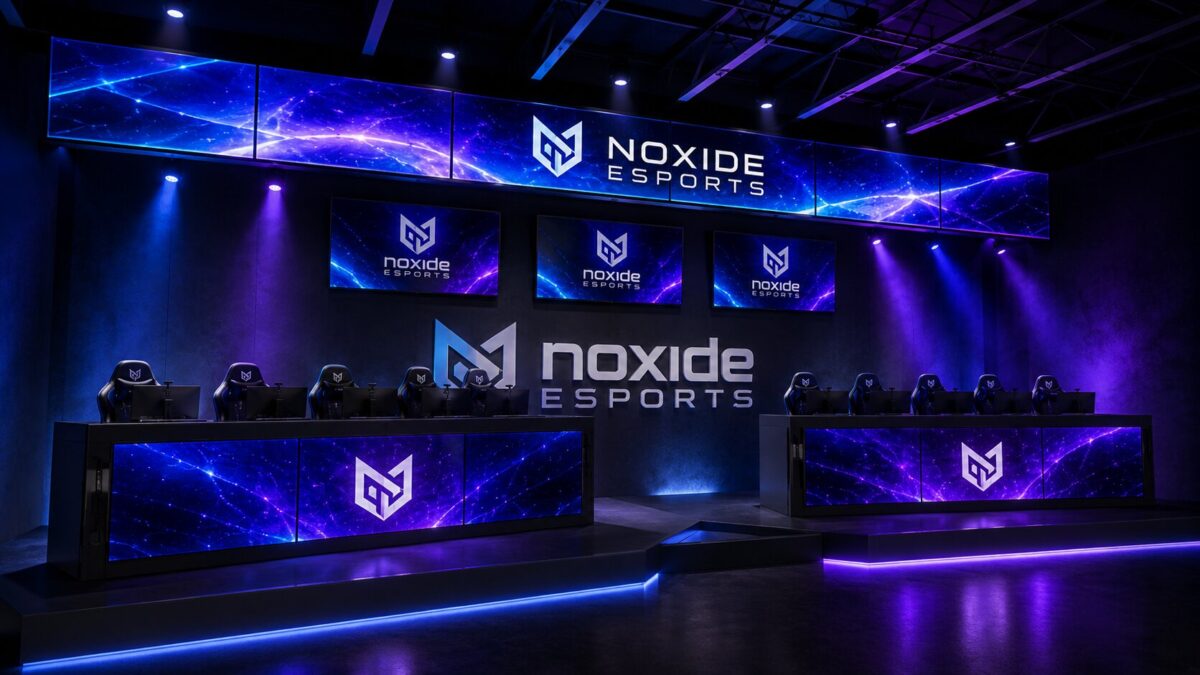
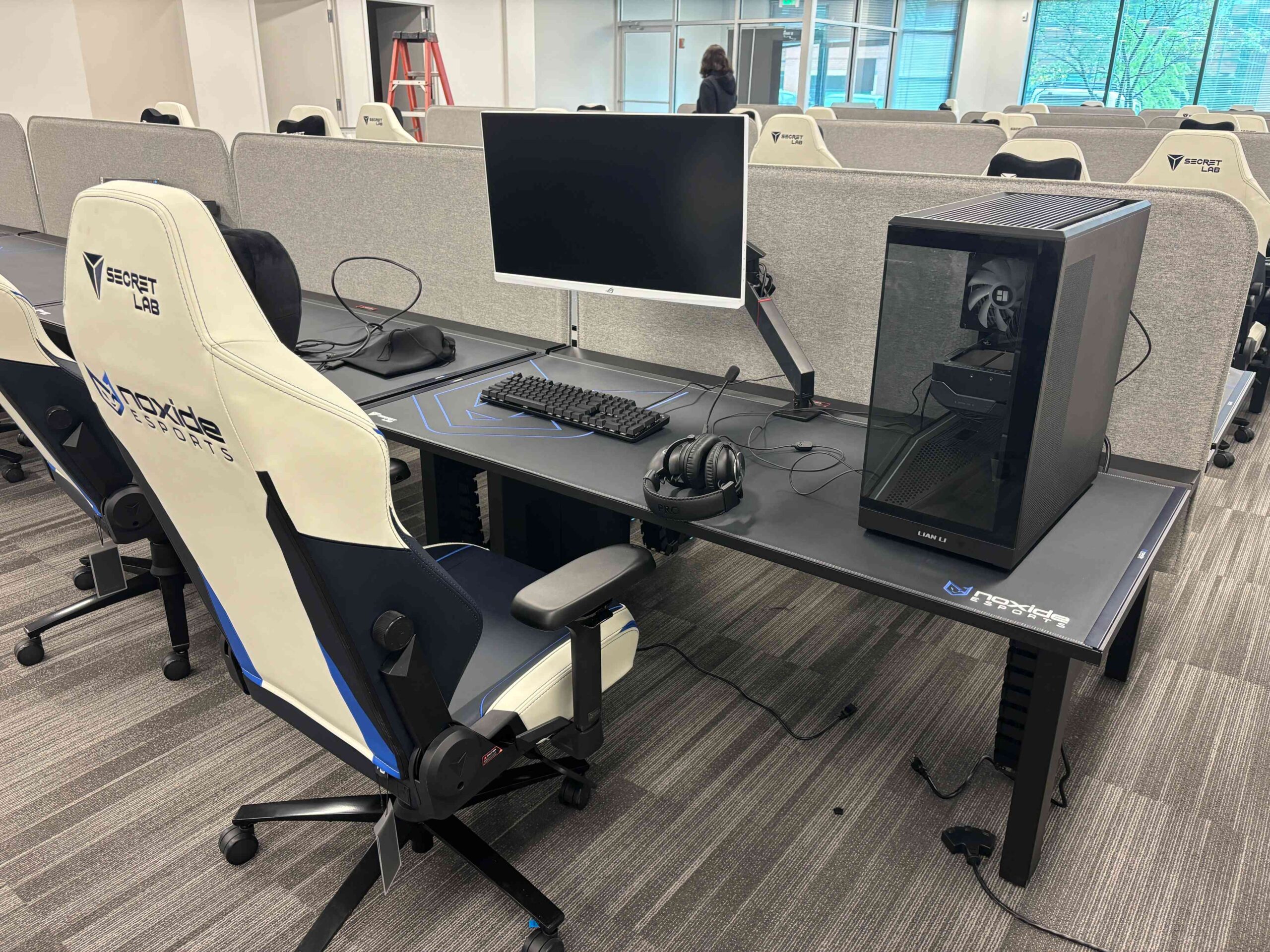
The Marylander is building a gaming center in Columbia, complete with rows of PCs and ergonomic chairs. But the real tour de force is the esports arena, which Minarik hopes will lure locals away from their personal setups and into a community space that elevates the gaming experience.
“We’re taking a risk on a business model that’s kind of dead, but we’re updating it to the current class of gamers.”
Nicholas Minarik, Noxide Esports
By competing on the big screen, Minarik says the Noxide Esports arena opening this summer will give players the adrenaline rush that at-home gaming can’t.
“It raises the level of play,” Minarik said, “having spectators, a stage, the stakes are higher.”
To build hype around the space, he’s lining up partnerships with local schools and colleges. The group is sponsoring Towson University’s Rocket League team and working with Howard Community College esports teams.
While Maryland has long been a hotbed for game development, its esports scene lags in comparison, especially at the K-12 level. Last fall, Calvert Hall College High School became the first high school in the state to establish a competitive esports club. Though, universities across the region now field esports teams.
Esports is quickly becoming one of the country’s favorite pastimes. According to market research firm MRI-Simmons, more than a third of young men are esports fans — a larger share than those who follow Major League Soccer or NASCAR.
Beyond cashing in on the esports boom, Minarik also wants to create a place for gamers to connect. Noxide channels the LAN cafes of yore, when gamers gathered at centers to play together on the same server. High-speed home internet largely killed the concept by the 2010s, but Minarik sees a renewed appetite among younger people for third spaces.
“We’re taking a risk on a business model that’s kind of dead,” Minarik said. “But we’re updating it to the current class of gamers.”
He’s hoping that a robust schedule of programming — including launch parties for new game releases and playtesting opportunities for developers craving feedback — will push the state’s gaming community to congregate IRL.
Those connections make for stronger teams, he said. Minarik coaches youth ice hockey and says collaboration thrives in person. Players can quickly debrief mistakes and strategy, and the emotional swings of gameplay just hit harder when the room sees it together.
“We’re trying to take my background in sports and move it into here,” Minarik said.
A brick-and-mortar strategy for safer gaming
Minarik ran local esports leagues before committing to a brick-and-mortar space.
He decided to go all in on the venture when the Trump administration rolled out the Deferred Resignation Program for federal workers, which gave the former intelligence officer a payout that helped cushion the early days of his new business.
Timing worked in his favor, too. Just a month before the program was announced, he found the space that would become Noxide’s home. He then took out a Small Business Administration loan to get the project off the ground.
As a parent, Minarik also hopes to highlight how a space like Noxide can help young gamers play more safely.
With staff on hand to monitor activity, it’s easier to reduce exposure to unsafe online interactions and curb the toxicity that can come with purely virtual play, particularly for women and people of color.
“If you leave your kid in the basement all day and they’re alone, that’s one thing,” Minarik said, “but if they’re out around other kids, around an adult or two that are responsible, they’re in a supportive environment.”