What did you want to be when you grew up? For many involved in building new technology, it wasn’t what they’re doing now.
Of the seven dozen respondents to Technical.ly’s 2026 RealLIST Innovators survey, nearly three-quarters (7 in 10) said that when they were young, they didn’t know a role like their current one existed.
In some cases, that’s because the technology or profession itself was still emerging — or hadn’t yet been imagined. In others, people simply didn’t realize it was an option.
Answers about how people eventually got to where they are suggest innovation careers often develop through a mix of education, mentors, unexpected opportunities and personal experiences, rather than a single well-defined pipeline.
Our annual RealLIST Innovators series honors people who cultivate community while actively creating new intellectual property. They’re engineers, scientists, developers, researchers and technologists. This year, nearly half the cohort is a company founder or cofounder, and many work at very small organizations — though some are at universities, corporations and government agencies.
Their answers to our questionnaire offer a snapshot of the people behind the ideas shaping their cities and what innovation work looks like now, including that AI is used often, for everything from building products to brainstorming ideas.
There’s no single path into innovation
No single type of influence dominated when we asked people how they got to their current career.
The most common answer was an experience in childhood, selected by 13%. Ten percent pointed to a college or graduate-school course, the same share as those who said their parents were the key factor. Around 8% said it was a professor or mentor, while 1 in 20 cited something they encountered in media or social media.
Other responses didn’t fit neatly into any category. They included the pandemic, a medical diagnosis, the OPEC oil embargo, the 2024 election, military service and activism.
New Orleans-based Andrew Dunn, head of engineering at Hello Gravel, offered a simple description of that kind of nonlinear career path:
“I just stumbled my way,” Dunn wrote, “from one interesting thing to the next.”
For a sizable share of respondents, the job they eventually found was one they helped create. Nearly half, or 48%, of this year’s Innovators have founder or cofounder in their primary title. About 3 in 5 described their organizations as startups.
And partly because we strive to highlight new people each year, the organizations our RealLISTers work at are often small. About 57% of this year’s class works somewhere with 10 or fewer employees. Fifteen percent are a one-person organization. Individual teams are similarly lean. Roughly two-thirds oversee no more than five people.
AI is part of the everyday toolkit
AI use is widespread across the group, and people are putting it to work in several different ways.
Nearly 2 in 3 said they use AI to build apps and tools for other people. Almost as many, 63%, use it as a thought partner.
About 56% of respondents use AI for administrative tasks, and the same number called it a core part of their main work. More than half build AI tools or models, and 55% use it for fun or experimentation. Just under a third said they use AI as a teacher or guide.
Respondents could select multiple answers, and the overlap shows that AI isn’t serving a single role.
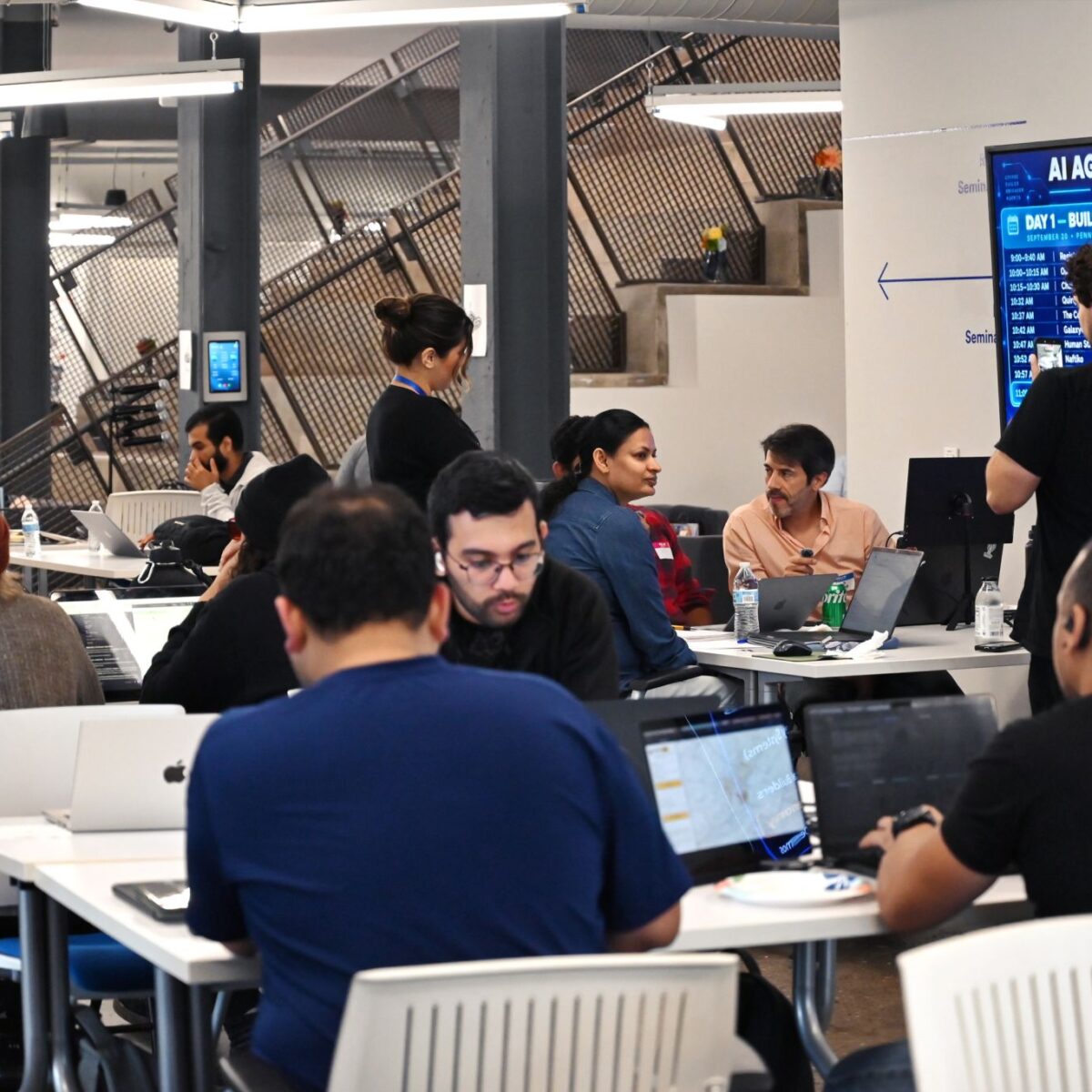
Washington-based Nadeen Siddiqui, founder of AI Build Club DC, described the community she created as one for people “navigating a strange new world, where figuring out AI together feels joyful instead of frightening.”
The technology is still changing, along with the jobs being created around it.
“I may not have gone where I intended to go,” said Arlington-based Nicholas Wagner, CEO of Learning Journey AI, quoting sci-fi author Douglas Adams, “but I think I have ended up where I needed to be.”