

This story was produced with support from the Howard County Economic Development Authority, which operates the Maryland Innovation Center and helps entrepreneurs and businesses of all sizes access the funding, guidance, and connections they need to grow in Howard County, Maryland. All stories are independently reported, with no partner review.
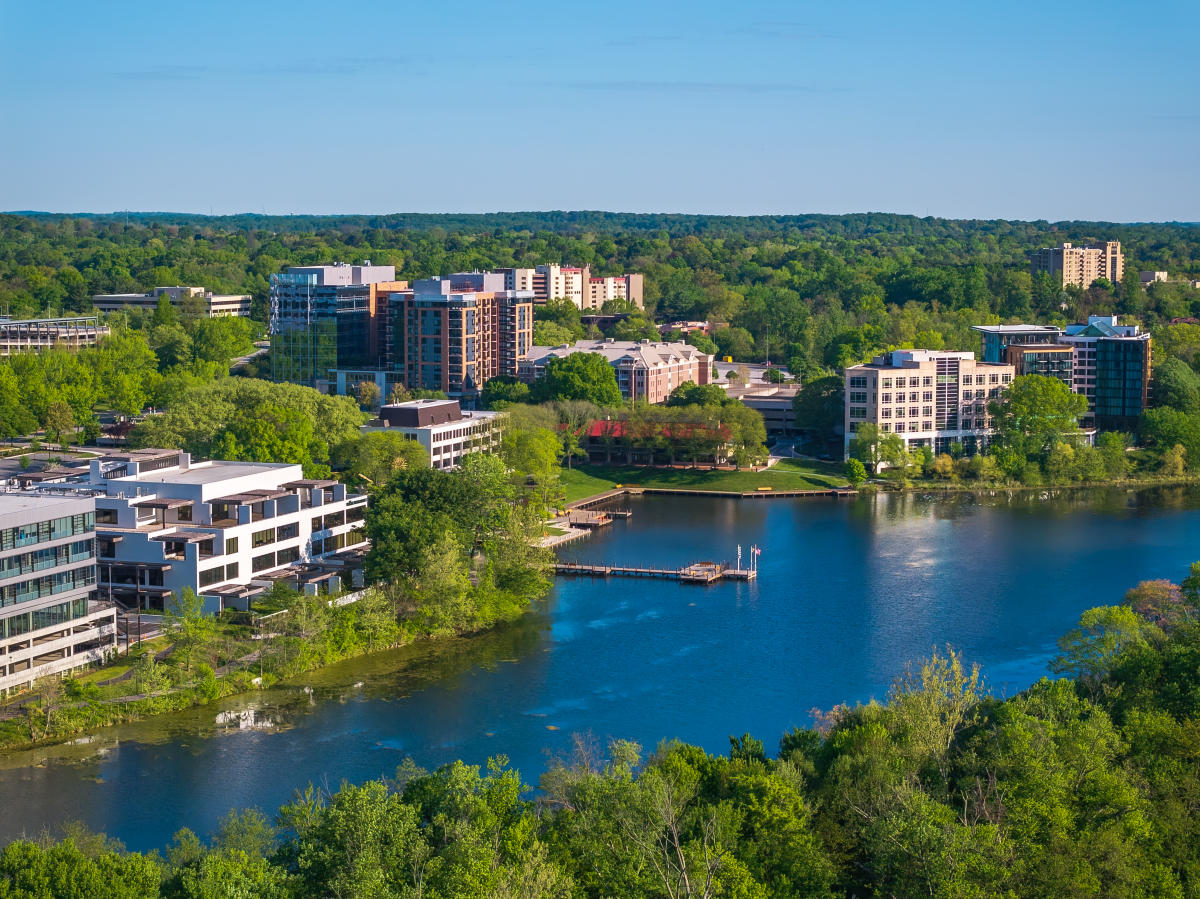
Federal contract awards and venture capital deals point to a strong year so far for Howard County’s cybersecurity sector, though other Maryland jurisdictions compete for its attention.
That includes Anne Arundel, Montgomery and Prince George’s counties — along with a dark horse: St. Mary’s, which, despite its comparatively small population, nabs seriously large federal contracts. They all boast similar perks for the cyber sector, including proximity to federal agencies and a highly educated workforce.
To stand out, Howard County’s approach courts businesses from other regions while building connections inside, too. The county hosts Cyber Howard, the state’s only cybersecurity-specific accelerator run by economic developers — a resource neighboring states like Pennsylvania and Virginia lack.
The winner of the spring cohort — Andrew DeFeo of Cipher — traveled from Philadelphia to attend the Howard County Economic Development Authority’s (HCEDA) program. Back in July, program reps told Technical.ly that business retention is a big reason they’re opening doors to founders across state lines.
“We wanted to leverage this as an attraction tool as well for the region,” HCEDA business development lead Bob Zhang said.
But another recent superpower comes from uniting tech firms across the state, according to Shelley Lombardo, president of financial advisory firm Evergreen Advisors.
“Howard County right now is really the star,” Lombardo said, “in pulling and connecting the people and the companies together.”
By the numbers, Howard County generally matches or trails its neighbors in federal contract awards, but the county has become more competitive in recent years.
Federal contracts remain a cyber cornerstone
The federal government is cybersecurity’s biggest customer. In fiscal year 2025, it spent over $27.5 billion on the industry across all agencies.
Proximity to the Capitol makes landing those contracts an attractive target for Howard County’s cyber startups.
It helps that the feds already know the stakes of cyber, too. Security startups don’t have to explain why the sector is important, like they may have to with smaller customers.
Only 22% of small businesses report having an advanced security system, according to consulting firm BD Emerson.
“Small to medium-sized businesses are still not fond of cybersecurity,” said Ijenna Aluko, founder of Columbia-based TandT LLC and a former Cyber Howard participant. “You have to do a lot of teaching, a lot of education to make them understand why they need cybersecurity within their workplaces.”
Over the last decade, Howard County has stayed a major player in federal cyber service contracts — outflanked only by St. Mary’s and Montgomery counties — but 2026 has proven particularly strong.
Much of that momentum comes from Columbia-based Enlighten IT Consulting, which secured a $42 million US Army award for cyber analytics and detection, according to federal contracting data.
But keeping the federal government as a client comes down to one thing, according to Aluko: relationship-building.
“Whether it’s the federal government or even the state or school system,” Aluko said, “that seems to be the case.”
Cyber startups turn to VC to fuel product growth
Cybersecurity firms may choose to forgo the federal customer by raising venture capital.
The difference usually comes down to whether the startup is building a product or providing a service, Aluko said.
Because developing cybersecurity software takes time and requires upfront resources, VC can help fund a product before it reaches the market. By contrast, a service-based business can bring in cash early on by charging for the human labor of maintaining and testing security systems.
“In order for you to scale among the huge competitors in the cybersecurity realm,” Aluko said, “you need those extra funds to back your product.”
Historically, cyber VC wasn’t Howard County’s strong suit, but 2026 is proving to be a turnaround.
Following a quiet 2025, local companies have landed four deals since the start of the year, bringing in nearly $50 million total, according to PitchBook data.
Those numbers are already outpacing totals from the start of the decade. And as for the 2022–2024 stretch, a handful of megadeals alongside a universally strong venture landscape did most of the heavy lifting.
With her sights set on the commercial market, VC might be Aluko’s next move. Federal and state cyber compliance contracts got the company off the ground, but she’s looking toward venture capital or mergers for the next phase of growth.
“For our SaaS products,” Aluko said, “we are definitely going to look into it.”