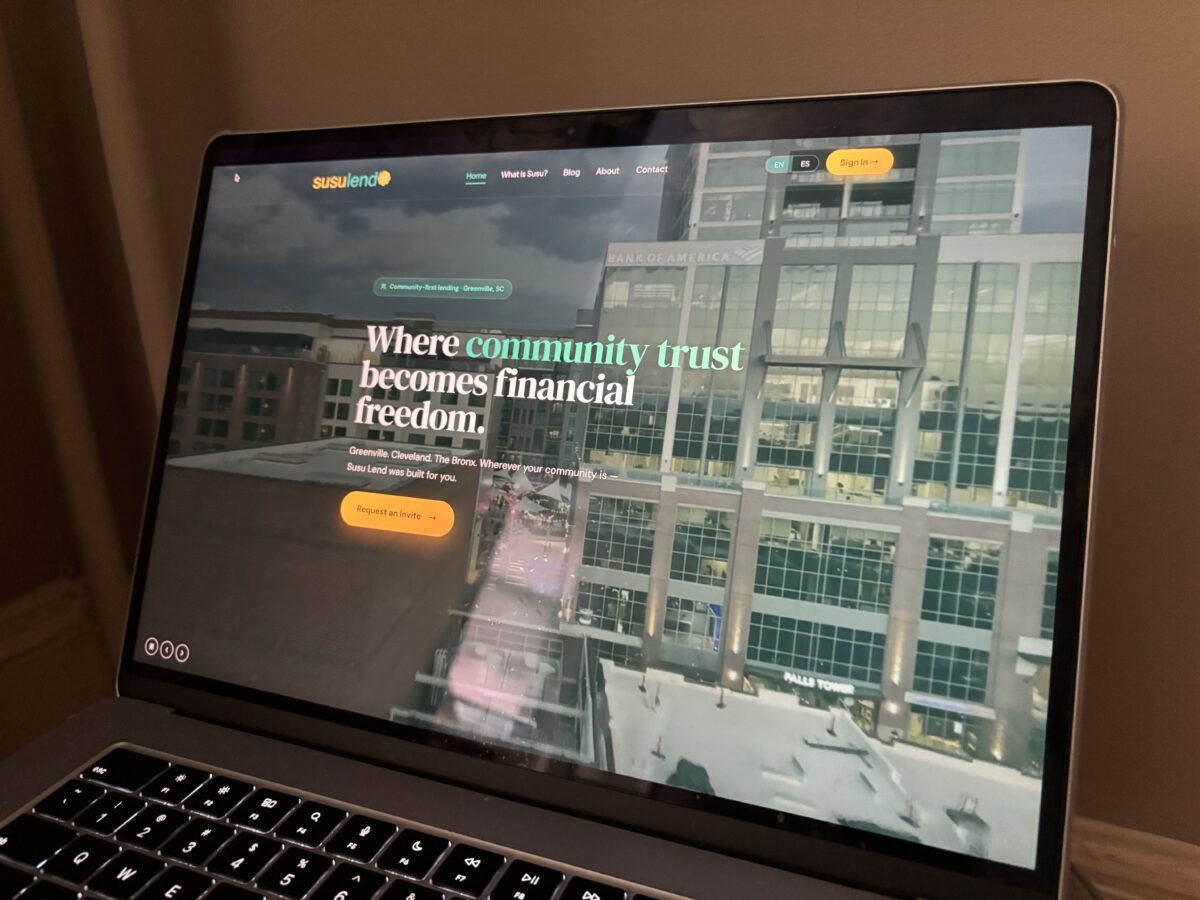
Startup profile: Susu Lend
- Founded by: Pedro Escobar, Ben Adams, Andrew Sabine
- Year founded: 2023
- Headquarters: Greenville, SC
- Sector: Fintech
- Funding and valuation: Undisclosed
- Key ecosystem partners: Nasdaq Entrepreneurial Center
Pedro Escobar’s first lesson in lending came when his family’s refrigerator broke.
Raised in New York City by Honduran parents, Escobar learned about financial hardship early when a bank refused to offer his family a line of credit for a new appliance. His father turned to his coworkers to start a susu — an informal savings pool popular with Latin American and African immigrants, where members take turns collecting payouts — to raise the $500 he needed.
Escobar wants to formalize that safety net through Susu Lend, a fintech startup designed to extend credit to people often overlooked by traditional banks. The Greenville, South Carolina-based company is working toward a partnership with a local credit union to begin offering loans through its platform.

“Our goal is to eventually have them graduate our program,” Escobar said, “and go to regular lenders like Bank of America or Wells Fargo to borrow money.”
Susu Lend funds its operations and lending pilots primarily with money from an angel investor.
If Susu Lend seals a credit union deal, participants would apply for loans through the platform, which would route requests to the institution on the backend.
The angel funding, however, would still play an important role. Applicants turned away by the credit union could still receive funding through the investor pool, Escobar said.
If the partnership falls through, Escobar plans to run a 500-person third pilot using investor funding by the end of 2026 or early 2027.
Credit for borrowers traditional banks overlook
In 2023, Escobar began attending local Latino markets in Greenville to recruit members of the company’s initial pilot. Five people participated in the first runaround, with cash loans ranging from $150 to $500 each.
All of them paid it back, according to Escobar.
“It really proved our theory that if you give people a shot despite not having a traditional FICO score, they will pay it back,” he said.
For the second test, Escobar went much bigger. He knocked on doors and appeared on local news to market his product. The waitlist for the pilot ballooned to over 1,500 people, with 250 ultimately onboarded. This time, the company processed loans of up to $1,000 digitally, allowing them to analyze repayment histories.
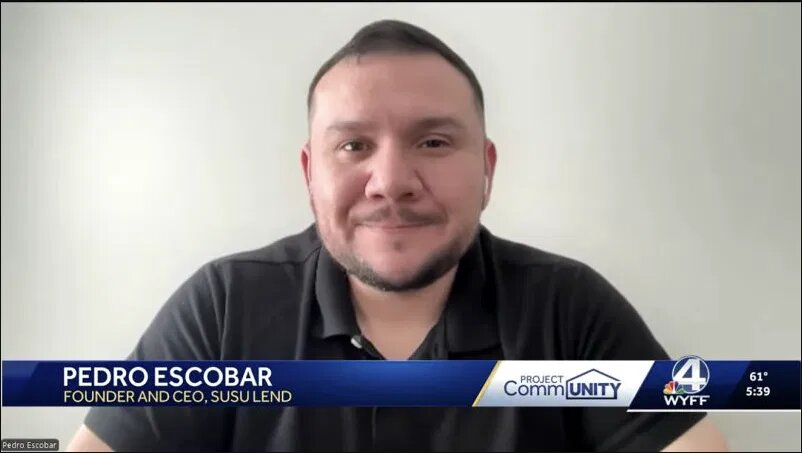
About 10 people are still repaying their loans through the platform. The company funded the early pilots primarily through an angel investor Escobar met while studying for his MBA at Cornell University, and the Nasdaq Milestone Circles program helped guide Escobar on compliance issues.
While the loan applications used fairly standard questions, the company tried to adapt them for immigrant workers after hearing many felt intimidated by traditional forms. The team added options for gig workers, accounted for job gaps and included professions like day laborer, house painter and gardener.
“It’s pretty much the same application process with minor changes that help people feel more seen,” Escobar said.
Next, Escobar plans to develop an internal Susu score. The system would generate a score based on users’ repayment history to help recommend them to traditional banks for future loans.
The roots of Susu Lend still go back to the money Escobar’s father received when his first susu eventually snowballed. Several more pools helped him with saving for a down payment on a house in New Jersey, and owning a home gave him the loan history to open a bodega.
“Just having access to capital through his friends,” Escobar said, “was such a lifeline for our survival.”