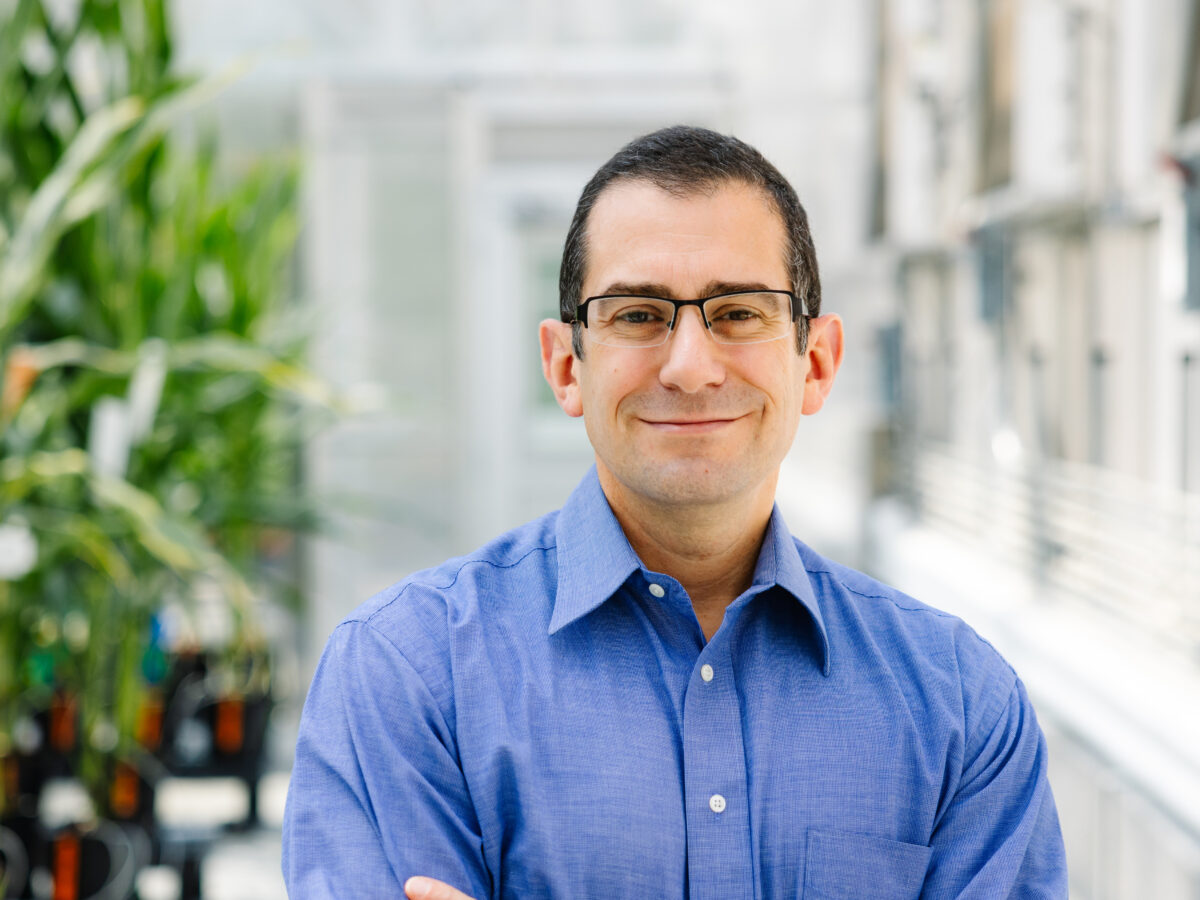
Growing up surrounded by flowers in his parents’ Florida greenhouses, Shai Lawit didn’t initially see himself working with agriculture.
His plans shifted during a college meeting with a professor that turned into a four-hour conversation about genetically modifying wheat to increase crop numbers. It was the 1990s, and there were widespread debates about rapid population growth and the global food supply. Lawit felt inspired to dedicate his career to agricultural innovation, with the goal of delivering more food to more people.
“You can work in science, you can work in ag, and do things that are really meaningful for the world,” Lawit told Technical.ly. “I wanted to have an impact.”
Lawit leads research, development and testing at Pairwise, a gene editing agtech startup based in Durham, North Carolina, with a second office in Research Triangle Park. His team at the CRISPR-focused company is finding ways to prevent plant disease, improve taste and make crops seedless, along with finding fellow agriculture companies to collaborate with in developing innovations.
Agriculture is a key industry in the Research Triangle region, which draws biotech talent coming from local universities, research facilities and greenhouses. Those are all factors keeping Lawit rooted in the area, he said.
For this edition of How I Got Here, Technical.ly chatted with Lawit about his current work at Pairwise, how a layoff pushed to change his career for the better and to lean into saying yes to risk.
This Q&A has been edited for length and clarity.
What was the start of your career in agricultural biotech?
In my second year of university, I wanted to start building out my resume and looked into research. I met with a professor. He had been studying how nitrogen as part of fertilizer is absorbed by plants and incorporated to make proteins. He had a gene that Monsanto [acquired by Bayer] had licensed that looked like it was increasing yield in wheat tremendously.
I realized I can have a really exciting career, doing very meaningful work and feeding people.
Going back to where I grew up with the nursery, it was all ornamentals. We can do ag tech to not just make pretty things, but to do things that really help people.
What was your first job in the industry?
I got my PhD from the University of Florida in plant molecular and cellular biology.
As I was graduating, I wound up getting a few offers.
One was at DuPont Pioneer, which later became Corteva, and I was just blown away with the people there and the opportunity to really go into the field that I wanted to do in the first place, which was to make products to improve agriculture.
The first job was a three year visiting scientist position, and I was working on short corn, which is still something that people are working on launching. [It’s a] difficult thing to develop, but the job was a solid grounding in the potential of making a big change to an important crop.
Where did you go from there?
[Corteva] offered me a permanent role, starting up a reproductive biology project where we’re trying to make what we call “cell-free producing hybrids.”
We knew at the time we were expecting it to take a couple of decades, honestly, because we had to invent lots of new biology to make it happen. If we could master this technology, it was going to be a huge, game-changing thing. That whet my appetite on taking a little bit of risk. Be more risk tolerant. Something that is going to be really hard, but has a huge impact.
I became an expert in that field over the next eight years. Eventually, built up several external partnerships and got some funding from the Gates Foundation to build up a consortium of people. It was so big, so difficult of a project, that we knew we needed to bring in partners that had other expertise and could help us do it. That also became a theme for the rest of my career.
Then you went to a startup, which are known for risks
This is where I had a career twist. About a year before I left [Corteva], there were some rumblings about this startup company Pairwise.
There was an announcement about base editing technology, and Pairwise had licensed it exclusively for agriculture.
That freaked out some people. We had this big meeting with my department. We’re seeing this new company, new technology. We need to figure out how we’re going to address this.
Early December of 2018, Cortez decided to close my department, so I actually got laid off. I had applied actually to a position at Pairwise, maybe a month ahead of that. There was a good fit in leading their molecular biology group. The same day that I was told I was being laid off that afternoon, I got a call from the recruiter at Pairwise.
You’ve held a handful of roles. How has your work evolved?
That’s one of the great things about Pairwise. There’s a lot of opportunity to do different things, get experience across different parts of the organization. I have led at this point five or six different teams at various levels.
After spending a couple years helping to develop the tools and stand up our molecular biology team, I transitioned over to leading the traits group, and that’s evolved over time.
Currently, I’m leading trait discovery and our plant physiology phenotyping team that looks at the plants that we make and determines how well the changes have impacted what we’re looking to change.
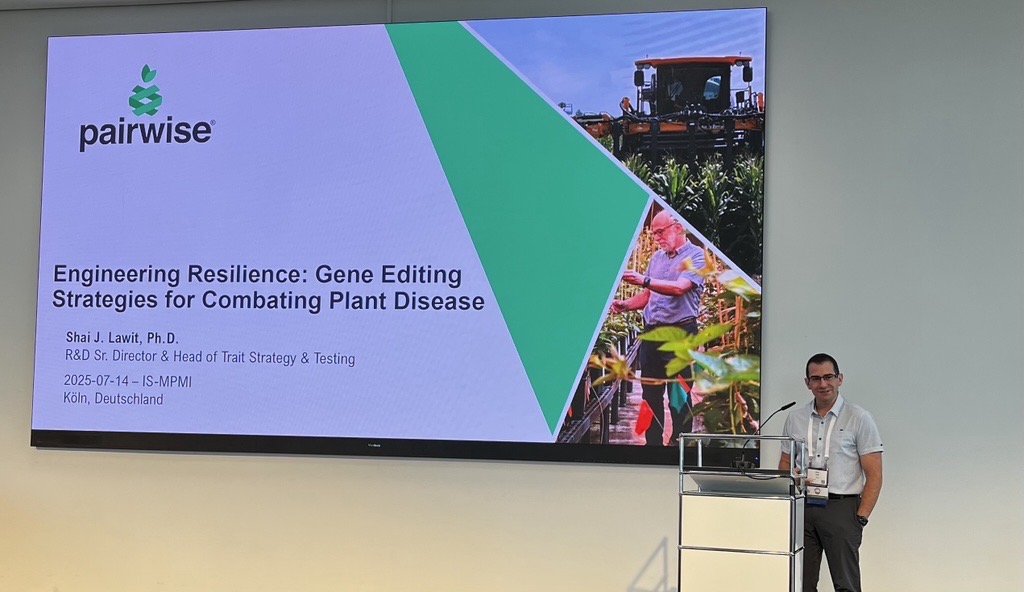
I help to lead collaborations. We have a big collaboration with Corteva. We’re actually standing back up the department that I left, so we’re doing a lot of similar work to what they’re doing, and working with some of the same folks.
I’m not in the lab so much anymore. I’ve joined our research and development leadership team and the company leadership team, which doesn’t leave me enough time to do experiments myself. But I’m overseeing people that are.
I may not get to do the science, but I get to think about it and get to see the outcomes of the edited plants and the phenotypes, which are really exciting for me.
What do you like about where you’re located?
Durham is a great place. One of the great things about this area is that there are a lot of pre-existing facilities that can be rented. We have a great facility here with lots of growth space, very large greenhouses, lots of growth chambers.
There’s other exciting startups, and we are pretty open and collaborative. We want other people to win too. We’re out meeting people. There’s plenty of room for lots of people to be successful.
The university system here as well. We do a lot of recruiting from those universities. It’s not ever hard for us to find great talent.
What advice do you have for others?
Take opportunities, but be selective. I’m super fortunate to have landed where I’m at.
There’s a lot of luck along the way, but I had to say no to things that were going to take me away from this path, and say yes to opportunities that were maybe even risky, but had the potential to get me closer to where I wanted to be.
I’m more motivated by what I can achieve in my career, and how I can help the world, than I am by making money. If I wanted to make tons of money, I would have gone into banking or some other career. I love the potential for what this type of technology can deliver.