
A cybersecurity startup in Northern Virginia emerging from stealth this week aims to help companies better know and secure their data — before AI gets access to it.
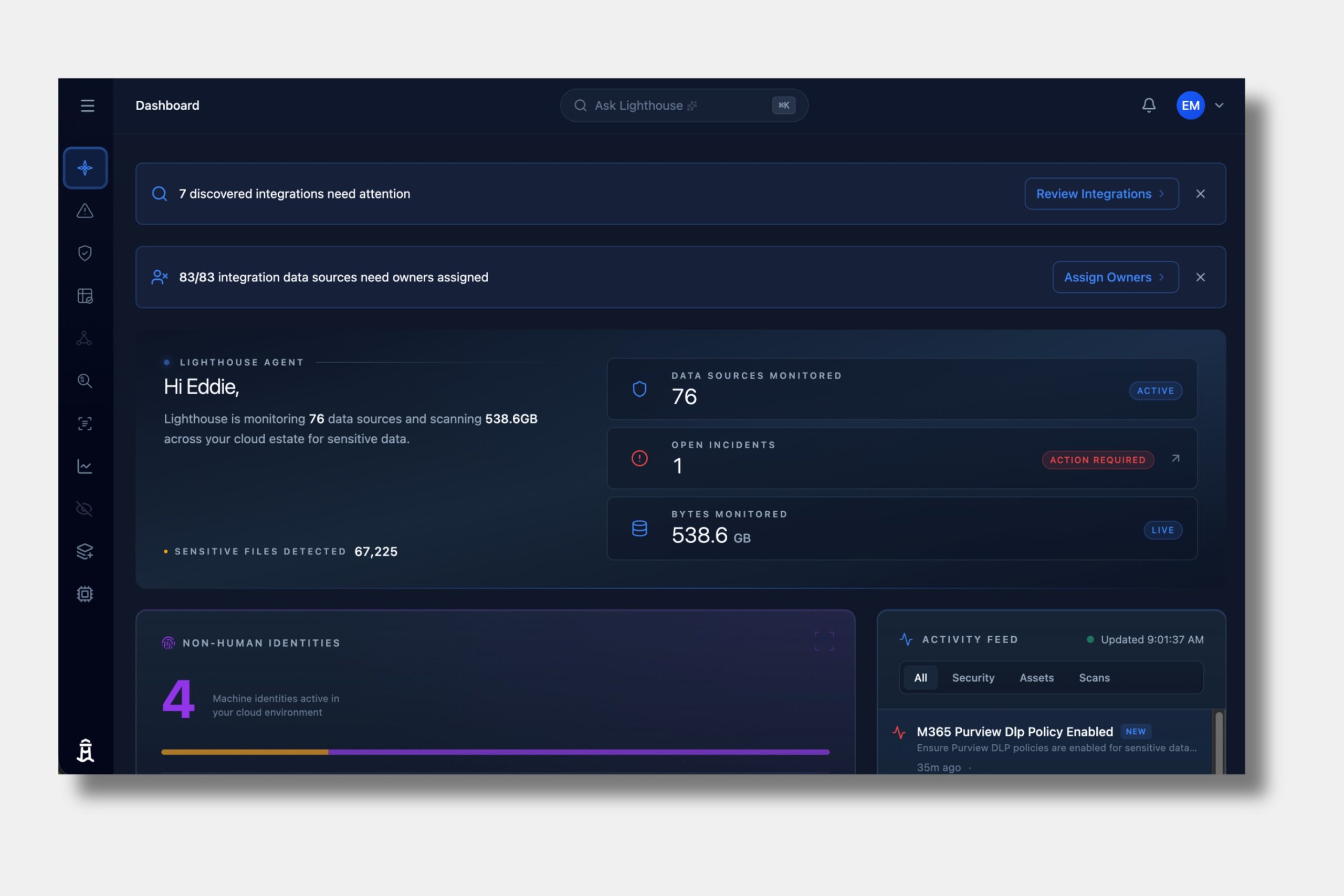
HarborMind works as the root of data security, per founder Eddie McKulsky. The platform can identify where sensitive data is stored within a company’s tech infrastructure in just a few minutes, he said. It then determines who has access (humans or bots) and tracks how it’s shared publicly or internally.
He built the platform from the ground up to make that possible, McKulsky said.
“[Security teams] are getting drowned right now with the millions of AI agents,” McKulsky told Technical.ly. “We’ve just gotta balance the noise versus what is actionable.
“[Security teams] are getting drowned right now with the millions of AI agents.”
Eddie McKulsky, HarborMind
McKulsky was inspired by his own experience on security teams at major companies like College Board, which he said brought in an outside cybersecurity vendor to classify and discover its sensitive data. The process would take a year, the vendor told him — or less time if they wanted to shell out more cash.
That’s when HarborMind was born. He spent a week creating the prototype, and one year later, has four patents pending, regarding the speed of the platform and how it scans a company’s broad network of systems.
The boom in company AI adoption and sophistication in cyber attacks is fueling the need for data security, per McKulsky. Focusing on where problems could start — like unknowingly giving a newly introduced AI agent access to social security numbers — is a different approach from the more common threat detection software offered by vendors like CrowdStrike and Tenable.
McKulsky’s software does not identify security threats, though he said HarborMind may expand to that in the future.
Feature set: Easy install and speedy processing
Data assessment speed is one of the ways McKulsky believes HarborMind stands out.
Legacy vendors often rely on sampling just 10% of a company’s data, he said, to avoid driving up massive computing costs. He says HarborMind’s architecture allows for 100% data scanning.
It does that by using scanners that flip on or off as needed, rather than continuously running and racking up big compute bills, he explained. There’s also a smaller scanner that consistently monitors for new data resources. Once collections of data are identified, the system will be scanned again with that increased compute power to find “attributes” (including social security numbers and drivers licenses).
HarborMind, McKulsky says, can process vast amounts of information — potentially a petabyte in 30 days — without missing any information.
It also directly embeds in a company’s tech infrastructure, unlike most traditional vendors that get access to a client’s data through external sharing, he said. Downloading the tool should take just five minutes and not require on-site staff, per McKulsky, though he pledged the company would provide in-person support if needed.
Just out of stealth, HarborMind doesn’t yet have customers but there’s a pilot launching this week, he said. He plans to start with mid-size businesses to prove out the tech, then plans to approach larger companies where the speedy processes of massive data collections will be impactful. The target market is companies in regulated industries and possibly the federal government.
Proximity to the Pentagon and various banks and healthcare institutions are major reasons he’s based in Northern Virginia. One day, he’d like to open a physical office in the region.



“Especially with DOD customers and the unstructured data problems that they have there,” he said, “they understand that they need to protect certain types of data. It’s a very good market to be near.”
After bootstrapping for the past year, McKulsky is currently raising a seed round to hire engineers and a sales expert. He has two advisors and a few part-time contractors, but wants to start building out a formal staff.
“I’ve taken a lot of pain points,” McKulsky said, “and tried to make it very friendly and actionable for security teams.”