
This story was made possible through support from TEDCO, the Maryland Technology Development Corporation, which enhances economic empowerment growth through the fostering of an inclusive entrepreneurial innovation ecosystem. TEDCO identifies, invests in, and helps grow technology and life science-based companies in Maryland. Learn more at tedcomd.com. All stories are independently reported, with no partner review.
• The rapid buildout of data centers is straining existing power grids, creating an urgent need for innovative methods to create or distribute power as current demand exceeds the capacity of existing infrastructure.
• Many of the energy startups attracting investment for these solutions are located in the DC, Maryland and Northern Virginia region, evidenced by the latest VC dealflow data.
• They’re building things like new energy generation technology, hardware to boost compute efficiency within facilities, and software that lets facility managers modulate energy consumption in real time.
Startups finding new ways to create or distribute power are having a moment, thanks to the power demands of the massive data center buildout currently underway across the US.
They’re resurrecting once-sidelined energy sources, like nuclear and geothermal, and inventing methods that wring more efficiency out of existing systems. These companies are at various stages of development, ranging from prototype to test deployments to fully operational.
Increasingly, many are located in the DC, Maryland and Northern Virginia region. Venture capital invested last year in DMV energy startups ($1.6 billion) was nearly double the previous high mark, in 2022.
“We grow our partnerships to build technology together, but also to learn how we are going to fit into their ecosystem.”
Ayse Coskun, Emerald AI
Emerald AI, for example, is currently raising a $100 million round at a more than $1 billion valuation. The DC-based startup is in active partnership with chipmaker Nvidia to pilot its energy adjustment tool that aims to prevent blackouts by coordinating communications between data centers and the power grid.
“There are very different companies covering different parts of the data center sector,” said Ayse Coskun, Emerald AI’s chief scientist. “All the time, we grow our partnerships to build technology together, but also to learn how we are going to fit into their ecosystem.”
Public opposition to data centers is growing across the US. The power demands of the rapid buildout have been linked with utility companies raising their rates, and communities also have concerns about environmental impacts, noise pollution and water use.
In the DMV region — which houses the world’s highest concentration of these facilities (in Northern Virginia’s Data Center Alley) and has hundreds if not thousands more in planning — the projected need for more energy is also butting up against lofty statewide climate goals, like those espoused by Maryland and Virginia.
This moment could mark a turning point for embracing renewable energy, some experts say.
Beyond technological development, energy infrastructure projects often take several years to reach fruition due to government approval processes, but solar, wind and battery storage are expected to comprise 93% of all new energy projects this year, per a February report from the Energy Information Administration.
“Clean energy solutions [are here],” said John Paul Moscarella, cofounder of angel group Resilient Earth Capital. “They meet the price point and, with the right policy support, they would get the job done.”
Not everyone is welcoming that strategy. West Virginia coal plants that were scheduled to wind down are instead being boosted and refurbished with Department of Energy (DOE) grants. In Maryland, a data center operator recently bought a coal plant with the sole purpose of converting it to natural gas generation. That’s become a trend adopted by other developers, who are building their own “behind-the-meter” gas plants (aka bringing their own power) to get data centers running quicker.
Extending the life of fossil fuel plants can offer a quick fix, but meeting new energy demands often requires a more scalable solution.
Reinvigorating the nuclear industry
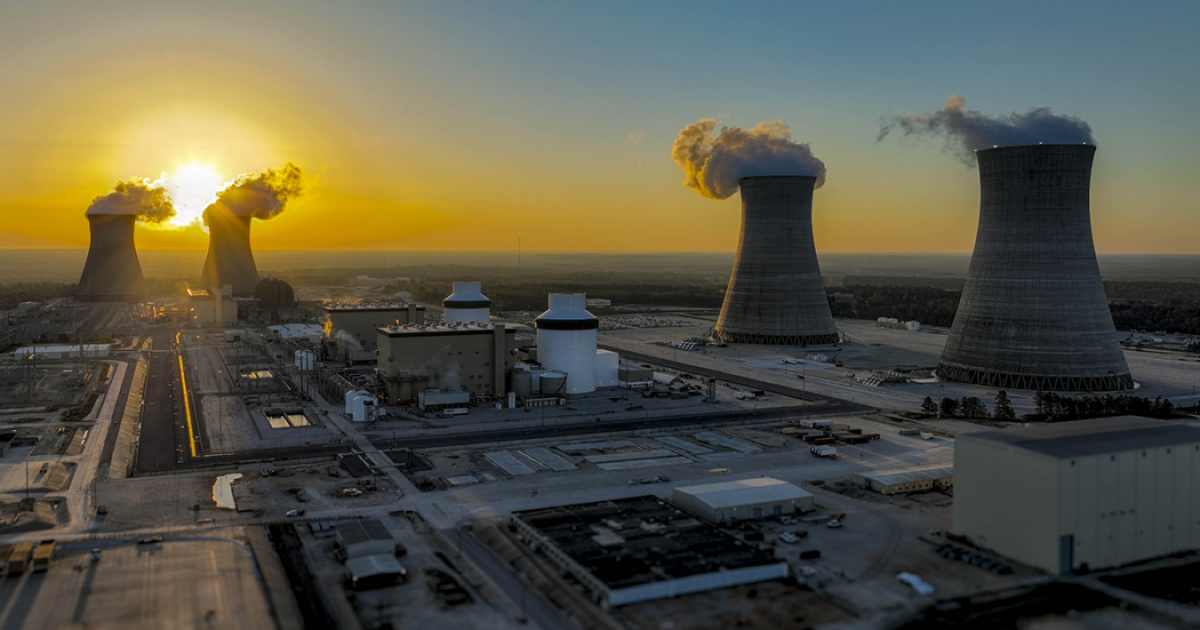
Just over a decade ago, most nuclear plants in the US were losing money, hampered by low power prices and competition from natural gas and renewables. Now, a wave of big tech companies sees potential in the technology, which can generate far more power, more reliably, than other energy-generating methods.
That wave of investment has boosted Maryland’s venture totals in a mostly subdued funding landscape. Chevy Chase’s Blue Energy raised $380 million in April and Bethesda’s X-Energy raised over $1 billion in 2025, eventually going public earlier this year.
While the Trump administration is incentivizing nuclear development, it’s still a long way off from widespread deployment. A handful of new reactors are expected to go online in the next four years, but most won’t be operational until 2035.
All active nuclear plants rely on fission technology. But for decades, researchers have been working to bring fusion reactors into the fray. Though nuclear scientists made breakthroughs in fusion over the past few years, it remains a white whale for commercial adoption.
FAQ: The difference between fusion and fission
What is nuclear fission?
Today’s operational nuclear plants use fission, a process in which heavy elements like uranium or plutonium are split apart to release energy. It triggers a chain reaction, allowing plants to generate a steady supply of electricity — but leaves behind radioactive waste.
How does fusion differ?
Instead of splitting atoms, fusion reactors combine lighter atoms (typically hydrogen) into one heavier atom. This releases even larger amounts of energy and does not create radioactive waste.
So why don’t plants use fusion?
No one has yet figured out how to make the process efficient, sustainable or replicable — but several startups are working on it!
Terra Fusion is one of the many companies racing to build a commercially viable fusion reactor. Based at the University of Maryland, College Park, the company received funding from the DOE’s Advanced Research Project Agency to prove its fusion concept, according to CEO Carlos Romero Talamás.
Now, Terra is raising $10 million in seed funding to build its nuclear fusion reactor in Baltimore. And they already landed an initial investment from angel group Vectors Angel.
There are other innovations happening around nuclear power, too. Curio, a DC startup building facilities to extract nuclear energy from its own waste, has been validating its tech with the DOE for the past four years, per CEO Ed McGinnis.

The startup is looking at the back end of the nuclear fuel cycle to make the energy source more sustainable, he said.
Fuel is typically “spent,” or not producing as much energy, after five years in a nuclear reactor.
But that fuel still has 90% of its energy that can be accessed in a recycling process, including possibly through Curio’s technology. The first facility is slated to go online in a few years, per McGinnis.
Recycling nuclear waste can be expensive and dangerous, and often done with the harmful chemical nitric acid. Curio does not use nitric acid, instead is developing electrolysis (using electricity to split water into hydrogen and oxygen) and pyroprocessing (submerging the waste in molten salt).
Adjusting power consumption through software
Some startups are approaching the solution by developing tech that makes it easier for data centers to modulate their energy consumption.
Emerald AI, the DC startup with an Nvidia partnership, is creating what it calls the “Emerald Conductor.” It gives data center operators and regional transmission organizations (which operate the country’s patchwork of electric grids) a framework for communicating when power needs to be directed elsewhere, such as during extreme weather events or power plant failures.
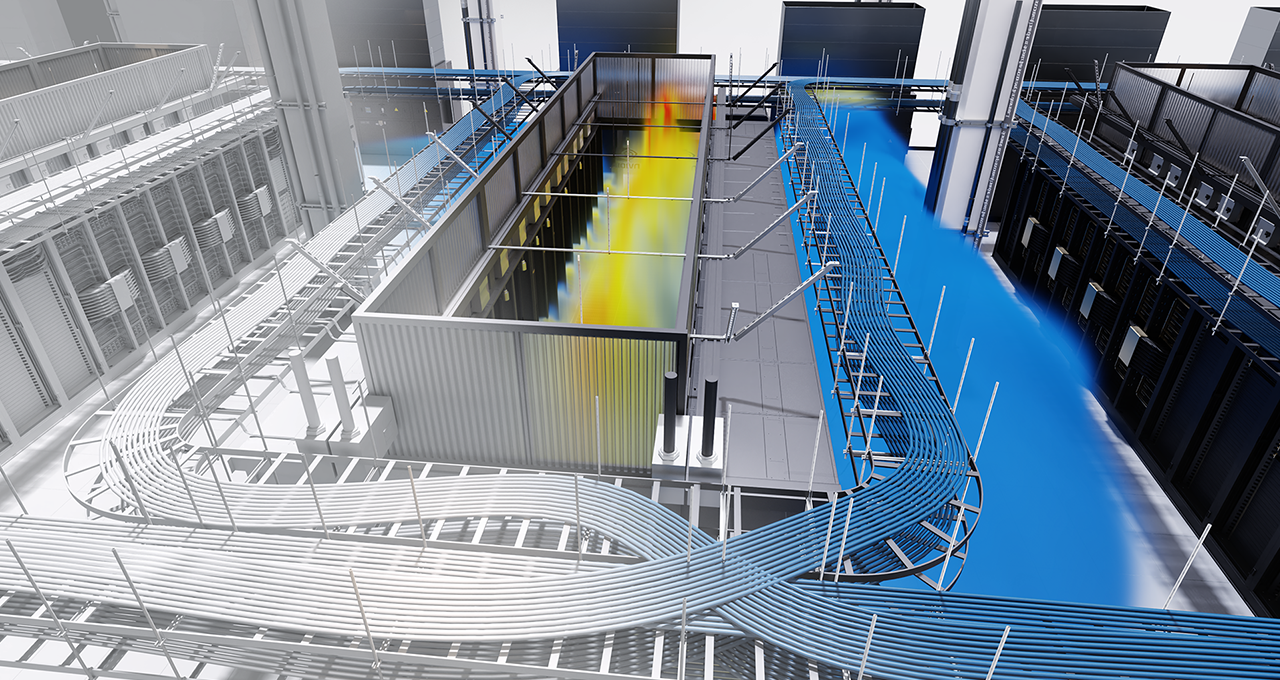
This tool holistically considers the power used for cooling, storage and on-site energy systems, said Coskun, the chief scientist, adding that it’s built to be hardware-agnostic and scalable in existing and future facilities. It operates by assigning urgency to various power demands, she said. In a situation where power is limited, critical operations like processing bank transactions would not slow down, but systems training AI models could be limited for a few hours.
OBM in Baltimore is also developing power adjustment tech for data centers. The startup originally started building the software to be used for bitcoin mining, per cofounder and CEO Dan Lawrence.
To alleviate grid disruptions from factors like extreme weather, OBM’s tech detects potential blackouts or brownouts and sends commands to data center facilities that temporarily reduce compute power. The company’s goal is to expand its software so it can also modulate other aspects costing energy in a data center, like server cooling.
“It all comes down to flexibility,” Lawrence said. “Data centers know they need to be flexible. Now, they’re actually getting forced to be flexible.”
The tech is directly integrated with the servers in a data center, and the slowdown typically happens for 10-15 minutes, he said.
New hardware to funnel energy
When tech companies and other data center developers decide to build their own power plants while still relying on the grid, combining all the sources can be difficult, with many conversion steps, said Dan Kultran, cofounder and CEO of Claros.
He’s cofounder and CEO of Claros, a McLean startup building fridge-like structures that combine power from the grid and behind-the-meter systems to feed to data centers. Called “Power Gateway,” the tech is built to handle overflow energy, Kultran said, which it can route back to the grid or, with some designs, store it on-site in batteries.
The structures can be placed either inside or outside a data center, with weatherproof designs if external, he said.
Claros is also creating tiny integrated voltage regulators that change how power flows inside the servers that make up a data center. Called IVRs, they’re about the size of four grains of rice, he said, and direct energy to chips in ways that boost efficiency in computing.
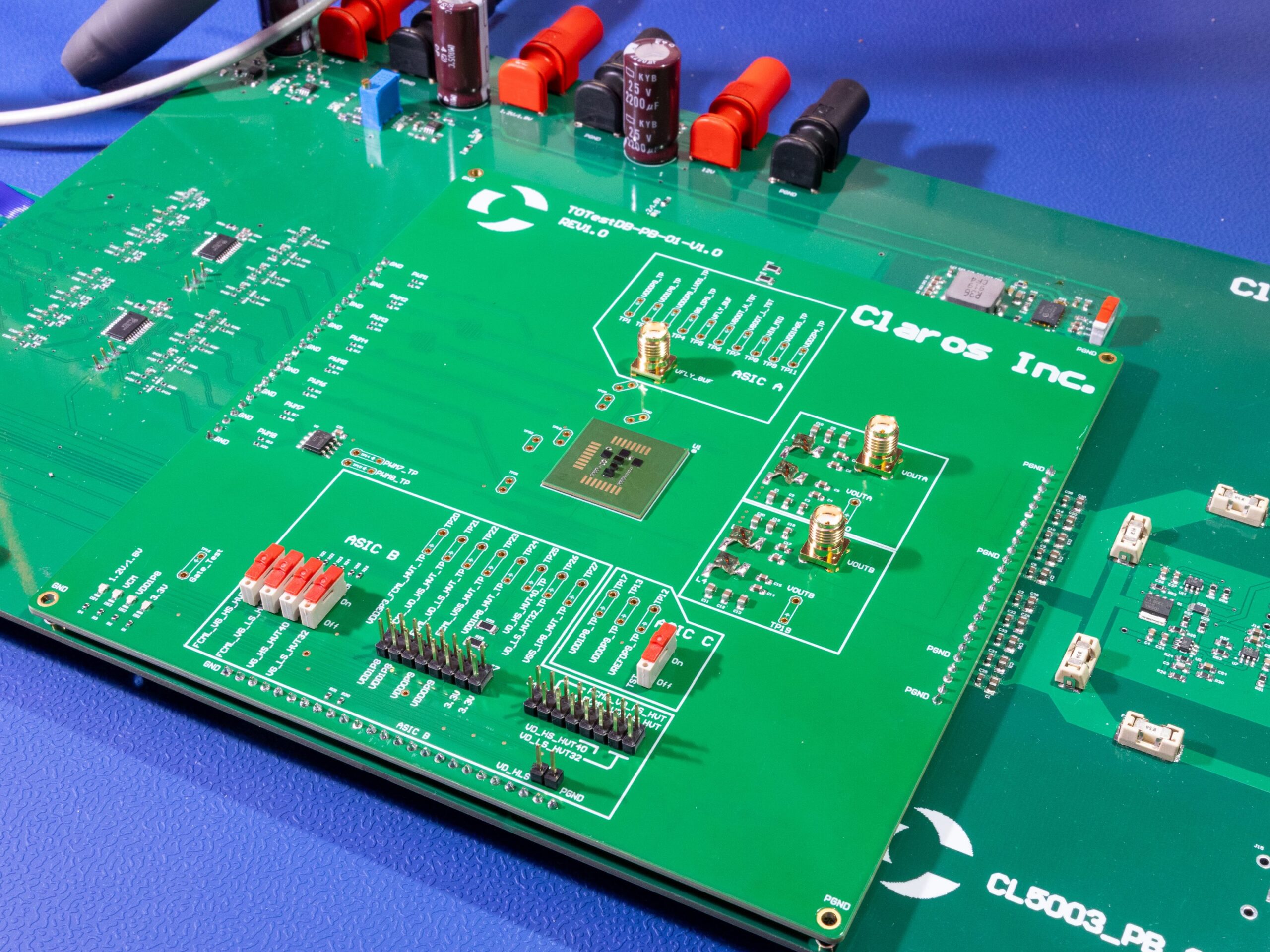
“We need to generate more [energy] but our take is also at the same time, address the inefficiencies that you have in these buildings,” Kultran said. “So that new energy resources that you bring online are more efficiently used across the data center industry.”
The startup this spring closed a $30 million round to keep prototyping and testing its products.
Expanding geothermal technology
Geothermal power plants have existed since the early 20th century, but Baltimore-based Geothermal Technologies is taking a new approach to expand its reach.
Traditionally, geothermal plants have been built in regions with strong underground heat sources — often near volcanic activity — where hot water or steam is accessed relatively close to the surface and used to drive turbines that generate power.
For areas without those resources, Geothermal Technologies developed a system that draws water from deep underground aquifers. The system operates like a jacuzzi, CEO J. Gary McDaniel said, pulling hot water to the surface, converting it into energy, and then pumping the cooled water back underground to be circulated again.
However, the technology is limited to areas with aquifers. In Maryland, that’s out west in Garrett and Allegany counties.
Like nuclear, geothermal is a baseload power, meaning it can generate electricity around the clock, regardless of weather conditions or time of day. But it has a distinct advantage over nuclear: it can get a plant permitted and running within two years, according to McDaniel.
The company is gearing up to start building a plant outside Denver, with a local utility agreeing to buy the power. The team chose the area, McDaniel said, because existing oil and gas drilling nearby provides useful data to support development. Plus, Colorado is leaning heavily into geothermal opportunities.
Initially, McDaniel pitched his company to utilities and state legislators scrambling to hit clean energy goals. But big tech is biting.
“We see it as a tremendous opportunity,” McDaniel said. “We can build our geothermal power plant collocated with a data center.”