

Getting a flock of drones to spontaneously coordinate is not easy, but making it happen could be useful in a variety of cases, from entertainment shows to military deployments.
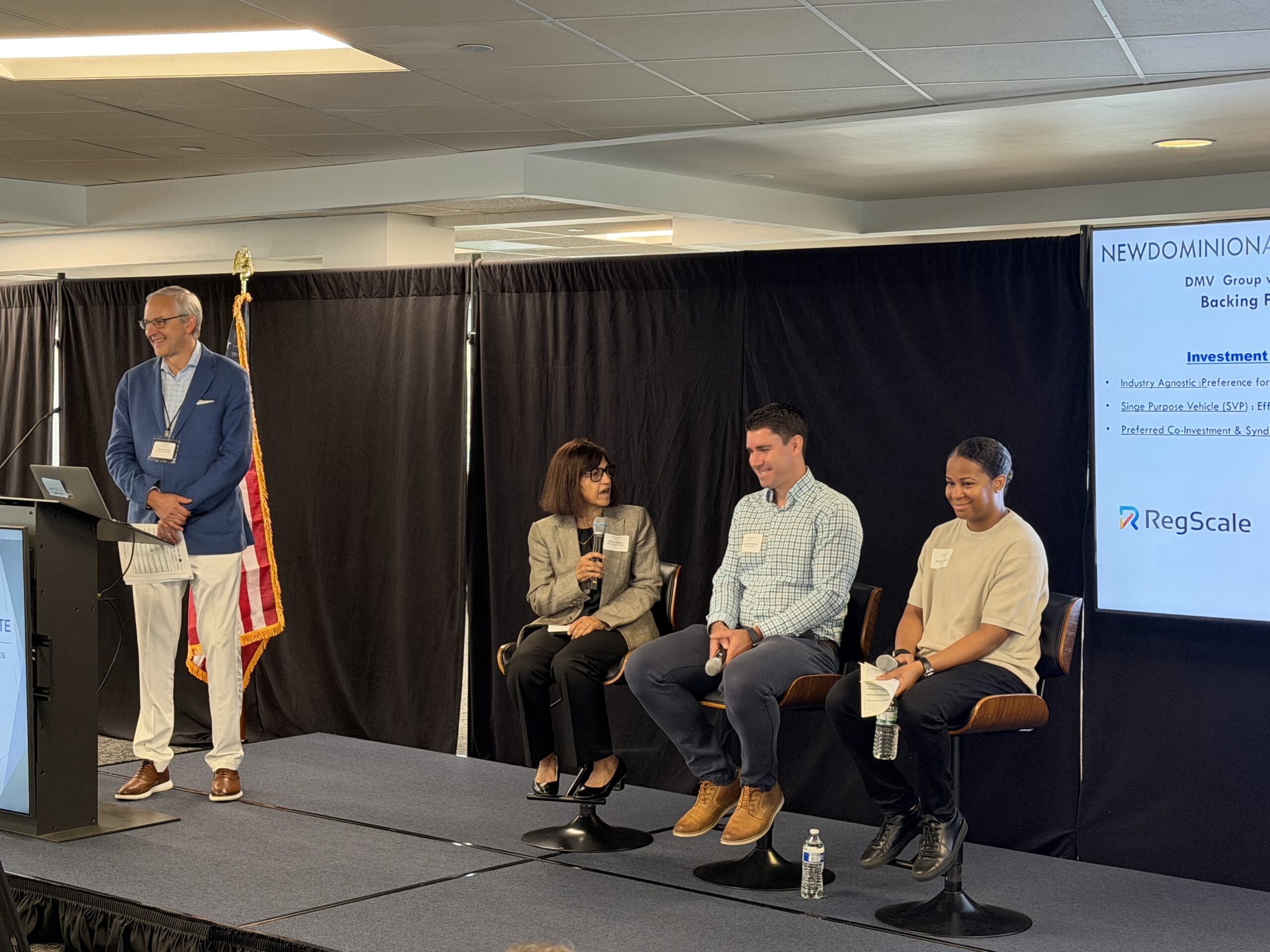
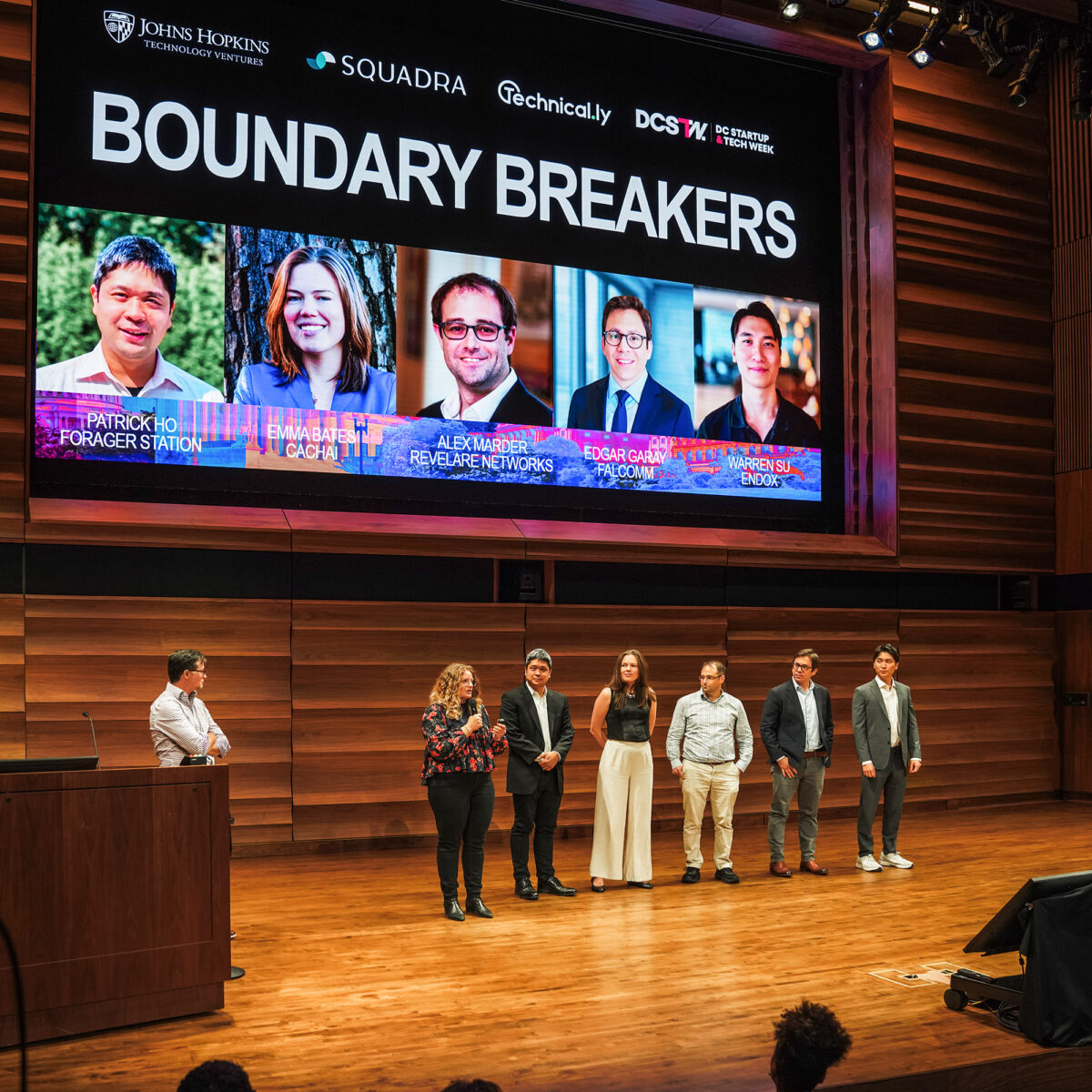
Cachai in Alexandria is betting on that business model with its software that links swarms of devices without a central server, founder Emma Bates told investors at a recent pitch event in Northern Virginia. With Cachai’s tech, if one autonomous device loses its connection, the rest of the group adapts and figures out how to finish the task.
Companies boasting both private and government work typically catch investors’ eyes.
While Bates is selling the product to defense contractors, she sees plenty of other opportunities to generate revenue.
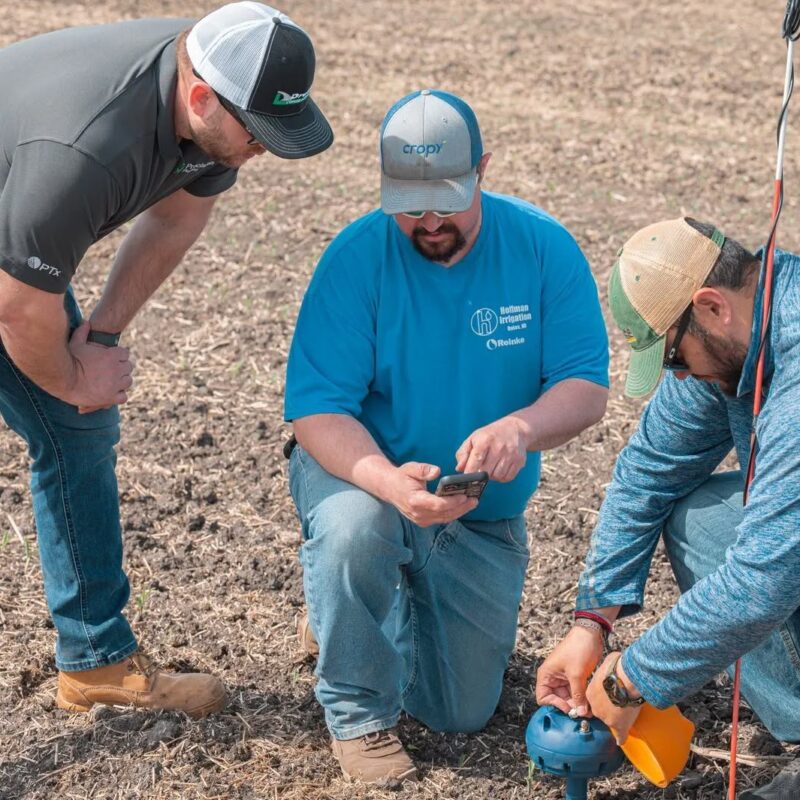
“The same technology solves problems for agriculture,” Bates said at this month’s Accelerate Breakfast, hosted by George Mason University. “Critical infrastructure security, satellite orchestration — all of these industries are looking for ways to get multiple devices to work together without any single point of failure.”
Bates is part of a growing trend in the DMV region, where founders are embracing a dual-use strategy to build revenue while going after the country’s biggest customer.
Companies boasting both private and government work typically catch investors’ eyes, and funding for national security-related companies, including cybersecurity software, is continuing to boom.
Scanning retinas from home
While defense and security platforms dominated the lineup, Baltimore medtech startup JuneBrain stood out as winner of the event’s People’s Choice award.
Founder Samantha Scott created NeuroEye, a wearable retinal imaging device that uses AI software to identify both neurological and eye-specific diseases.
Scott started JuneBrain the same year after receiving a long-awaited nervous system diagnosis from her eye doctor.
“This was following about five years of neurology hopping and debilitating untreated illness,” Scott said. “My vision at the time was that the eye would become a common tool to assess not just eye disease but also neurological disorders, and that is now becoming proactive.”
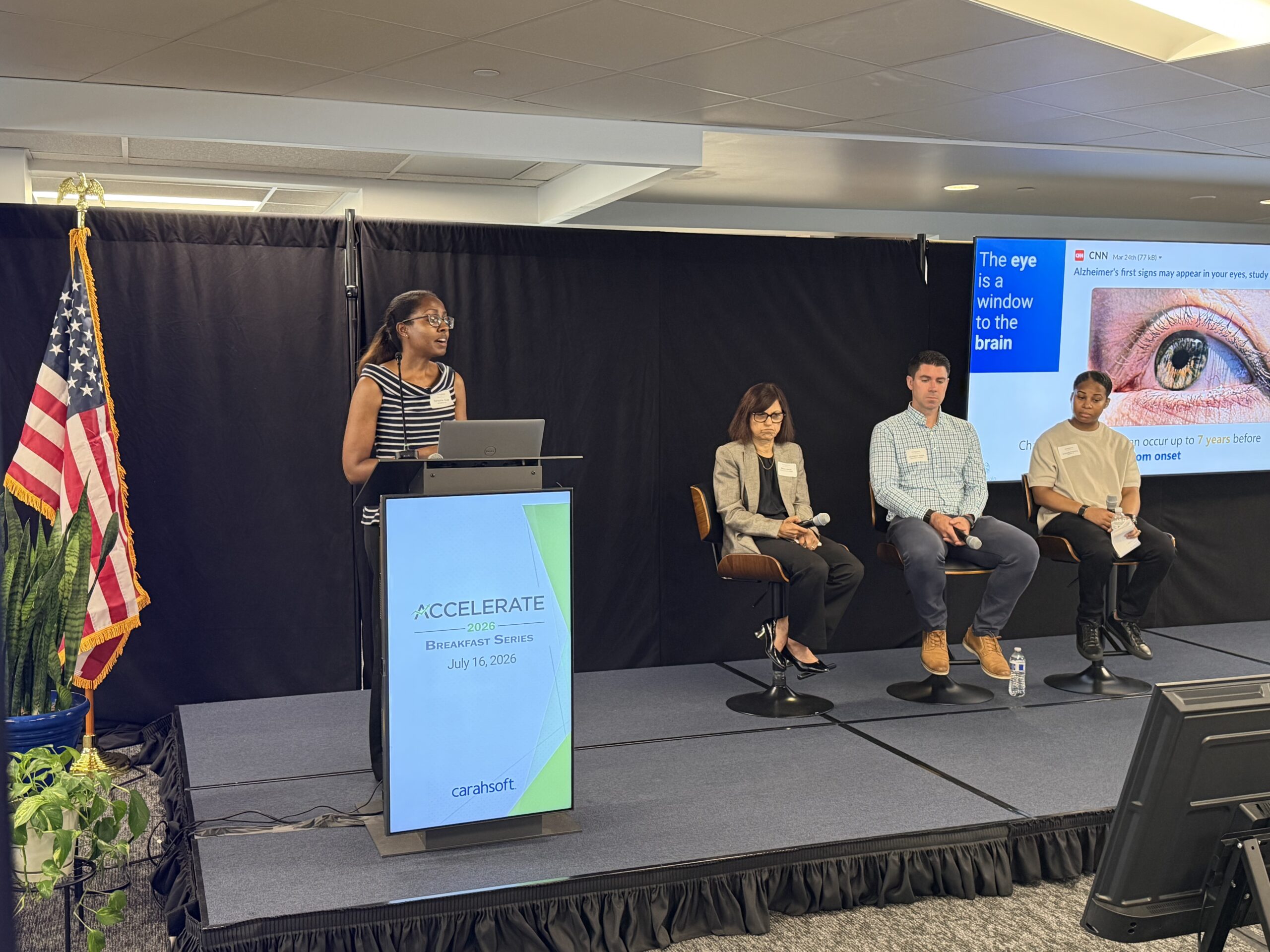
Usually, equipment used to examine the retina is expensive and requires technician training. NeuroEye is portable and automated, allowing it to be used in clinics or remotely by patients for continuous monitoring of conditions like Parkinson’s and Alzheimer’s disease.
JuneBrain has demoed the tech with Warby Parker, and Scott hopes to achieve FDA clearance by next year.
Universal adapter for space hardware
The Pivvot Spaces software enables different satellites and components to seamlessly communicate and operate together as a coordinated fleet, which would typically need to be custom built, per Prince William founder Sergio Gallucci.
“Pivvot fills in the gaps between them,” Gallucci told the crowd. “We help them work together. We’re Switzerland, you could say.”
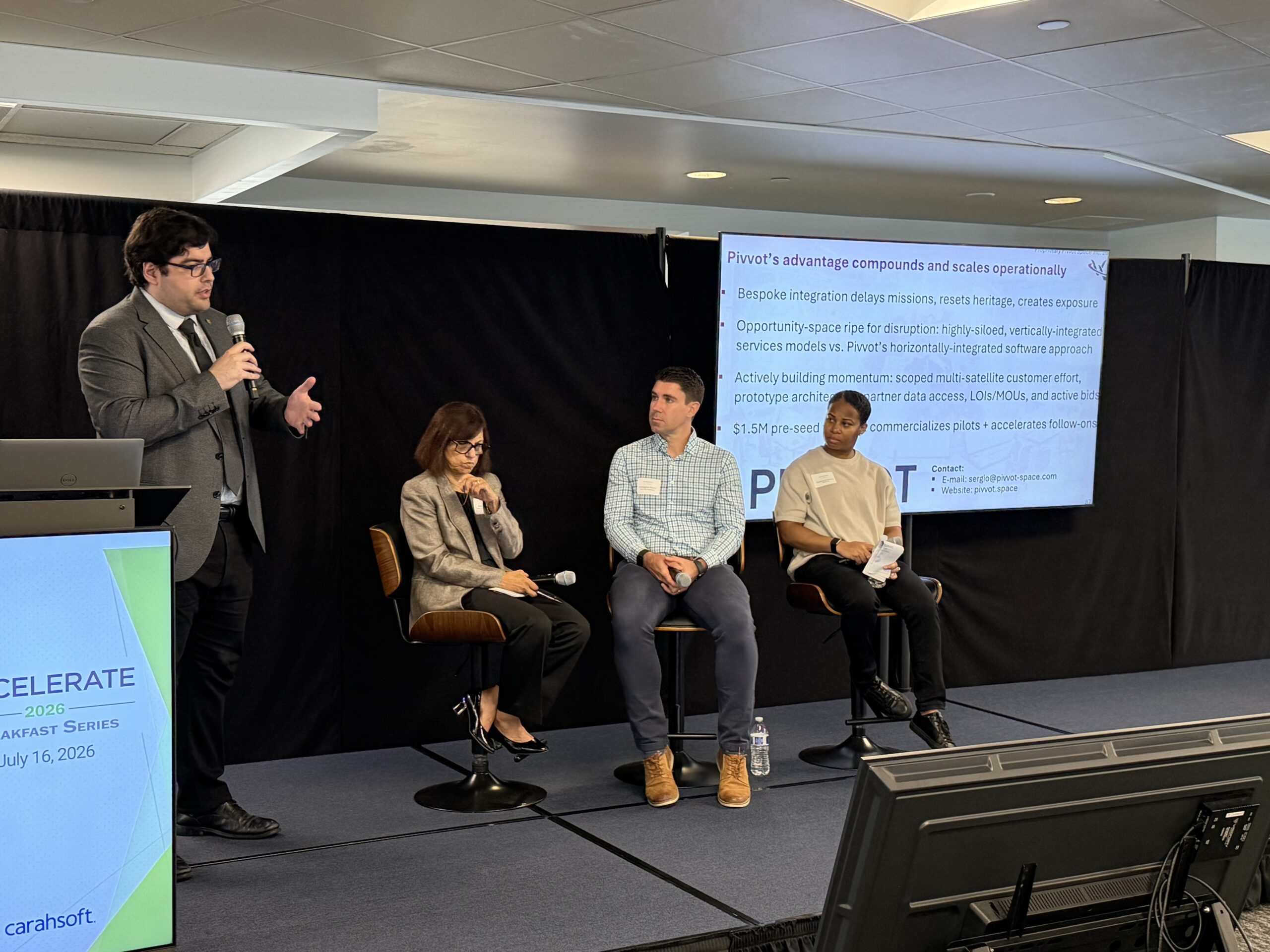
The software is getting attention from mid-size prime government contractors, he said, and is in contract negotiations with a commercial customer on a $25 million dynamic space program.
Real-time threat detection at the World Cup
Pervista AI in Greenbelt detects weapons in real time and notifies threats to law enforcement around crowded venues like sports arenas
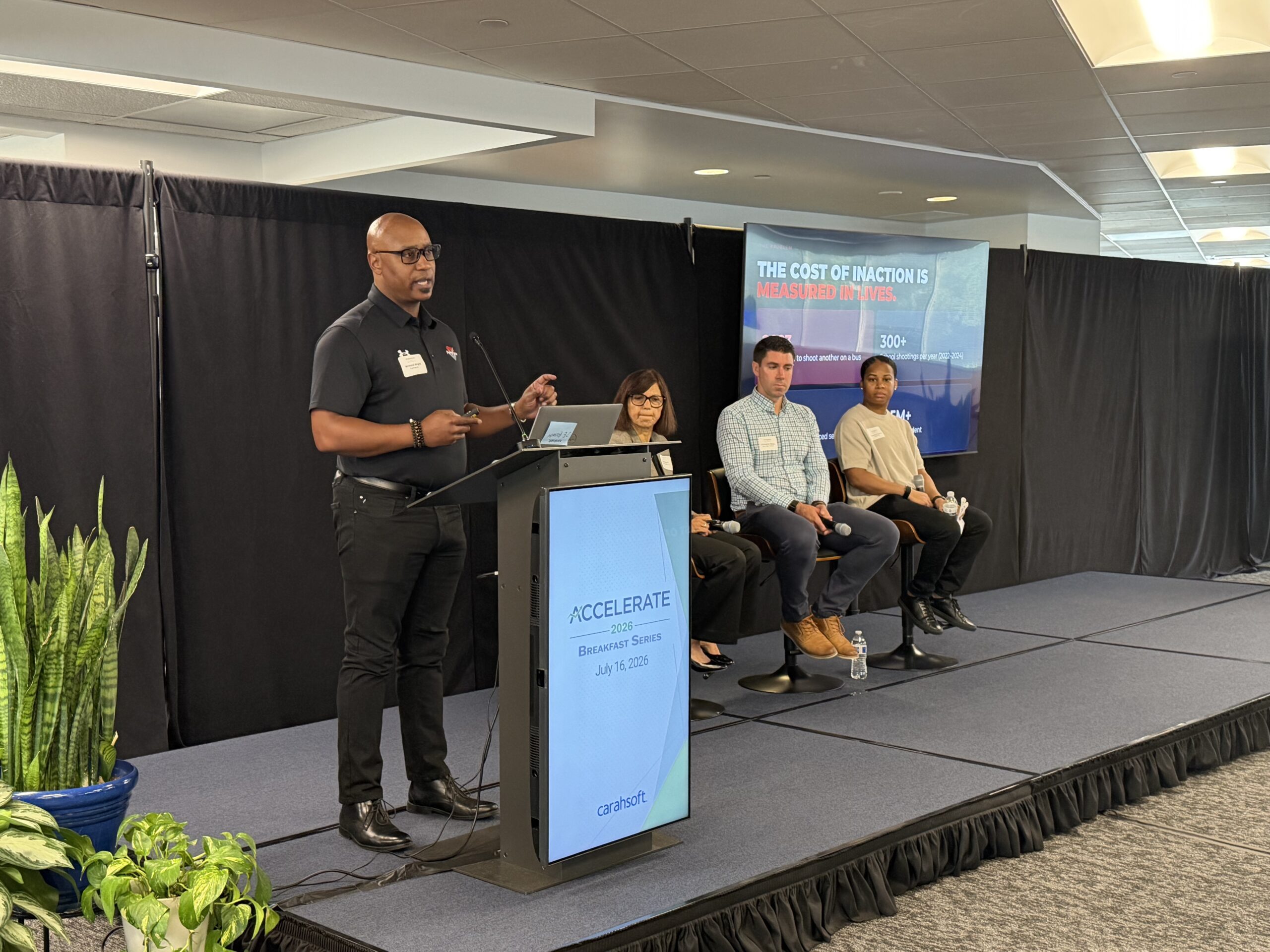
The tech uses software and hardware including computer vision, heat signatures, lidar and radar technology, per founder Vennard Wright. The tech was deployed at stadiums hosting FIFA World Cup games, along with ongoing work at Baltimore Orioles games.
Wright focuses on building relationships with customers, he said — one strategy is first offering a free pilot before paid contracts.
(Kaela Roeder/Technical.ly)
“What we do is we make sure that we’re leveraging our network at the very beginning,” Wright said, “to make sure we get to them.”
PerVista AI also has a patent pending for a quantum sensor to speed up detections across a wide area, Wright said.
Addressing data security at the root
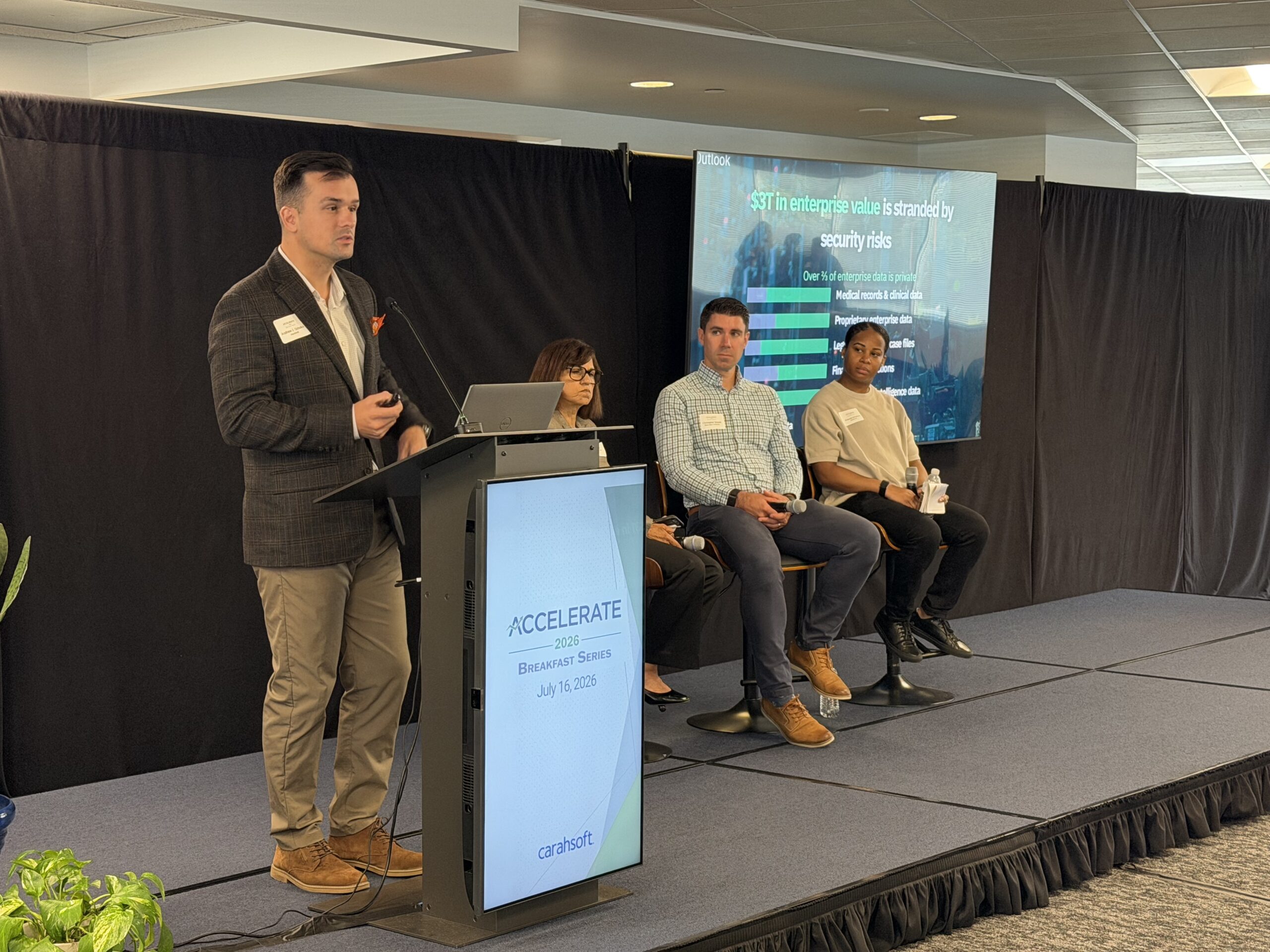
Hardshell, an AI data security platform in Charlottesville, visualizes, scans and secures sensitive data to prevent leaks or tampering with a company’s AI models, with the goal to deploy the tech faster in regulated environments.
(Kaela Roeder/Technical.ly)
“Approaches like AI guardrails … They’re important, but they don’t actually address the root causes,” Hardshell founder Andrew Schoka said. “We help organizations use AI safely with the data that matters most.”
Hardshell, founded 10 months ago, is working with companies across industries and is planning to market strategies for federal defense agencies.
“The best differentiation in this space is proven commercial delivery,” Schoka said. “So we’re looking to scale up as fast as we can.”