
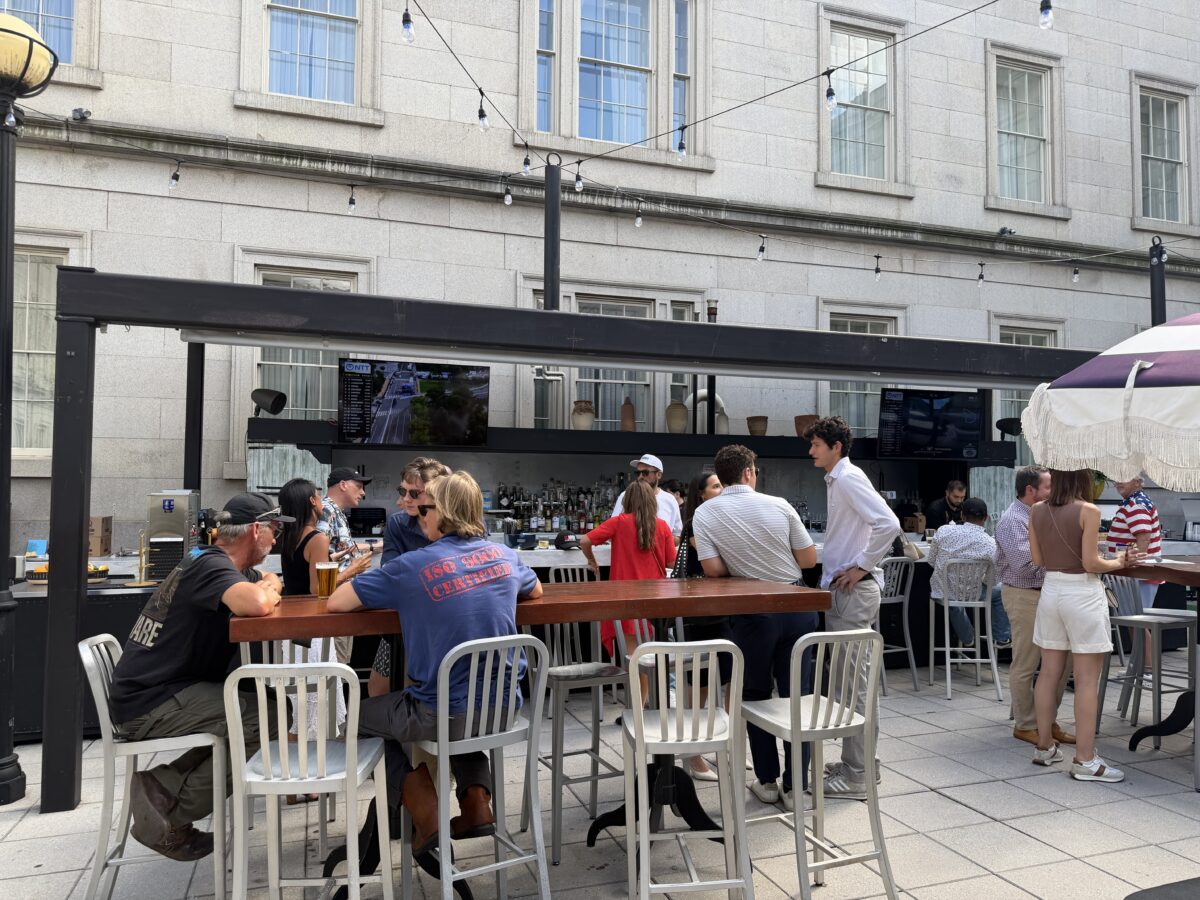
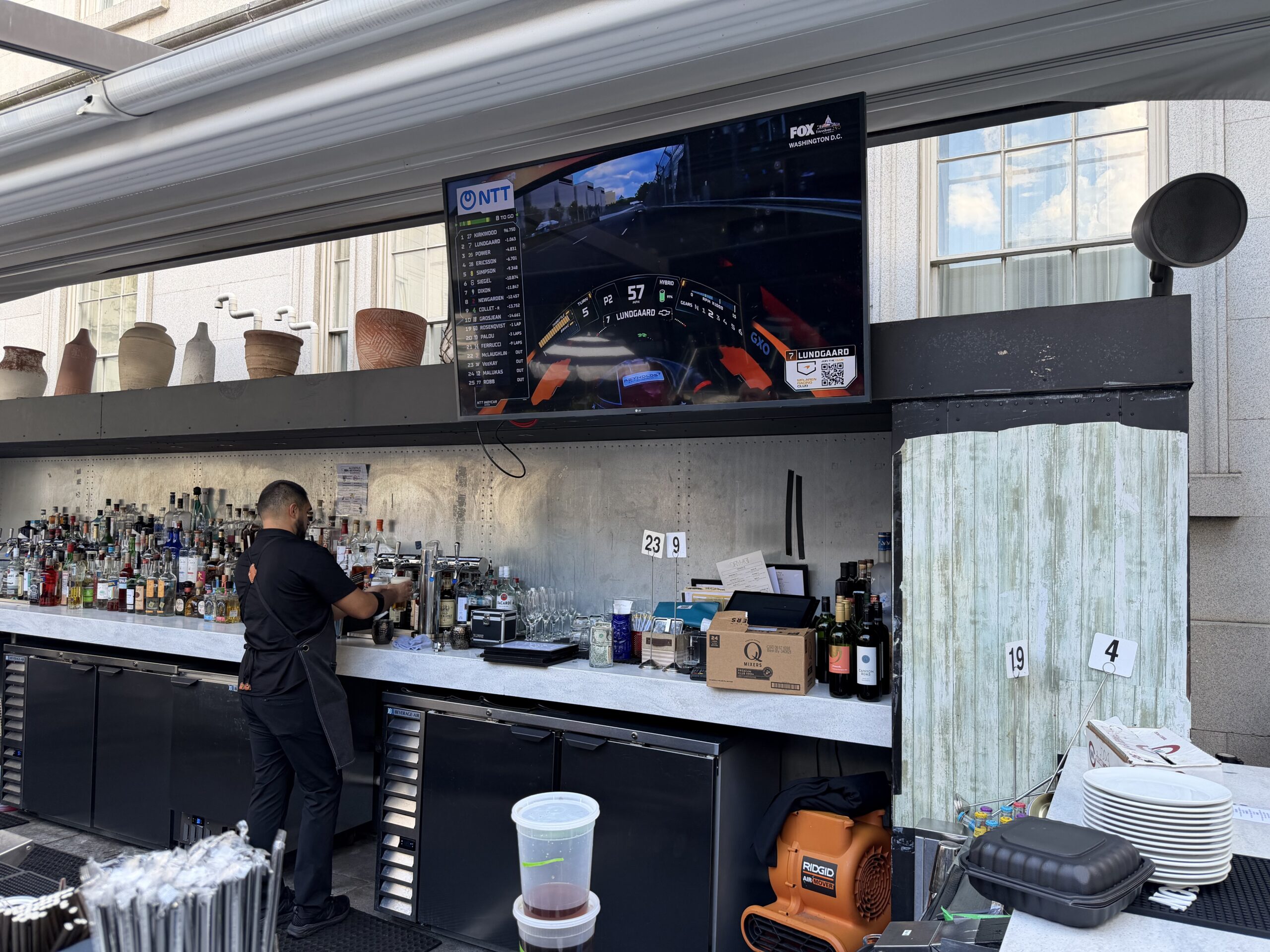
It was rare to see people actually looking at the TVs at a defense tech-themed Grand Prix watch party in DC this weekend.
Yes, cars were zipping down Pennsylvania Avenue just a few blocks away for the IndyCar race, part of the Trump-directed Freedom 250 semiquincentennial celebrations, which included the beleaguered Great American State Fair.
But at the party, hosted by Frontera Group at Dirty Habit in Penn Quarter, the Grand Prix seemed to be background noise for the dozens of investors, company executives and government leaders busy networking around the open bar.
There was gossip about which hot manufacturing companies were worth putting money toward, chatter about contending with the new SBIR rules and debate over which startup accelerators had the best support. I bopped around the patio for almost four hours on the surprisingly not-too-humid day. And had one vodka soda.
The race? It was there, and sponsored by major companies in defense tech like Boeing and Booz Allen. Several people admitted to me that earlier in the day, they’d looked up the difference between IndyCar (US-focused) and Formula 1 (international). Yeah, I did too.
Frontera is a government affairs firm that lobbies for defense tech startups and small to midsize– contractors, and the whole affair was filled with the kind of energy I often find at events around national security and defense tech. People often have an air of self-importance, like the work they do is too consequential to talk to a reporter about. Even off the record.
A handful of people I spoke to came along “with the homies” and didn’t work in the defense industry at all. All in all, it was mostly white men.
Frontera partner John Thomas said he didn’t care about the lack of active IndyCar fans.
“We look at every opportunity to advance our clients’ interests,” Thomas told me. “We’re all in the same network, all trying to help each other advance in national security in the United States.”
This isn’t the first time IndyCar put on a race outside of a track in the US. Trump and DC’s mayor both said they were interested in bringing it back, but IndyCar itself says that’s unlikely. The stunt has garnered criticism for being locally disruptive without bringing much benefit — races in Baltimore in the early 2010s were said to have little economic impact, for example.
In DC, the race meant major road closures starting a month before the event. They continue as the racecourse is taken down. Flights paused for three hours out of DCA on Sunday. The National Gallery of Art worried about the vibrations affecting artifacts. Smithsonian museums inside the race’s perimeter were closed to people who did not have Grand Prix tickets.
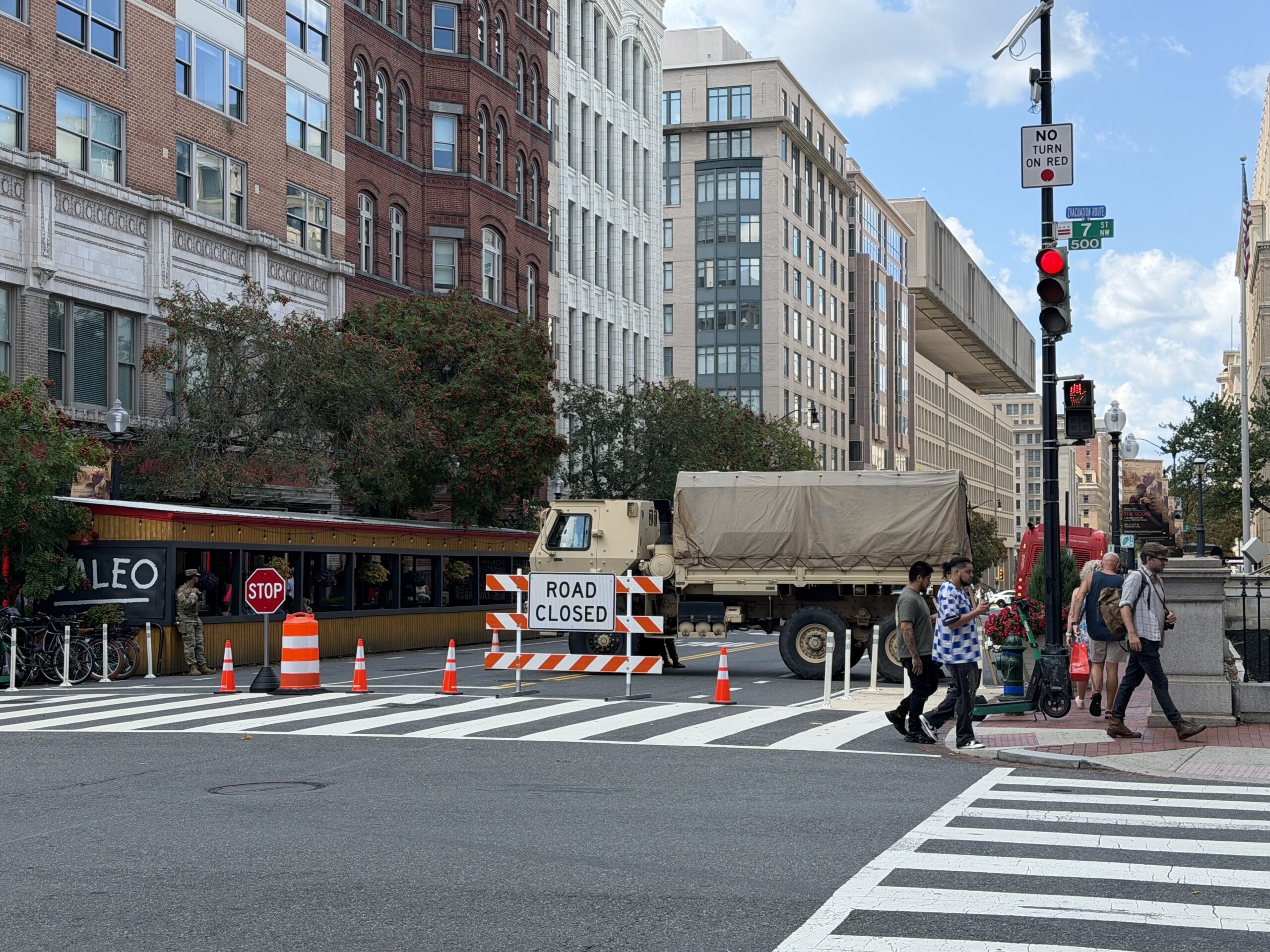
Despite the disruptions, this defense tech crowd didn’t have many issues with getting to Dirty Habit.
Many took the Metro, coming from Northern Virginia via the Silver line. That included software engineer Matt Conrad, who came from McLean. While we were talking about the Grand Prix — Conrad went to the F1 race in Miami earlier this year but didn’t know much about IndyCar — a military flyover was roaring overhead. I’ve learned to hold conversations till those pass.
Bihan Mahadewa flew in from LA that morning and took an Uber from the airport, he said, unaware of any transportation chaos the race was causing. He’s building a startup in stealth that’s focused on defense tech and dual use. I couldn’t get more details.
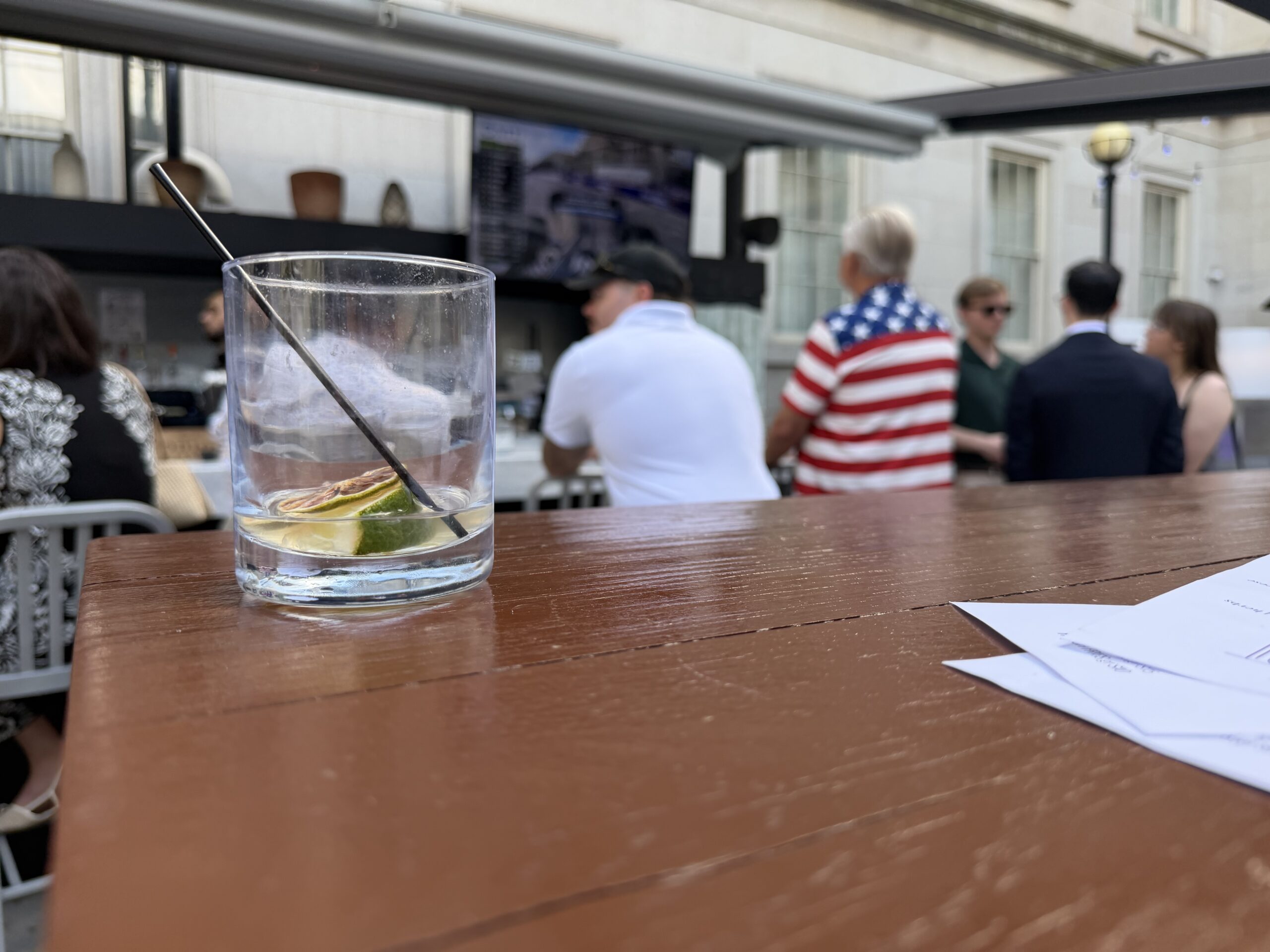
I glanced up at one point and saw a motor crash on the TV screen, which was tuned to Fox. I looked around, asking if anyone knew if that was normal. I was met with shrugging, and people pivoted back to conversations.
Around 4 p.m., once the 147 loops were done and repeat champion from Florida Kyle Kirkwood had won, the crowd was getting thinner. I decided to head out.
Helicopters were circling around on my walk to the Metro, and I spotted tourists with patriotic shirts and National Guard leaning on walls, looking down at their boots.
Ads for defense tech companies are everywhere in DC, especially in Metro stations and cars. I surprisingly had a break from seeing any on the commute home.