
Seasoned gamers and kids gathered at a popup arcade recently in DC to give a developers’ most sought after tool: feedback.
At the Martin Luther King Jr. Memorial Library last weekend, nearly two dozen games were presented at ashowcase hosted by the International Game Developers Association’s local chapter. IGDA hosts arcades like this twice a year, along with frequent meetups for developers.
“We hear people talk about the game and things they like. And that makes us happy.”
Tony Obremski, Dukkido
Most of the games on display there are in early stages of development, according to board member Austin Auclair. His “normie” job is for Parks and Recreation in Prince George’s County and he builds narrative-focused games on the side.
“People are really good at discovering bugs, because they do things you would never think a player would do,” Auclair told Technical.ly. “I’ve shown my games at events like this, and it’s just incredibly energizing … It really helps propel you forward to whatever you need to do next on the project.”
As evidenced by indie studios popping up in the region, these arcades hosted by IGDA have been growing, he said. The previous showcase in the fall was in a small room at the library downtown, and this time around the event took up a chunk of the first floor.
Solve puzzles and navigate Doodle Kingdom
Evan McRae started building the game King Scribble as a capstone project while attending University of Maryland, Baltimore County. But he’s had the idea since first grade.
It’s a puzzle game where a being, the eponymous King Scribble, gets lost and has to find his way home by exploring a notebook. Gamers draw scaffolding and blocks to move forward and can find tools, like erasers and pencils, along the way to get the king back to his loyal subjects.

In the capstone class last year, McRae’s game was one of four out of 37 ideas selected to be developed for the rest of the semester. King Scribble now has a team of eight volunteers, including programmers and artists.
“It’s been really fun and just very fulfilling to be able to develop it to this extent,” McRae told Technical.ly. “Definitely closer than I ever thought a project could go, but it’s all thanks to the team.”
King Scribble is available to add to wishlists on Steam and is being privately tested with some users. McRae is planning for a release in late 2027.
Since he came up with the idea when he was a kid, that same age group should be able to access it. “I want to make sure that this game is playable for them,” McRae said.
Battle opponents on acne-inspired terrain
Kristen Marcinek, a master’s student at American University studying game design, has directly embedded herself in Fleshwalk. The world that the user hikes through in the exploratory, first-person shooter game is a scan of their skin when Marcinek was dealing with hormonal acne.
What she’s trying to get at: “How can body horror and monstrosity be subverted for a transformational and more positive goal?” they said.

Marcinek has other gaming summits lined up to keep getting feedback.
They pursued cybersecurity when they first attended college. But she missed the creative side of technology, hence going to game development.
“I’ve always wanted to do more of an artistic outlet, but I’ve also really liked tech,” Marcinek said, and this combines both interests
Collect a squad and minions to fight enemies
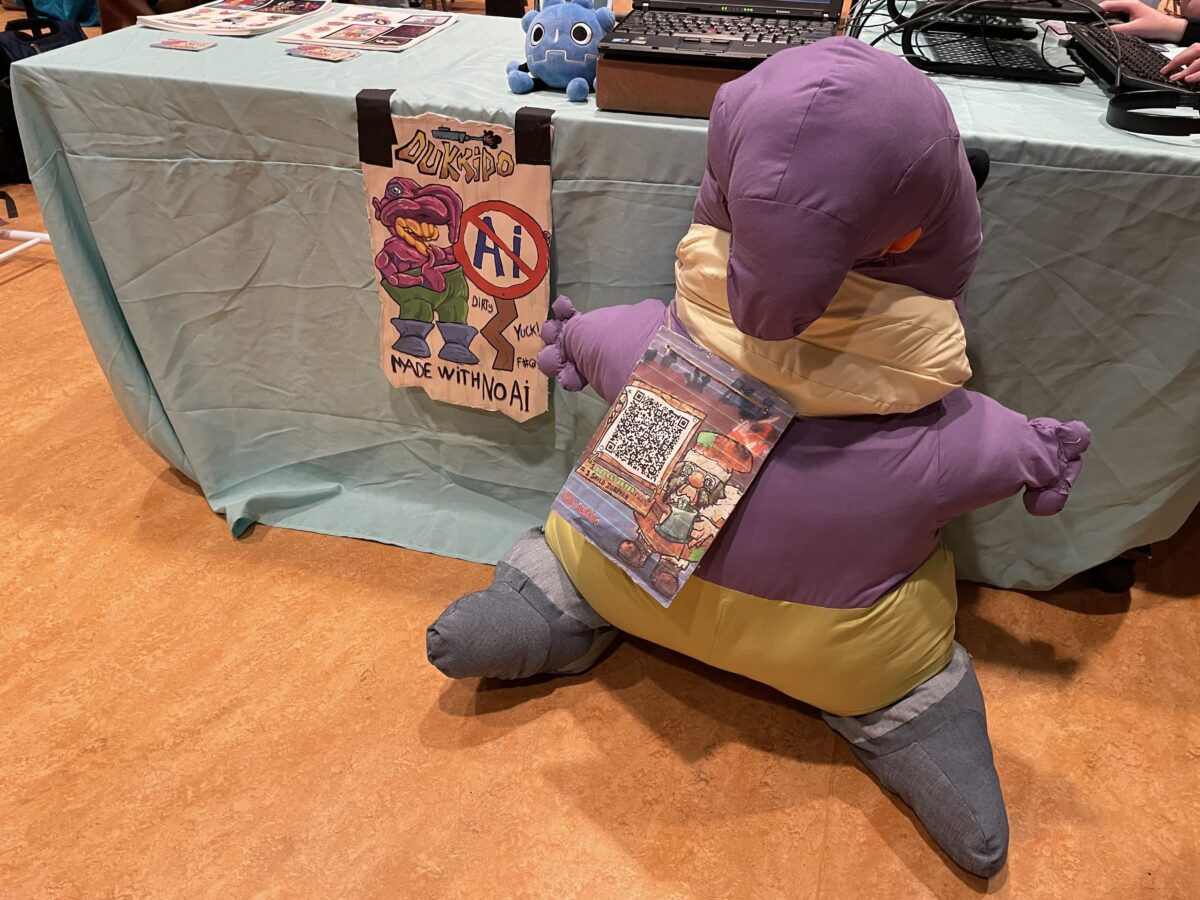
Called Dukkido, this is an action and real-time strategy game where users amass minions to help solve puzzles and uncover objects to expose secrets in the “Relic Frontier.” Gamers can play solo, or with up to five people to solve missions together.
It’s currently in private testing, said Tony Obremski, one of the developers. He hopes for an early access release in October.
As IGDA DC intended, he and his fellow creators joined the event with the goal of getting live feedback from players.
“We see where people get stuck,” Obremski told Technical.ly. “We hear people talk about the game and things they like. And that makes us happy.”

Obremski, who drove up to the arcade from Southern Maryland, specifically is looking for thoughts about the controls used in the game. Dukkido uses clicking and dragging with the mouse as a control device to direct paths and move objects, which is not too common in games but has been gaining traction. Players at the arcade seemed to be enjoying that feature, Obremski said.
“It’s just cool,” he said. “You have a lot of control. It feels like you’re doing your own thing. It’s open ended.”
He’s been developing the game for about three years with co-developer Eric Immler, thanks to funding from friends and family (a common route for developers). For that time, they have not used AI at all. “You’ve got to keep the soul in games,” Obremski said.
AI coding tools for game development have expanded with new releases often. But he’s wary of these, too. A majority of companies will use uploaded code for training models unless otherwise directed, for example, and security issues can happen.
“I don’t want to upload my code to a corporation server that I don’t control,” said Obremski.