

This story was made possible through support from TEDCO, the Maryland Technology Development Corporation, which enhances economic empowerment growth through the fostering of an inclusive entrepreneurial innovation ecosystem. TEDCO identifies, invests in, and helps grow technology and life science-based companies in Maryland. Learn more at tedcomd.com.
Baltimore City is expanding low-cost internet access to over 4,000 public housing units.
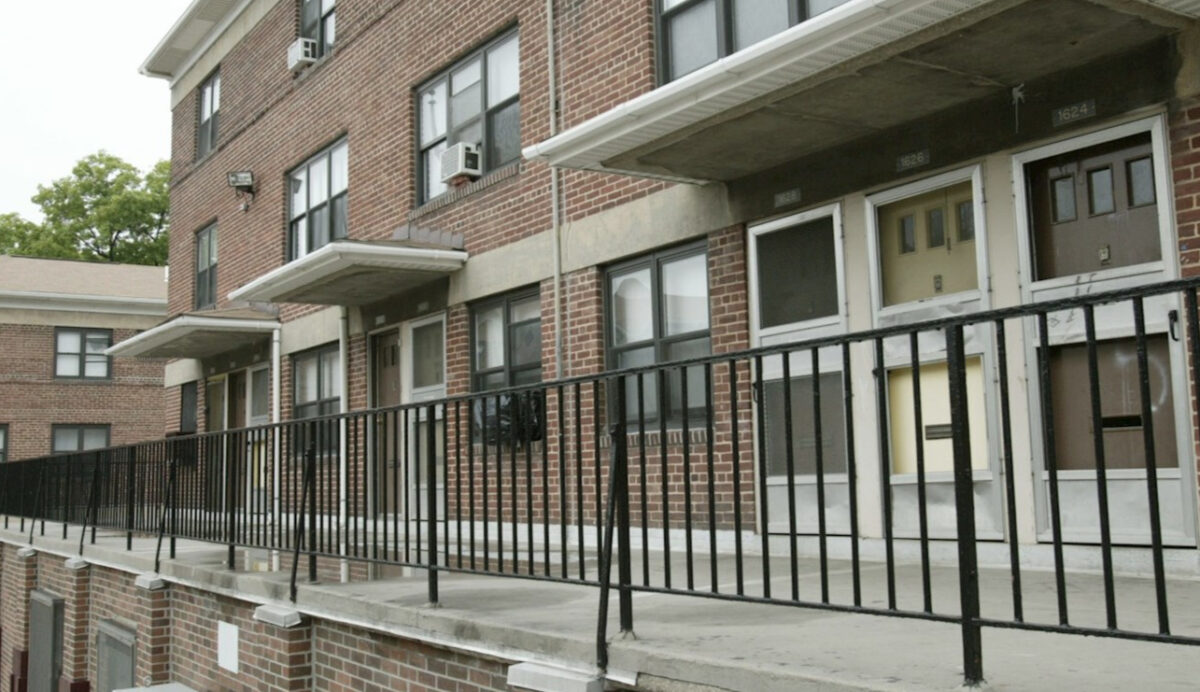
The city plans to install fiber internet in every apartment at eight public housing complexes in West and South Baltimore.
A nearly $22 million initiative will fund a broadband buildout through local internet service provider Port Networks. Residents will be able to subscribe for $20 a month, or less than half the typical price of internet in the US.
Plus, Baltimore’s Emerging Technology Centers (ETC) announced $200,000 for its newest portfolio company, JuneBrain — the organization’s first investment in more than a year.
Read on for more on these and other money moves shaping Maryland.
Public housing complexes get internet upgrade
The Housing Authority of Baltimore City (HABC) and the Baltimore City Office of Information Technology (BCIT) teamed up on a new initiative to provide affordable internet to underserved communities.
The city plans to install fiber internet in every apartment at eight public housing complexes in West and South Baltimore, where residents can opt in to internet service for $20 a month.
A mix of federal and local dollars is funding the project, according to a HABC spokesperson. They did not specify which programs the funding comes from or how the $22 million for the project is divided between state and federal dollars.
Building out affordable Wi-Fi will rely on the city’s existing fiber network. Since the infrastructure is publicly owned, internet providers can utilize and expand the current system instead of starting from scratch.
“We’ve laid the groundwork early,” Leyla Layman, BCIT’s interim CIO, said in a press release. “With much of the core infrastructure already constructed, HABC residents will receive broadband service faster than most communities across the country.”
The city took a similar approach with the Hammond at Greenmount Park development, unveiled in November with low-cost internet through the same provider, Port Networks.
Installation will be scheduled building by building, and Port Networks will assist residents with the sign-up process, according to the release. The city did not provide a timeline for the expected completion date.
ETC backs JuneBrain with $200k
JuneBrain secured $200,000 from ETC Baltimore for its ongoing seed+ round. The biotech company is developing a device that scans eyes to better understand retinal and brain diseases. Following successful clinical trials, JuneBrain is working toward an FDA submission, according to the company.
ETC, a subsidiary of the Baltimore Development Corporation, will also provide JuneBrain with commercialization support, including investor introductions and technical guidance, per the release. This is ETC’s first investment made under its new leadership team.
Maryland workforce gets $4M for AI training
Gov. Wes Moore is rolling out $4 million to help prepare Maryland workers and employers for an economy increasingly shaped by artificial intelligence and cybersecurity.
The funding, administered through the Maryland Department of Labor, includes $2.5 million for workforce training in the state’s lighthouse industries — such as life sciences, IT, aerospace and defense — including internships and reskilling programs.
With another $1.5 million dedicated to cybersecurity, it will also support three cyber and AI clinics that provide services to schools, hospitals, nonprofits and small businesses.
Grant recipients include the Center for Critical Infrastructure Security, TCecure and Howard Community College, which are expected to collectively train about 600 aspiring cyber professionals.
More money moves:
- Baltimore-based environmental nonprofit 4MyCiTy won a $50,000 prize from HR management platform Gusto to support its work in reducing local food waste.
- Loyola University awarded $25,000 from its angel fund to Sunday Morning at Savannah’s, a bed and breakfast in New Windsor.
- CraniUS, a Baltimore neurotech company, secured $20 million in a Series B financing round to support operations into 2027.
- Baltimore-based Cursive Technology, a writing verification company, landed $125,000 per an SEC filing.
- ApexQuantum, a Howard County computer software company, raised $200,000, according to an SEC filing.
- Frederick-based KnowledgeNet.ai nabbed $500,000 from TEDCO’s Venture Fund for its customer management platform.
- POSTR Technologies, a creator recruitment platform, raised $1.9 million, it said in an SEC filing.
- NanoBioFab, a Frederick biotech company, landed $200,000 through TEDCO’s Pre-Seed Builder Fund.