Waiting at a bus stop or browsing a farmers market in DC can now include the chance to give input on local government tools, thanks to a push to create civic tech alongside the people who actually use it.
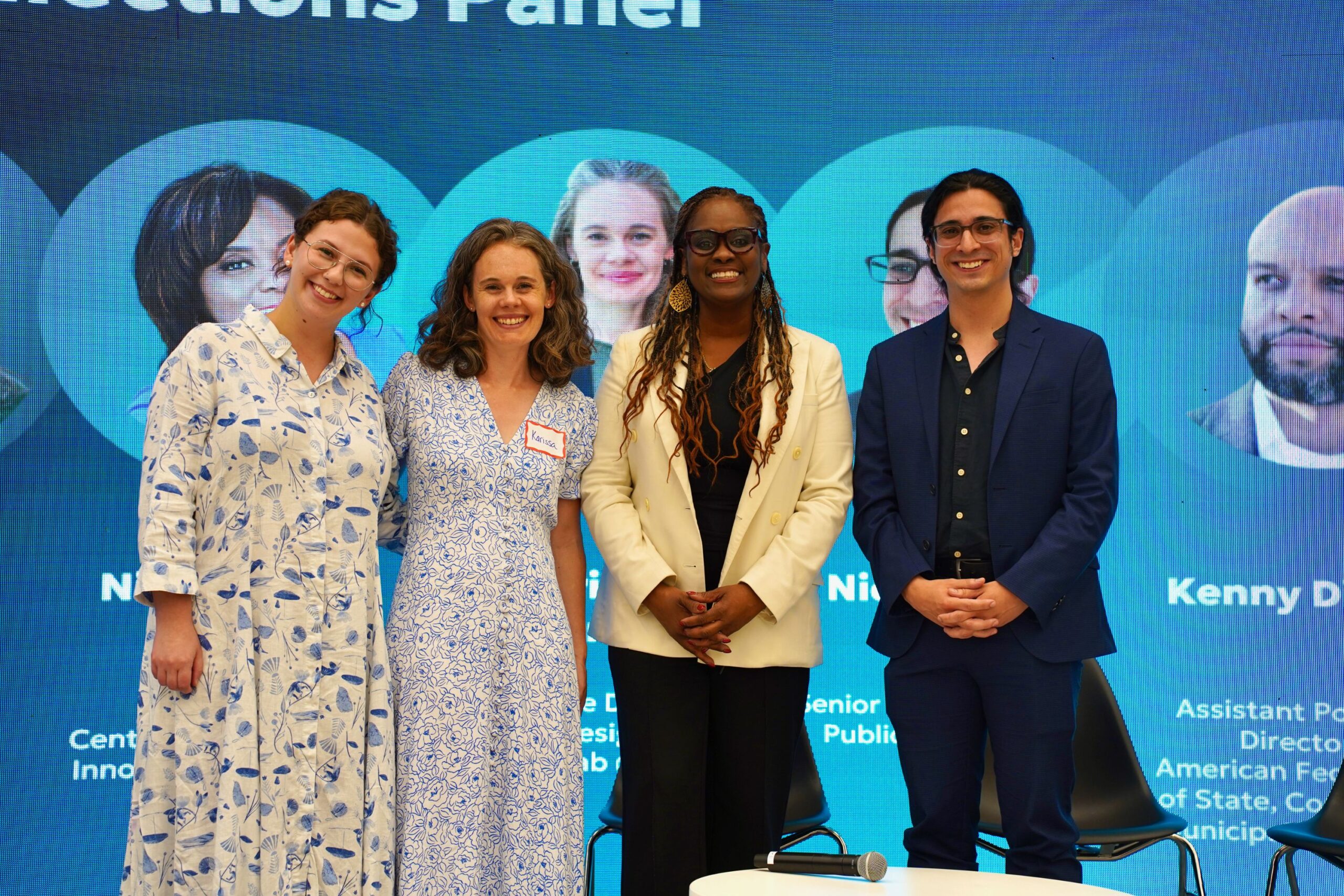
“You’re already waiting. We’re going to come to you and have you use or test our new design,” said Karissa Minnich, associate design director at The Lab @ DC, a program working within city government to make services more accessible. “Try to flip that around. There are larger ways we engage, but we don’t want to take for granted that people have the luxury of time to engage with us.”
“We don’t want to take for granted that people have the luxury of time to engage with us.”
Karissa Minnich, the lab @ DC
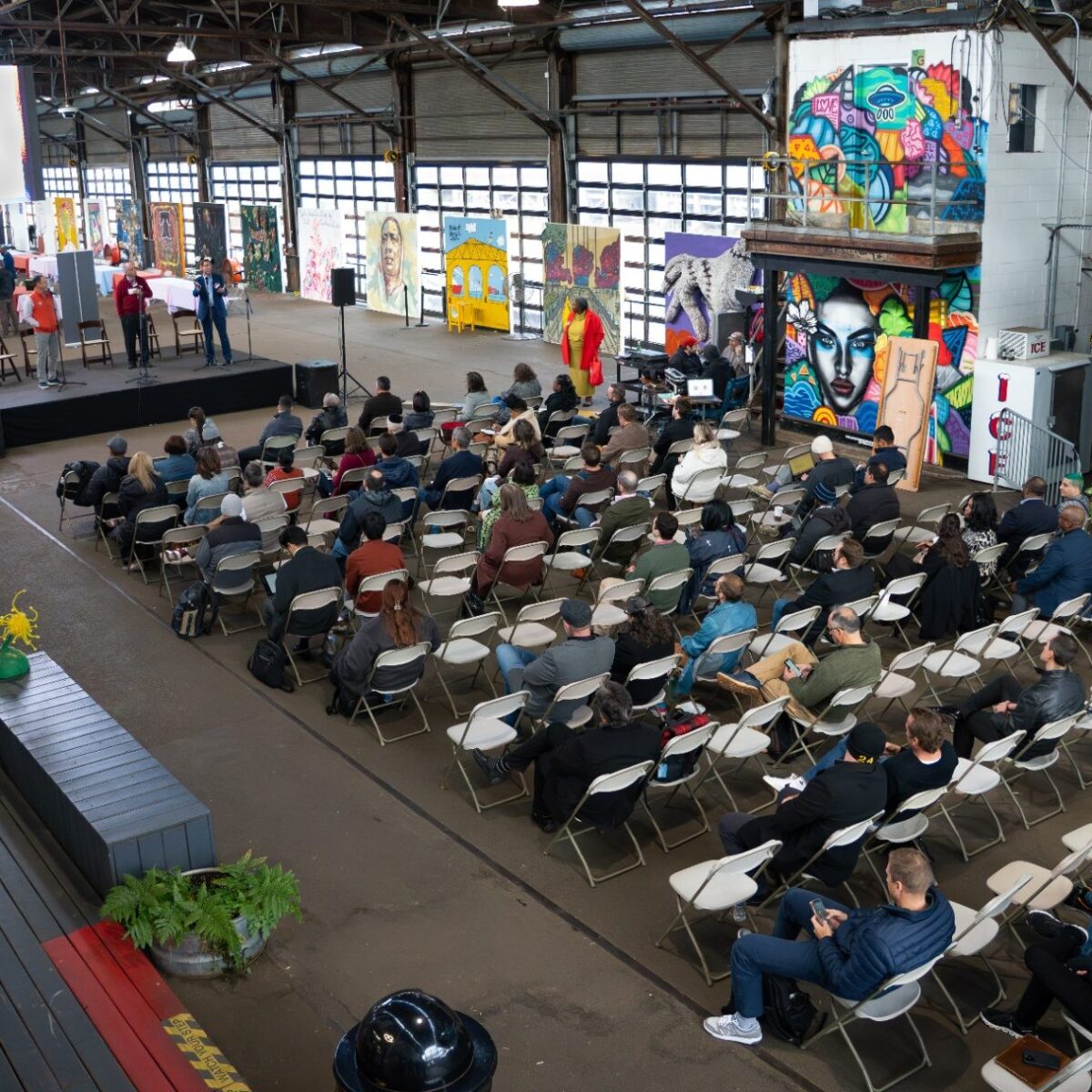
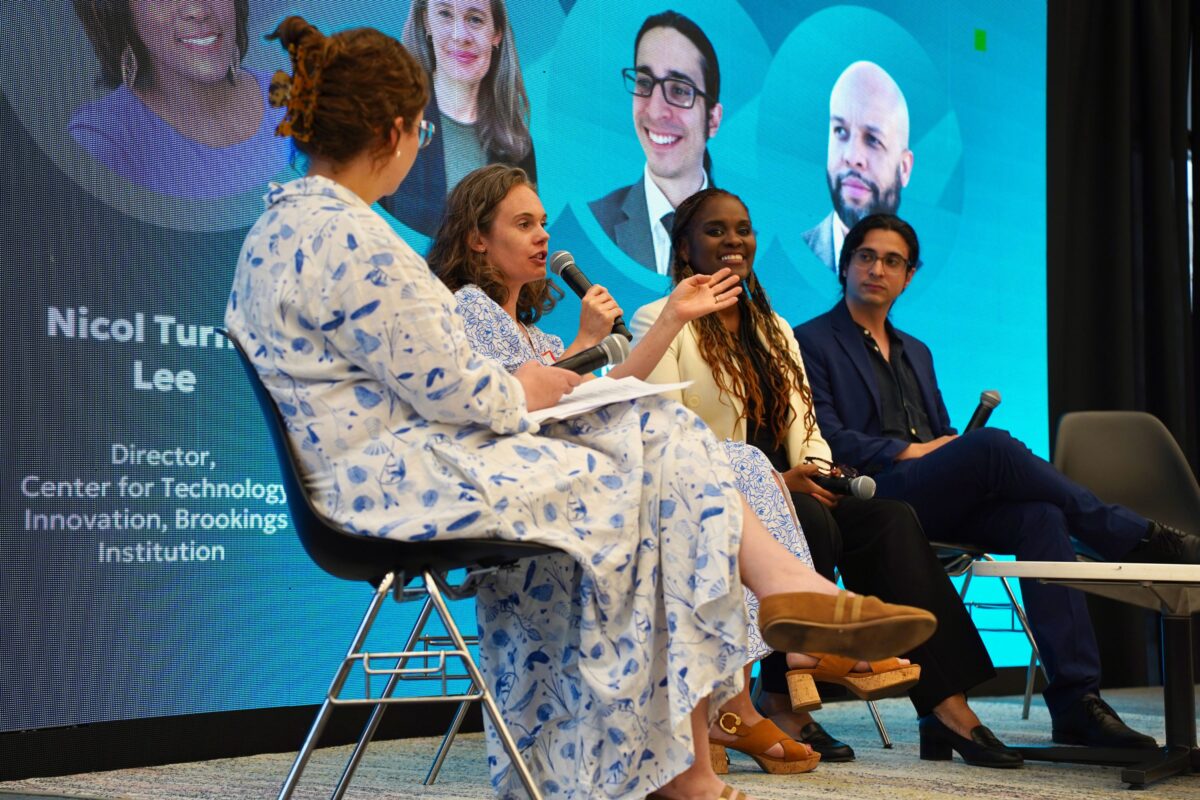
Instead of rapidly implementing flashy AI features, public institutions should move toward more community-oriented solutions, she said, speaking at a recent event hosted at the MLK Memorial Library by Upskilling Labs.
The discussion marked the kickoff of the DC-based nonprofit’s latest three-month “build cycle” focused on civics and elections, where small, peer-led teams learn AI basics by creating open-source tools to address local community problems. The initiative spun out of a program teaching federal workers how to use AI in the wake of mass DOGE cuts.
In DC, only 77% of residents have access to high-speed internet, per a digital equity plan published by the government in 2024.
The city won $100 million in federal dollars in 2024 to expand internet access, host digital literacy training and develop workforce development pathways in tech. This year, the National Telecommunications and Information Administration rejected DC’s $4 million broadband proposal.
Fixing bad processes for $2k instead of with an $8 million tool
The Lab @ DC hosted a “FormaPalooza” a few years ago to better understand how mundane paperwork can be easier to fill out, per Minnich.
Like getting a disability parking placard for your car, she said.
People were making up to five separate trips to get all the medical and vehicle documentation necessary for that key item, Minnich and her team found, and they were sometimes adding a stop to get those papers notarized (which was never a formal city requirement). After working with agencies to streamline the process, many steps were cut, she said.
The fix in this case didn’t involve a new interface — on purpose. There were some talks to digitize forms. But that wouldn’t have captured the issues, she said.
“If I take a paper form and I make it digital, now it’s just a bad digital form,” Minnich told the crowd. “We have to like to get underneath the hood and think about why are we asking this question?”
The Lab @ DC also used an off-the-shelf product to automatically enrol DC Public School School students in the city’s summer EBT program based on existing SNAP, TANF and Medicaid data.
Minnich said private companies quoted that project at $8 million a year, while this fix costs $2,000 annually.
Building alternatives locally instead of turning to Big Tech
Relying solely on a handful of tech giants to build foundational AI tools strips local communities of power, said Nicholas Garcia, senior policy counsel at Public Knowledge.
He sees opportunity in building tech within the government and separate open source tools to have more control, and leveraging trusted institutions like libraries to do that.
“We have the opportunity to be invested as the public, as democratic institutions, as individuals,” Garcia said on the panel. “We can participate and have more publicly accountable systems.”
Nicol Turner Lee, director of the Center for Technology Innovation at the Brookings Institution, whose recent book focuses on structural tech inequalities, agrees. Microsoft Copilot was recently downloaded onto her computer without her doing so. It made her mad, even though it now helps with her run-on sentences, she said.
She sees it as symbolic of a wider reality where people are losing control of how they interact with tech, even when it’s ultimately useful.
“We’re going to be in this world where technology was going to become much more ingrained, much more sophisticated,” Turner Lee said. “I suggest to people that we need to develop products that are not necessarily always in the vortex of what five major companies have actually designed for us, but actually reflect the local values of our communities.”
The people most affected by civic issues like accessing unemployment benefits or contesting parking tickets need to be involved first-hand in building tools, she said.
“We are the subjects of this technology,” said Turner Lee. “I think it’s important for the civic infrastructure community to start thinking about, how do you create alternative infrastructure, alternative content that reflects your community?”