The Port of Vinton is about to get a facelift.
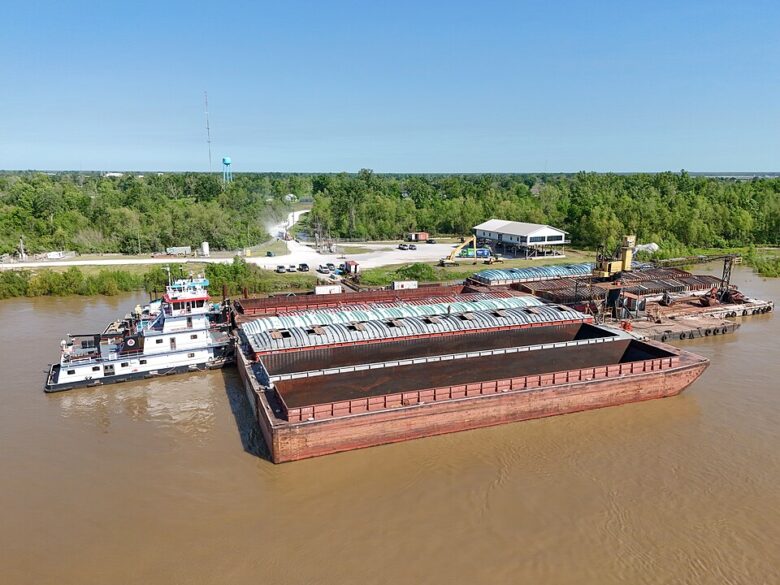
Located in Calcasieu Parish, about 100 miles west of Lafayette and near the Gulf Intracoastal Waterway, the publicly owned port has been a site for logistics and port-driven business since opening in the 1950s.
With $5.9 million from Louisiana’s FastSites initiative, the Port of Vinton will expand, aiming to make room for even more business opportunities.
“By expanding marine infrastructure and increasing site readiness, we are creating new opportunities for industry while strengthening our ability to serve both existing and future port users,” Vinton Harbor and Terminal District President Jerry Merchant said in a press release.
“Louisiana’s ability to operate at the speed of business has been a major advantage for this project.”
Aclara US CFO Alonso Guzman
The state funds will go toward the construction of a 600-foot-long, 50-foot-wide barge berth, according to the press release, which will increase capacity by an estimated 20 barges a year through the shallow-water port. That ups barge traffic from about 60 per year — which is about 80,000 tons of product — to about 80.
The port expansion is expected to be done in early 2028. Site preparation has already begun.
The developments also include infrastructure needed for the $277 million heavy rare earth processing facility being built by the Vancouver-based mining company Aclara Resources, Inc. at the Port of Vinton, according to the press release.
The new facility makes the Port of Vinton and Louisiana a source for rare earth mining that provides materials for making magnets used in things like electric cars and defense radar systems.
According to the press release for the project, which was announced last fall, the facility will be an important link in the nation’s advanced technology supply chain.
“The Aclara Project is not only a great addition to the Vinton Port along with the Vinton community but a critical asset to our country as well,” Louisiana State Representative Les Farnum said in the press release.
Construction on the Aclara outpost is scheduled to finish at the end of 2027, sooner than expected, thanks to the FastSites funding, according to the press release. The Aclara project will bring roughly 600 jobs to Southwest Louisiana, according to the company.
“Louisiana’s ability to operate at the speed of business has been a major advantage for this project,” Aclara US CFO Alonso Guzman said in the press release.
How FastSites funding works
FastSites, a Louisiana Economic Development program, is a fund to turn land and existing buildings into ready-to-use sites for new projects and opportunities.
Appropriations are made available through the passage of Act 365 during the state’s 2025 legislative session, which set aside $150 million in the Site Investment and Infrastructure Fund.
The FastSites program provides funding in multiple forms, including loans, partnerships with the state where both sides invest, or ownership arrangements for key infrastructure, if needed.
The Port of Vinton investment is structured so that the funds are returned to the state for other site-readiness projects as the development moves forward, according to the press release. The money is scheduled to be repaid by March 2028.
Those eligible for FastSites funds include local or regional economic development groups, municipalities, nonprofits, redevelopment authorities and other public groups like parishes or districts, according to the LED website.
FastSites funds can be used for land and property improvements, such as tearing down old buildings or fixing drainage issues; utility upgrades, such as water or internet; and infrastructure improvements, such as road access or port expansion.
“[The Port of Vinton expansion] reflects the intent behind the legislature’s creation of the Site Investment and Infrastructure Improvement Fund,” Louisiana State Sen. Mike Reese said in the press release. “What makes it especially impactful is the speed and coordination between the public and private sectors to identify a critical need and deliver a solution that will create lasting benefits for Southwest Louisiana.”