


Two weeks past the deadline, Pennsylvania Democrats and Republicans reached a budget compromise over the weekend.
More than $100 million was approved for an innovation investment program and workforce development initiatives totaled $193 million.
The $50.8 billion budget, passed relatively quickly compared to last year’s record four-month delay, includes funding for education, workforce development and startup investment.
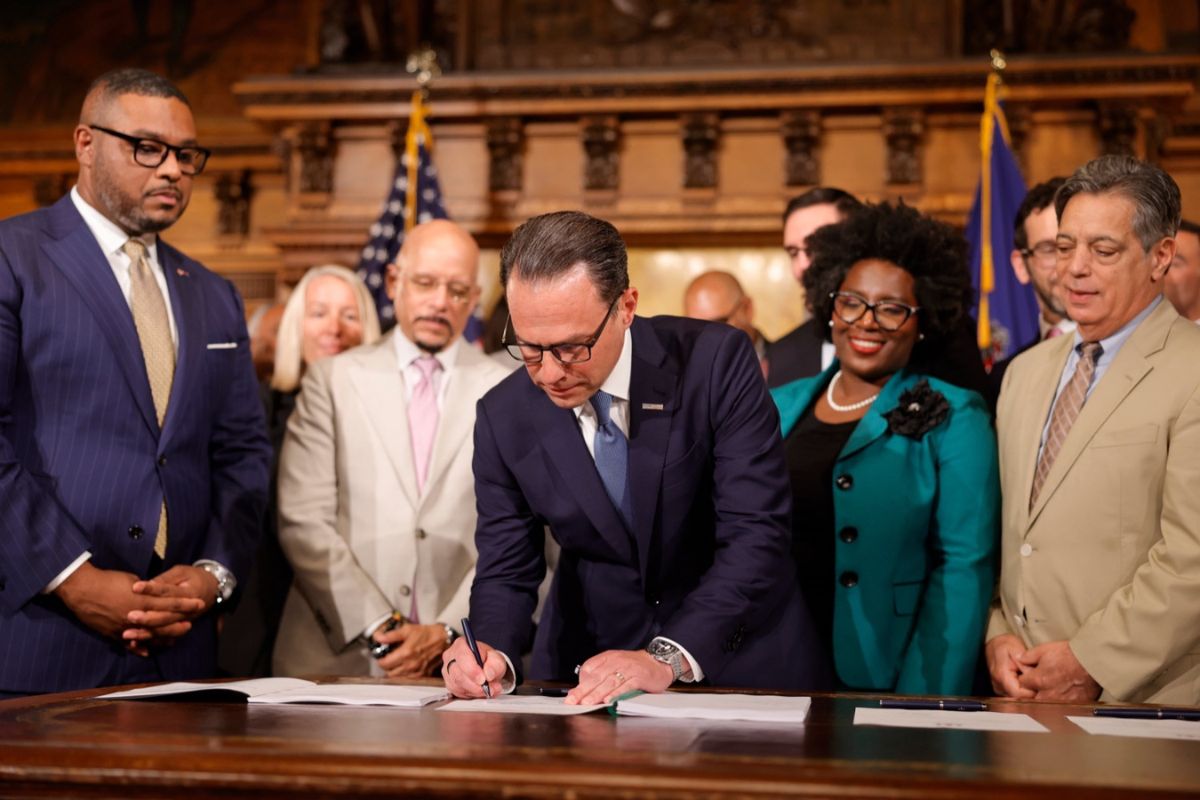
“I’m proud to say that if you go back and look at the goals we set way back in 2023 — funding our schools, making communities safer, growing our economy — four years later, this budget reflects those priorities,” Gov. Shapiro said before he signed the budget into law.
More than $100 million was approved for an innovation investment program. Plus, workforce development initiatives totaled $193 million, including a $10 million increase for career and technical education. The governor’s office says workforce funding has grown 60% compared to when Shapiro took office.
Some ambitions fell short, though, like Shapiro’s push to increase the minimum wage from $7.25 to $15 per hour, which was not included in the budget package. The legislation does, however, establish new compliance requirements targeting large-scale data centers.
Here’s a breakdown of what Pennsylvania’s innovation ecosystems need to know.
More capital for startups and main streets
PA’s budget secured $125 million for the new Innovate in PA 2.0 program — a $25 million increase from Shapiro’s proposed budget.
The initiative aims to provide more investment capital to local startups, clinical trials and the infrastructure behind PA’s innovation network.
The Department of Community and Economic Development (DCED) will sell tax credits to insurance companies and use the money to fund:
- The Ben Franklin Technology Development Authority’s venture funds;
- Grants for small and medium-sized biotechnology and life sciences businesses addressing industry gaps;
- Grants to partner biotech and life science companies with educational institutions to train students, especially the underrepresented or economically disadvantaged, for careers in these sectors;
- Grants to seed and scale venture studios in rural and economically disadvantaged areas; and
- Grants to develop and expand DCED programs to find federal funding for innovation.
DCED has discretion over how funding is allocated among the eligible program categories established in law.
The budget also transfers $17 million from the state’s General Fund to the Ben Franklin Technology Development Authority Fund, with at least 80% of that funding required to go to Ben Franklin Technology Partners.
Other innovation funding to note:
- $10 million for the Agricultural Innovation program, which helps farmers adopt new tech. It fell short of the $19 million Shapiro wanted for the program.
- $20 million for the downtown revitalization program, Main Street Matters.
- $23.75 million for the Historically Disadvantaged Business Assistance program — a $3.75 million increase in state funding for small minority-owned businesses.
New data center and energy reporting requirements
The budget creates new reporting requirements for large data centers and adds new utility planning requirements related to growth.
Data centers with a peak electric demand of more than 10 megawatts must now submit an annual energy and water usage report to the Department of Environmental Protection.
Utilities have new rules, too.
When a utility company plans to build or update transmission lines, it must demonstrate that it evaluated grid-enhancing technologies, such as dynamic line ratings or advanced conductors, when proposing transmission projects.
Lawmakers also expanded state oversight of PJM’s load forecasting process.
PJM — PA’s primary grid operator — calculates load forecasts, or how much electricity PA will need in the future, and this can dictate the price of electricity down the line. The operator must provide the Public Utility Commission (PUC) with its load forecasts and supporting information used to develop them.
The PUC and Office of Consumer Advocate may also review confidential customer information that affects PJM load forecasts.
A longer list of proposals to regulate or restrict data centers — including the effort to repeal the 6% sales tax exemption for these developments — didn’t make it into the budget.
Funds for classrooms, careers and universities
Workforce development initiatives in the state totaled $193 million, according to the governor’s office.
Within that funding, Career and Technical Education (CTE) got a $10 million bump, according to Shapiro’s office. The funding will support some 80 CTE centers in the commonwealth, teaching in sectors like biomedicine and energy.
Apprenticeship training took a hit, though, with $10 million allocated this year versus $12.5 million in the last budget.
Other investments in education include $565 million allocated to under-resourced schools, adding to the state’s $1.9 billion effort in closing the adequacy gap.
An additional $10 million was allocated for the performance-based funding formula, which gives funding to universities based on student and institutional success, including Temple University, Penn State University and the University of Pittsburgh.
Other workforce development efforts maintained funding:
- $3.5 million for the School-to-Work Grant program
- $1 million for New Choices/New Options programs
- $2.8 million for industry partnerships



Some tech modernization boosts, but cuts to CODE PA
The commonwealth is continuing to modernize its IT practices with more than $80 million being funneled to statewide technology and cybersecurity projects.
However, CODE PA saw an almost $700,000 decrease in funds, bringing its budget from $11.55 million to $10.83 million. Shapiro’s office previously proposed that the department use some of those funds to create a permit tracking system.
Additionally, State Police saw a roughly $3 million jump in information technology spending, bringing the budget for law enforcement IT up to $31 million.
Other cybersecurity and IT funding changes include:
- $3.49 million remains steady for judicial system cybersecurity and disaster recovery
- $1.35 million to the Treasury Department for information technology and cybersecurity — a $100,000 increase from last year
- $10.4 million for the Department of Revenue’s technology modernization efforts —