

Jeff Berkowitz spent early mornings in the 2000s physically cutting out news articles and running to deliver clips to his politico bosses. The process is more digitized now, but it’s still mostly grunt work. He thinks it doesn’t have to be.
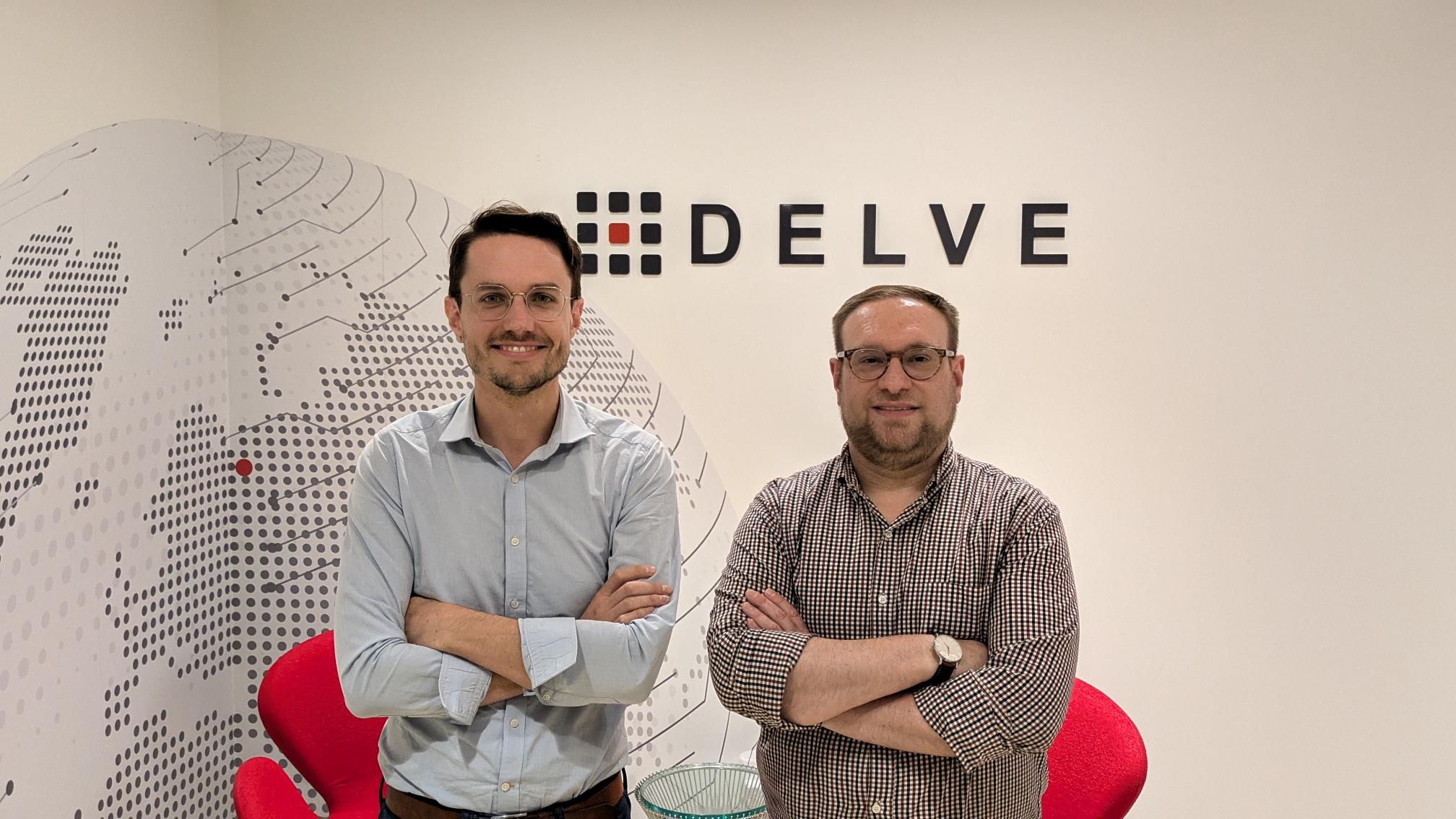
He and the team at Delve, a DC startup offering agentic AI policy analysis and real-time legislative hearing transcripts, are today releasing a tool distilling newsletters for politics and policy professionals.
“Why should the first year of somebody’s life in politics be spent doing that laborious work, when they could be getting better?”
Jeff Berkowitz, Delve
For $20 a month, Readout synthesizes multiple public affairs newsletters into one customizable email. Sorting through each day’s stream of public policy news and summarizing what’s relevant is a common entry-level role in Washington, in both the private and public sectors. The tool aims to help professionals more quickly find what’s pertinent, he said, and free up time for strategic thinking.
“Why should the first year of somebody’s life in politics, policy, government,” Berkowitz told Technical.ly, “be spent doing that laborious work, when they could be getting better?”
Readout can be tailored to each user, he said, including what time it’s sent each day. Customers select which newsletters they want summarized, selected through Delve’s platform or forwarded to the tool, and then share with the AI agent which policies or government affairs they want to follow closely.
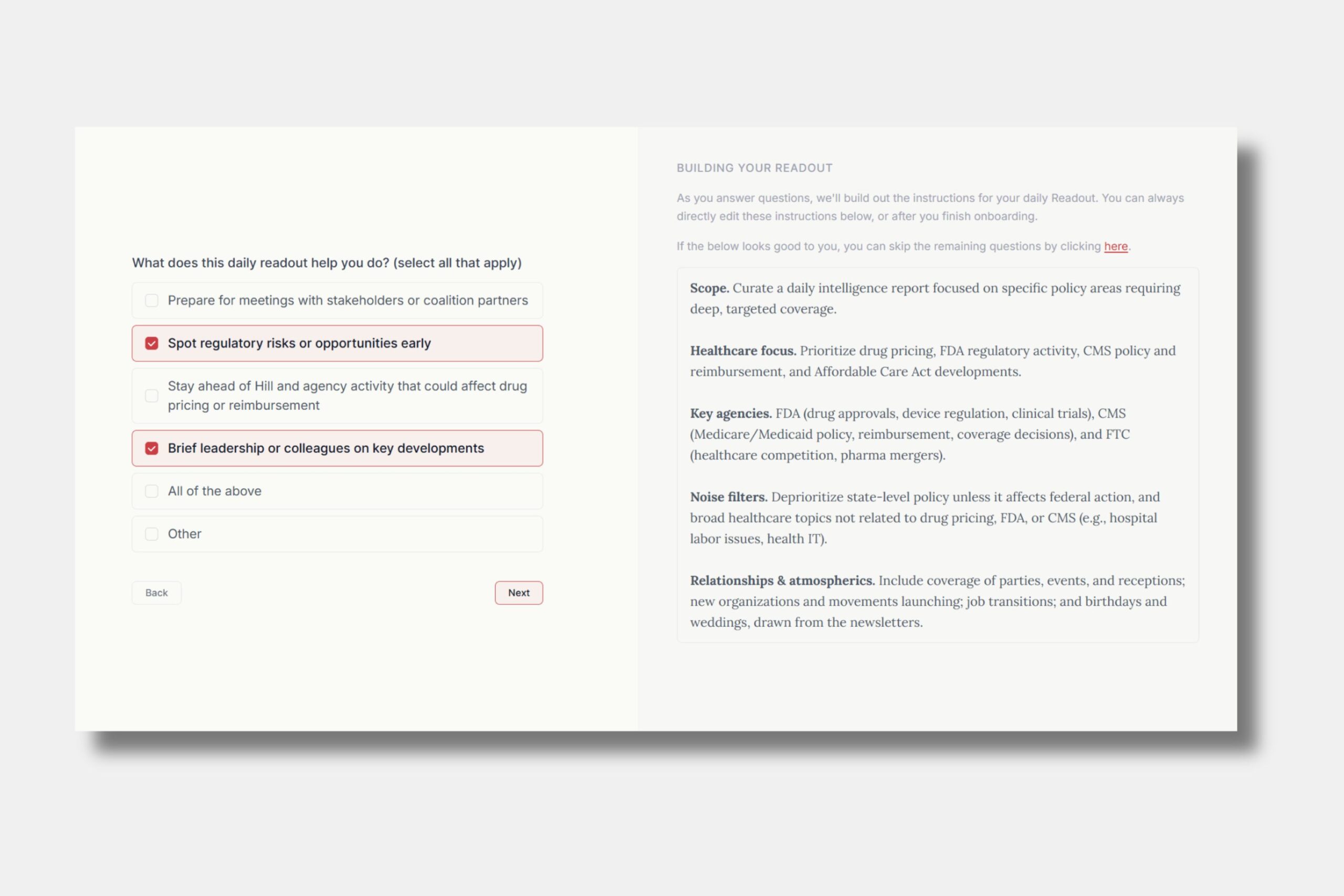
To read the selected newsletters, the startup subscribes to each mailing list like an individual would, per Berkowitz.
Readout emails also include the “silly” DC talking points often found in politics and policy newsletters — birthdays, job changes, sightings of officials around town. That feature was requested by the dozen or so early product testers, he said.
Continuously tailored to individual priorities
If customers want more information on a specific policy or regulation, they can reply to the Readout email to tweak the next day’s compilation.
“It finds exactly what in those newsletters needs to be surfaced for the user,” said cofounder Kyle Huwa. “What they need to read every morning to get smart fast before they go into their first meeting.”
Readout differs from most of Delve’s offerings in that it’s priced for individuals, instead of at the enterprise level, which Berkowitz said was a request from customers.
The tech, like its enterprise platform that tracks news and drafts policy memos, uses natural language processing and context engineering. Berkowitz argued that unlike traditional legislative-tracking systems that rely heavily on keyword searches, Delve’s tools are better at interpreting context and generating more customized analyses.
To power its algorithms, Delve pulls from a variety of publicly available data, he said, everything from legislative bill text to social media posts. Clients can also upload their own contextual information, but that’s not used for training purposes, he said.
The long-term goal is to make policy analysis autonomous at scale, Berkowitz said, with continuous, real-time breakdowns. He doesn’t anticipate pushback for Readout, because he thinks people realize AI systems are more effective in synthesizing trends from multiple sources.
“Everyone needs to be able to sift through and understand this information,” Berkowitz said, “and it’s going to make them more effective at their job.”