When large-load data centers come knocking in Kent County, Delaware, they’ll find new guardrails waiting for them, including limits on noise.
Kent County Levy Court on Tuesday unanimously approved new rules for data centers, establishing limits on where they can be built, how much audible volume they can produce and what developers must disclose about water, power and cooling.
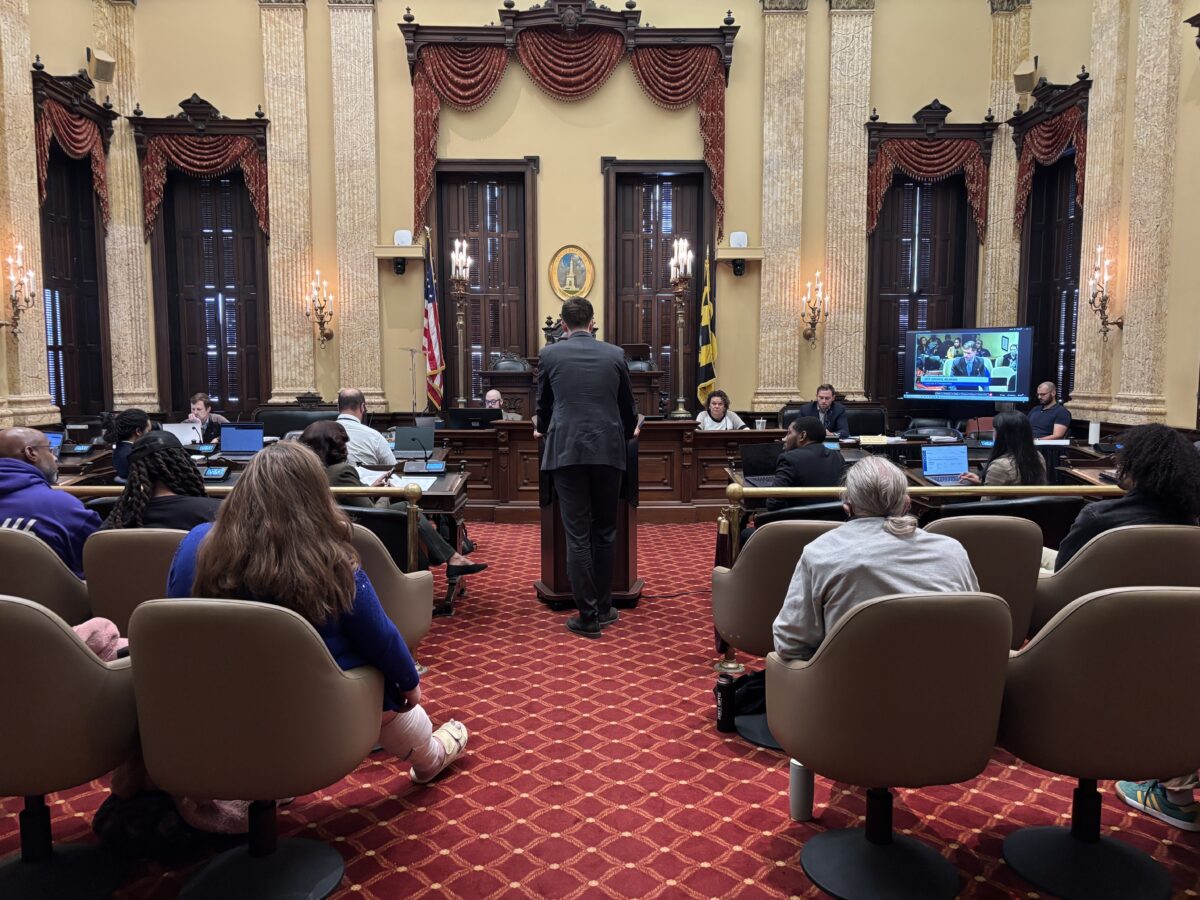
The 7-0 vote to adopt Ordinance LC26-06 followed a lengthy public hearing that drew a large crowd and hours of testimony.
“In the night, you can hear everything, every cow, every chicken… The animals take naps. However, a data center noise will never stop.”
Heidi Patton, Kent County resident
Commissioners repeatedly stressed that they were not deciding whether or not to approve any particular data center project, but getting ahead of the issue.
“We are not voting on data centers,” Commissioner Terry Pepper said before the vote. “We’re voting on this ordinance to control them.”
One of the major concerns addressed by the ordinance is also one that is often overlooked: noise from cooling systems and other equipment.
“If you’re doing air cooling, which is the most prevalent cooling system, it’s very, very noisy, and the noise does not stop,” Dustyn Thompson, executive director of Sierra Club Delaware, told Technical.ly in a recent interview. “It’s 24/7.”
Thompson compared low-frequency data center noise to hearing the bass from a passing car: “You don’t hear their car, but you hear their bass, and it’ll shake your windows.” That type of sound can be harder to block and may be more noticeable at night, when traffic and other background noise fade.
The ordinance caps noise at 55 decibels at the data center property line. Data centers next to residential areas would also have to surround exterior mechanical equipment with sound-blocking barriers.
What Kent County’s new data center ordinance does
Did Kent County approve a data center?
No. Levy Court approved rules for any future data center proposed on unincorporated county land. County officials said they had not received a data center application or inquiry when the ordinance passed.
Where are data centers allowed?
They are allowed only in areas zoned Limited Industrial or General Industrial, and only if they meet the ordinance’s conditions.
Does the ordinance apply in Harrington and other towns?
It applies only to unincorporated Kent County, not land within municipal boundaries, where cities and towns control zoning.
However, a Harrington, Dover or other municipal mailing address does not necessarily mean a property is inside that town. Some nearby properties remain under county jurisdiction.
How close could a data center be to homes?
Data center buildings must be at least 300 feet from a residential zoning district. Generators, cooling towers, chillers and other exterior equipment generally must be at least 400 feet away.
That distance may be reduced to 300 feet if the equipment is inside a building designed to reduce noise.
What is the noise limit?
Noise cannot exceed 55 decibels (about the level of a normal conversation, but low frequency) at the data center property line.
Developers must conduct noise tests before construction and again after the facility opens. The total noise must be measured while all equipment is operating at the same time. Generator testing is generally limited to weekdays between 10 a.m. and 4 p.m.
If a data center is next to existing homes or residentially zoned land, exterior mechanical equipment must be screened on all four sides by an acoustical barrier.
What landscaping is required?
Along public roads and residential zoning districts, developers must create a visual barrier using at least two staggered rows of evergreen trees. The barrier must be at least six feet tall when planted.
What does the ordinance say about water and cooling?
Where a water utility would serve the property, the applicant must obtain written confirmation that it has enough capacity and identify any limits or upgrades needed. The applicant must also explain how the facility would be cooled.
Open-loop or once-through cooling is generally prohibited unless reclaimed water is used or the county approves an exception after finding minimal impact.
The ordinance does not explicitly require data centers to use municipal water.
What about electricity use?
The electric utility must confirm whether it can serve the project and explain whether upgrades would be needed, including whether they would be on-site, off-site, utility-owned or customer-owned.
The ordinance does not set a maximum data center size or megawatt limit.
Can a data center generate its own electricity?
Backup generators are allowed for temporary use when the main power supply is interrupted.
A power plant intended to supply the data center during normal operations would require separate conditional-use approval. Solar installations are the exception.
Would every data center receive its own public hearing?
Not automatically before Levy Court.
The ordinance treats data centers as a permitted use with conditions. If a proposal meets those conditions, it could proceed through the county planning process without a project-specific hearing and vote by the elected Levy Court.
Several commissioners said they want to consider a separate ordinance that would require each proposal to receive that level of public review.
Could agricultural or residential land later be rezoned for a data center?
Potentially, but not automatically. A property owner could apply to have land rezoned to Limited Industrial or General Industrial, which would require a separate county review and public process.
The ordinance does not limit eligibility to properties that were already industrially zoned when it passed.
What happens if a data center closes?A data center that stops operating for at least one continuous year may be presumed abandoned, although its owner can request an exemption for a legitimate reason.
If the county determines that the facility has been abandoned and no exemption is granted, it must be removed within 180 days. The cleanup includes buildings, servers, generators, substations, cooling systems and related infrastructure.
Developers must provide financial assurance covering 100% of the expected cleanup and restoration cost. The amount must be reviewed at least every five years and updated when necessary.
Why did Levy Court pass the ordinance now?
County officials said the previous zoning code did not treat data centers as their own type of development.
Without LC26-06, a data center could have been reviewed under broader business or industrial rules without data center-specific limits on noise, setbacks, cooling or cleanup after closure.
Can the ordinance still change?
Yes. Commissioners described it as a starting point and discussed possible future action on project-specific public hearings, nighttime noise limits, groundwater protections, data center size and/or electricity-use limits moratorium or ban options.
Those changes would require additional legislation and another public process.
Many residents argued that the county should go further by adopting a stricter nighttime standard and considering how low-frequency noise travels.
Heidi Patton, who lives in an agricultural-residential area, said noise already carries across long distances there.
“In the night, you can hear everything, every cow, every chicken,” Patton said. “The animals take naps. However, a data center noise will never stop.”
Linda Lewis, who lives near Cheswold, argued that the required separation from residential areas does not go far enough. “Three hundred to 400 feet is less than an eighth of a mile,” Lewis said.


Guardrails now, more changes later
The zoning code did not previously treat data centers as their own type of development, said county planner Sarah Keifer. Without the new ordinance, they could have been approved under the county’s broader business or industrial regulations, without special limits on noise, setbacks or cleanup after closure.
Under LC26-06, data centers are allowed with conditions only in areas zoned either Limited Industrial or General Industrial. The ordinance also requires information about water, electricity and cooling, along with a cleanup plan and funding to remove the facility and restore the property if it closes.
The ordinance applies only to unincorporated Kent County, not land inside cities and towns. But municipal boundaries do not always match mailing addresses, meaning some properties with Harrington, Dover or other municipal addresses may still fall under county zoning.
Delmarva Power records obtained by Technical.ly listed an unnamed 100-megawatt data center project in Kent County that was pending further grid analysis. Technical.ly has not confirmed where it would be built or who is behind it. County officials said they had received no application or inquiry for a data center on unincorporated county land.
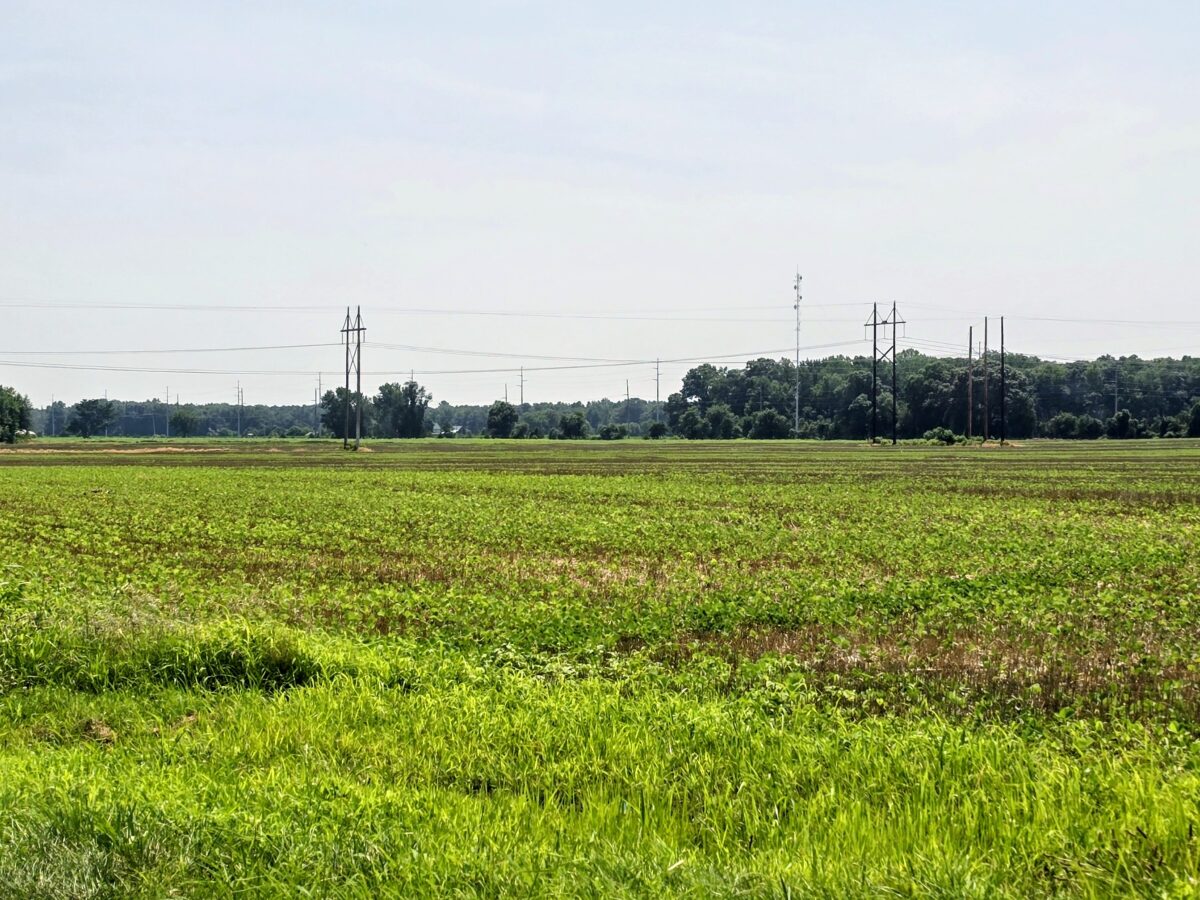
Keifer said the new restrictions leave one vacant, correctly zoned site that could currently accommodate one: the former Reichhold property north of Dover. A second area south of Felton is identified for industrial development in the county’s comprehensive plan but is not currently zoned for it.
The industrially zoned Delaware State Fair property near Harrington was also included in the county’s review of possible sites, although Keifer considered redevelopment there unlikely.
“It’s not going to redevelop, I suspect, for a data center,” Keifer said.
Skeptical of data centers, split on the ordinance
Public testimony was overwhelmingly skeptical of data center development, but more complicated when it came to the ordinance itself.
“Every time Delaware talks about development, I always ask one question: Who benefits and who bears the burden?” said Vonderlear Smack, a Dover resident who told commissioners she is living with stage-four cancer.
Smack pressed commissioners for legally enforceable community benefit agreements rather than informal promises.
Many speakers said they supported putting immediate protections on the books while also urging Levy Court to strengthen the measure. Others called for a moratorium or complete ban.
“Why not just ban them entirely?” said Callie Champiny of Hartly. “Guardrails can be bent. A solid ban — a wall of protection — would be more beneficial than a simple guardrail.”
James Chrisman, who lives near Nobles Pond, agreed. “I believe a ban is necessary,” Chrisman said. “I don’t think this should pass. I don’t think it’s ready.”
Residents should also be able to voice their concerns about each proposed data center, said Sierra Club Delaware environmental justice organizer Marissa McClinton.
As passed, the ordinance treats data centers as a permitted use with conditions. That means a project could be approved through the regular planning process once it meets the rules, without automatically receiving a hearing before Levy Court.
Commissioner Jody Sweeney asked Levy Court to workshop a change that would require future proposals to come before the elected body.
Resident Max Flaxman urged commissioners to go further by limiting data center eligibility to properties already zoned for industrial use when the ordinance passed. That would block developers from later rezoning other land to make it eligible for a data center.
Commissioners said the ordinance could be revised, and several indicated that additional legislation may come soon. Residents still question whether its protections will be enough if a data center is built nearby.
“What happens if the projections don’t line up with reality,” Dustyn Thompson asked, “and I’m stuck with a really noisy neighbor?”