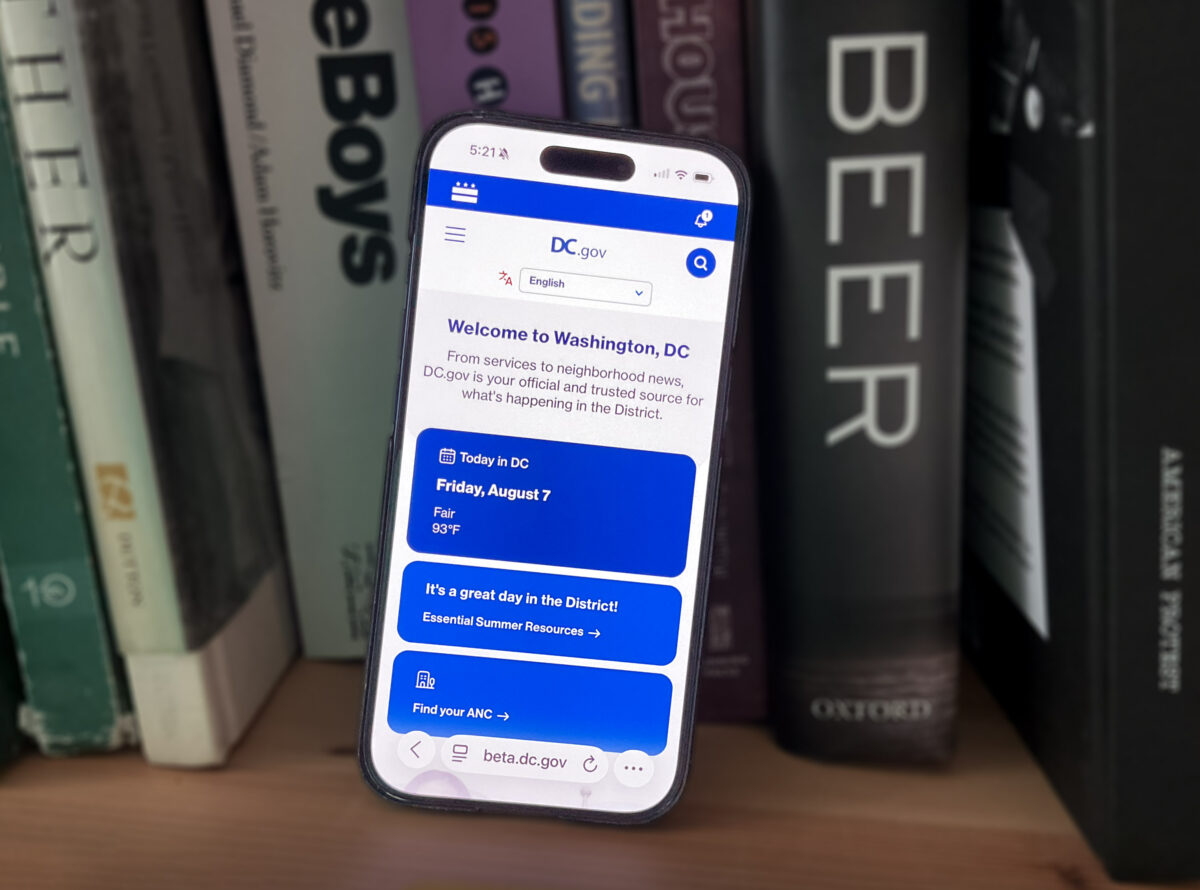
DC’s government website is getting its first major update in a decade, including AI features that officials hope will make accessing city services easier.
Already, the public beta site includes automatic language translation, courtesy of Google Translate. Promised this fall is an AI-powered search tool providing information on things like how to apply for unemployment benefits and pay parking tickets.
And the 311 portal — which has been plagued by glitches and outages in recent months — is another big priority, according to city CTO Stephen Miller.
“This is a focus on a resident, or a business, or a visitor is looking for a service,” Miller told Technical.ly. “This really gets into a unification of government services available to a resident.”
“This is a focus on a resident, or a business, or a visitor is looking for a service.”
Stephen Miller, DC CTO
DC’s 80-plus agencies will still each have their own websites, he said, but instead of being listed as “agencyabbreviation.dc.gov” they’ll be found at “dc.gov/agencyabbreviation,” and share the same architecture.
The new site was developed with local DC firm Taoti Creative. It was spurred by feedback from residents asking for website improvements, including better mobile access, per Brandon Schmittling, Taoti’s director of user experience. The team took inspiration from other government website designs, he said, pointing to Boston as an example.
“It was time for DC to also lean into some of those things. We had that behind us, that was wind in our sails,” Schmittling said. “Why shouldn’t we also do these things?”
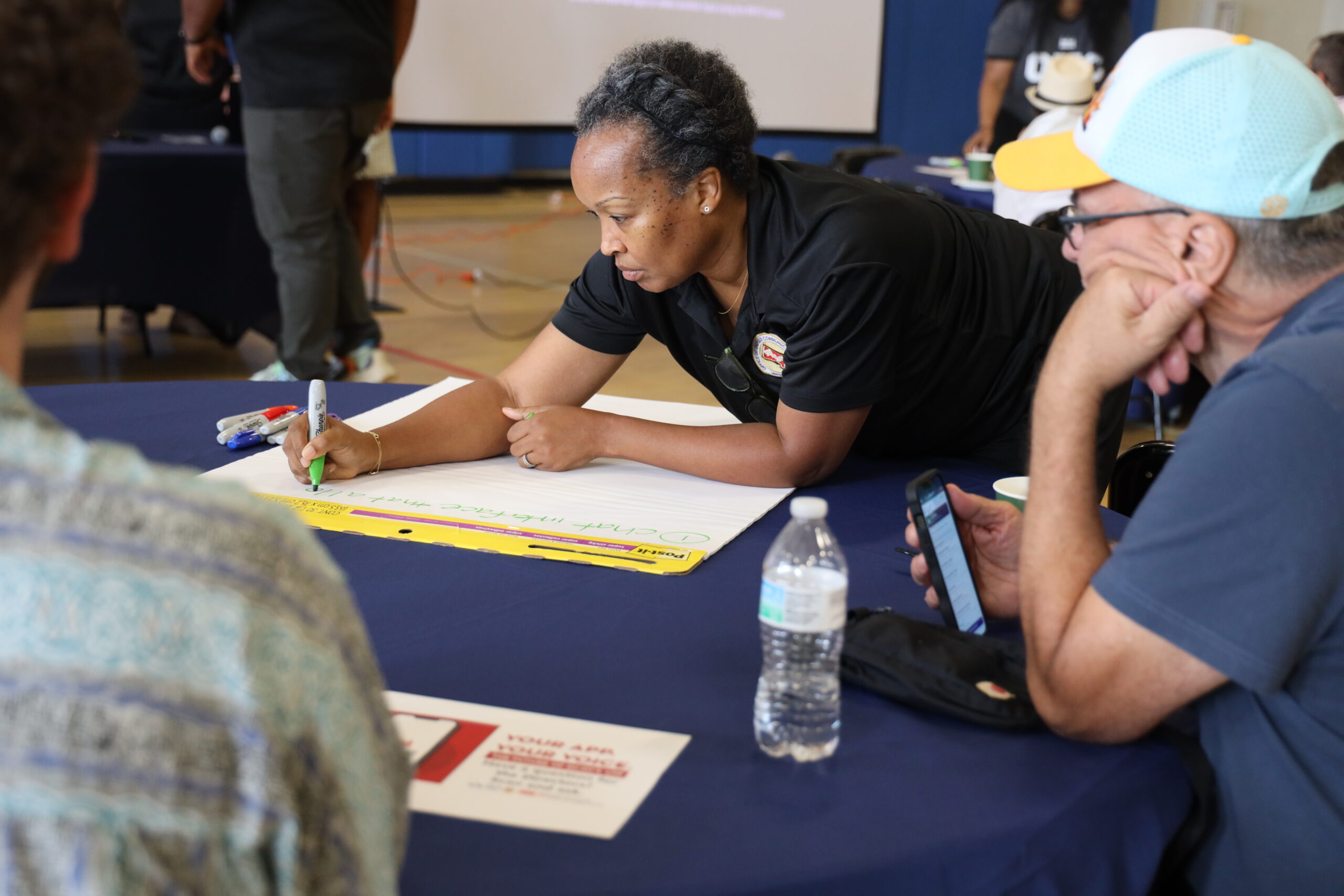
During the initial discovery phase starting in 2024, the Office of the Chief Technology Officer (OCTO) gathered around 4,000 public comments from residents and businesses, then used AI tools to analyze that data and surface primary user pain points. That effort has continued. Since the beta site launched in June, OCTO has been setting up tents at Metro stations and busy areas like Eastern Market to get live feedback.
Taoti Creative was brought on in spring 2025 with a $700,000 contract to help develop and design the site, according to DC’s procurement transparency portal, and that fall signed another contract of the same value to build the site on Drupal 11, a common CMS for government websites.
Neighborhood-specific info and automating migrations
While migrating content to the new website, developers found some information that hadn’t been changed since the 1990s.
Updating outdated information is important anyway, but especially because of the deep reach of the forthcoming AI-powered search, said Miller, the city CTO. “The last thing that we want is, someone performs a search [for something like] ‘How do I dispose of paint cans?’” and the tool gives them information from 20 years ago.
Agencies are also being encouraged to create FAQ sections with 10-12 points to be posted on the website as a way to train the AI models for that search tool.
“When these FAQs are written, they’ll definitely become part of the knowledge base that the AI uses to respond with,” Taoti Creative’s Schmittling said.
DC is prioritizing migrating information from agencies residents directly interact with the most — including public safety and education, Miller said. These migrations are mostly automated. Once that process is done, the content is hidden from the public until checked by OCTO and leaders from the agency.
The beta site’s homepage is designed to rotate based on what services are most popular per season. Where to find a public pool is near the top of the site for the summer months, for example.
Based on recent feedback, OCTO and Taoti Creative are building information sections based on the city’s wards for people to find services specific to their neighborhoods, including listing advisory neighborhood commissioners.


Gathering feedback and continued updates
For improving 311 specifically, OCTO has hosted several feedback sessions with residents about the access issues.
“311 is the entry point for a lot of government services, and we do want to make sure that we have a clear way for people to transition from dc.gov into the 311 application,” he said.
Instead of pushing out continuous changes, project leaders are structuring site updates on a quarterly schedule to avoid overwhelming users. There has not been a major update since the initial launch, Miller said. But slower releases doesn’t mean the website will be static, per Miller.
“This will be a living beast,” Miller said. “We’ll constantly collect feedback on this and just constantly iterate and improve based on what residents are asking us to do.”