What’s the difference between a giant pharmaceutical plant and a hyperscale data center?
Both types of development can cost billions and reshape the communities around them. But the jobs they create and the demands they put on land, energy and the environment can look very different.
Delaware offers a case study.
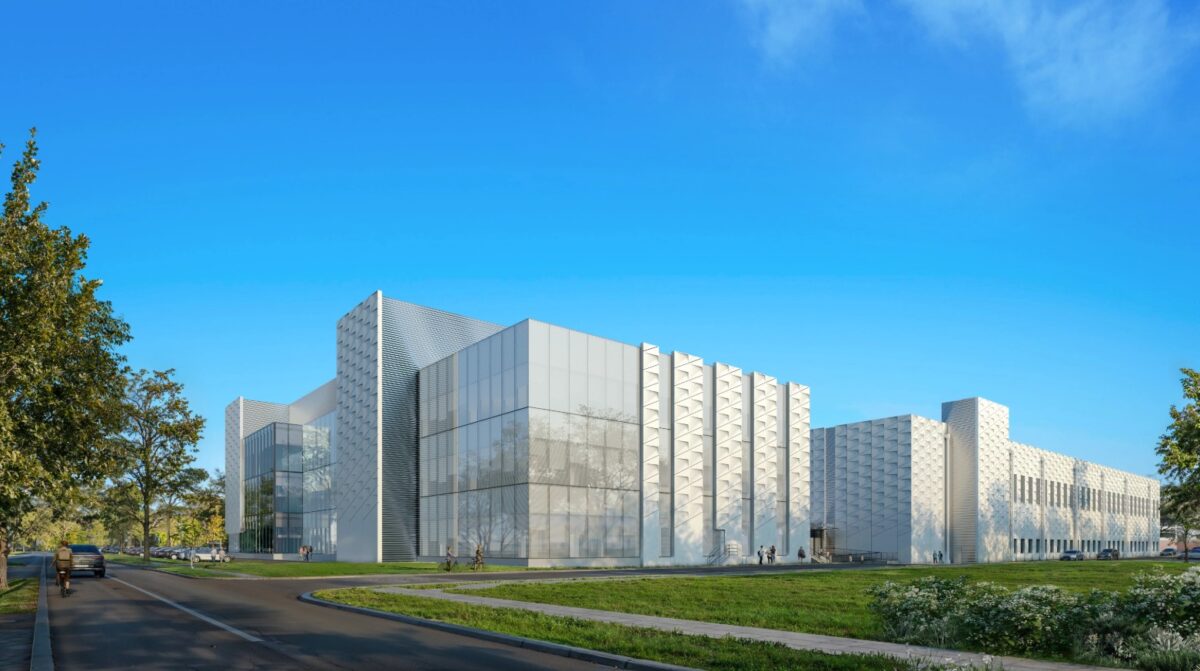
Biopharmaceutical company Merck is building a $1 billion, 470,000-sq.-ft. biologics center in Wilmington. The company expects it to create more than 500 permanent jobs and about 4,000 construction jobs.
Project Washington, the stalled data center campus near Delaware City that was projected to cost up to $10 billion, called for about 6 million square feet. Developer Starwood Digital Ventures projected 700 permanent jobs and 3,500 construction jobs.
In raw numbers, Project Washington projected more hires. But measured against building footprints, there is a huge gap. Merck projects at least 106 permanent jobs per 100,000 square feet, compared with about 12 for the proposed hyperscale data center.
That’s even fewer jobs per square foot than your existing large data center. A typical 250,000-sq.ft. facility — large but not “hyperscale” — employed about 50 full-time workers in 2024, according to a study by the Virginia Joint Legislative Audit and Review Commission study. That’s about 20 jobs per 100,000 square feet.
The contrast extends beyond jobs.
The Merck project comes with a different set of environmental demands, mostly tied to the chemicals it uses for drug manufacture. On Sept. 2, the Delaware Department of Natural Resources and Environmental Control posted five proposed air permits for the development, covering laboratory and office space, logistics and production operations.
Four applications list maximum emissions of volatile organic compounds, or VOCs, below 2 tons per year. One production application would allow up to 10.43 tons per year. (Those figures are limits, not estimates of what Merck will actually emit.)
Data centers can require air permits, too. Project Washington called for 516 diesel backup generators, each paired with a 5,020-gallon fuel tank. Delaware requires air permits for emergency generators larger than 450 kilowatts, meaning the proposed campus would also have faced air-quality permitting for its backup power systems.
For Project Washington, electricity was a central concern.
Its proposed 1.2-gigawatt peak demand became part of a broader debate over how much power data centers would require and who would pay for the infrastructure needed to serve them.
Last month, Delaware Gov. Matt Meyer signed new energy legislation requiring qualifying data centers and other large power users to provide or secure new electricity generation to support their operations.
It’s not clear whether Merck would fall under that requirement. The company has not publicly disclosed how much electricity the Wilmington facility is expected to use, and the law applies to non-data-center facilities only if they cross specific power-demand thresholds. Merck did not immediately respond to a request for comment.
These two Delaware developments — one suspended and one moving forward — show why a project’s price tag and size say little about its impact. Large developments can produce very different numbers of jobs while requiring very different amounts of land, energy and other resources.